

 |
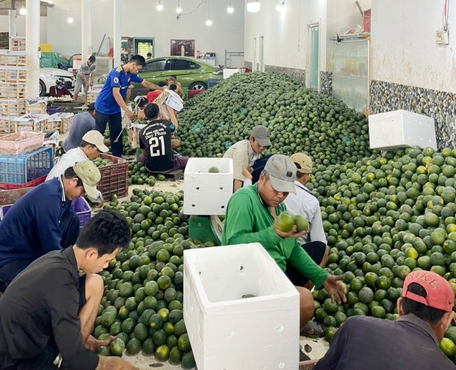
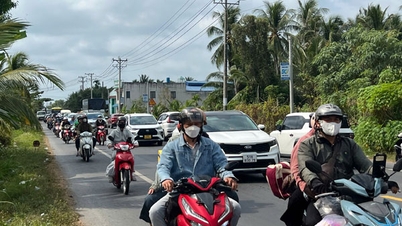
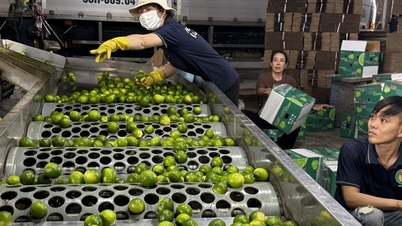
| During the peak season, the supply of mandarin oranges increases significantly while demand remains slow. |
Recently, in the mandarin orange growing regions, farmers have been extremely worried because the price of mandarins has dropped sharply, causing them heavy losses.
Peak season: Mandarin oranges drop in price.
Mr. Nguyen Thanh Ky (Tra Con commune, Tra On district) has 6 acres of mandarin oranges that are past their harvest season, but he still hasn't been able to sell them despite contacting traders many times. Mr. Ky said: "Traders haggle; they'll buy the good oranges for 2,500 VND/kg, but my oranges are out of season, ripe and yellow like small tangerines, so they're only offering 2,000 VND/kg. And even then, I still can't sell them."
Similar to Uncle Ky's orchard, many orange orchards are struggling to sell their harvest. Even if they do manage to sell, the prices are very low. In some places, traders no longer buy oranges by the kilogram but buy them in bulk from entire orchards at rock-bottom prices.
Mr. Nguyen Van Thanh (Hieu Nghia commune, Vung Liem district) expressed: “This time, my mandarin orange orchard is expected to yield about 40 tons. Recently, traders came directly to the orchard to buy them at only 2,500 VND/kg.”
At this price, we're certain to lose 40-50 million VND per hectare. But the trees are ready for harvest, so we have to sell them because if we don't sell them and wait for the price to rise, we'll only get a few more days. If we wait too long, the trees will become stunted, reducing yield for the next season, or even die."
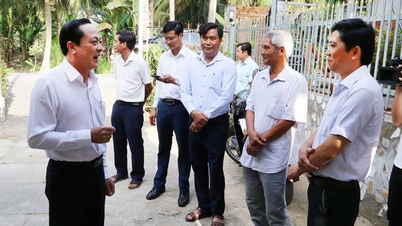
Mr. Nguyen Van Tam, Head of the Agriculture and Rural Development Department of Tra On district, said: "This is the favorable season, but the price of oranges is fluctuating. Those households growing mandarin oranges in cooperatives are able to sell them for 6,000-7,000 VND/kg. However, those growing them independently face more difficulties, sometimes selling them for 3,000-4,000 VND/kg, lower than their initial investment."
According to many small traders, the current low price of mandarin oranges for consumers is due to the fact that it is currently the peak season. Since this fruit is primarily for domestic consumption, the supply far exceeds demand. Some traders predict that the price of mandarin oranges is unlikely to improve by the end of the year, as the market in the northern provinces is shrinking due to the onset of cold weather, leading to a sharp decrease in demand.
Meanwhile, in Vinh Long City, many stalls are selling mandarin oranges at prices ranging from 4,000 to 7,000 VND/kg, but demand remains low. Ms. Phan Thi Thao, a small trader at Ward 4 Market (Vinh Long City), said: “I only buy oranges in moderation, taking only what I need because sales are slow, and the oranges ripen too quickly and spoil. Normally, I supply my regular customers, but now they don't buy anymore.”
A long-term solution is needed.
According to the Department of Agriculture and Rural Development, the area planted with mandarin oranges has continuously increased at a very rapid rate over the past 5 years, and has now doubled compared to the plan for 2020.
The reason is that the profits from this crop are so attractive; orange prices in the years 2015-2020 were always high, especially during the off-season when prices could reach 13,000-18,000 VND/kg. Meanwhile, farmers have applied many cultivation techniques, so the yield of mandarin oranges has continuously improved, increasing from 36.6 tons/ha (2019) to 44.1 tons/ha (2023), with some orchards achieving yields of nearly 100 tons/ha.
Therefore, the production of mandarin oranges has exceeded 900,000 tons/year. With the current scale of cultivation (18,000 hectares, average yield of 70 tons/ha), if production is staggered throughout the year, farmers in the province will sell an average of about 3,000 tons of oranges per day to the market, making consumption very difficult.
Meanwhile, according to Mr. Nguyen Van Liem, Deputy Director of the Department of Agriculture and Rural Development, the investment cost for producing mandarin oranges is currently increasing proportionally with the yield.
The reason is that the prices of fertilizers, pesticides, materials used for irrigation, labor, seedlings, and the ropes used to support the orange trees when they bear fruit have all increased significantly. The average production cost is nearly 8,000 VND/kg, equivalent to an investment of over 350 million VND/ha. This doesn't even include cases where farmers rent land to grow oranges, at a cost of 50-80 million VND/ha/year.
“In recent years, farmers have continuously expanded their cultivated area, leading to a sharp increase in production. Weak purchasing power coupled with an overwhelming supply has resulted in a situation of ‘supply exceeding demand.’ Furthermore, oranges are an agricultural product that cannot yet be processed or packaged for long-term preservation, so exports remain limited,” Mr. Nguyen Van Liem added.
To curb the oversupply of mandarin oranges, according to Mr. Nguyen Van Liem, it is necessary to develop models applying high technology to mandarin orange production, organic farming, and ecological agriculture. The goal is to comprehensively apply advanced, safe production processes with post-harvest preservation technologies to improve productivity and product quality for future consumption and export.
In addition, when farmers want to switch to growing oranges, they must carefully study the conditions of their farm. When wanting to grow oranges on paddy fields, they should concentrate on areas with suitable conditions, avoiding scattered, patchy planting that makes water management and other conditions difficult.
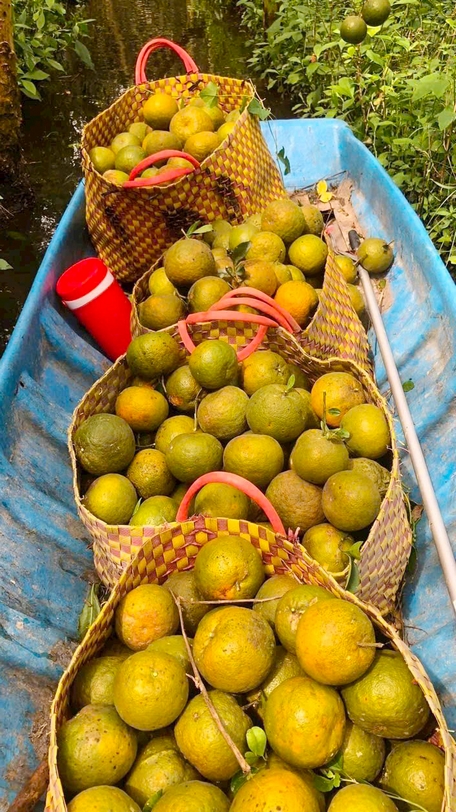 |
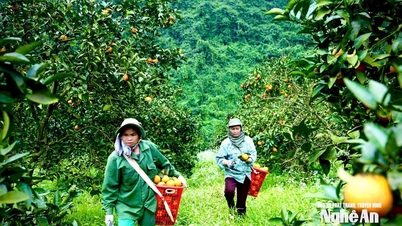
| Oranges are cheap, and many orchards have oranges that are overripe. |
"In addition, it is recommended that research and investment be made in science and technology projects on processing products from mandarin oranges, in order to transfer processing technology and create value-added products for localities."
"In the short term, we need to support localities in promoting trade and finding markets for mandarin oranges in the Central and Northern regions, as well as neighboring countries. In the long term, we propose that the Ministry of Agriculture and Rural Development negotiate official export channels to China," Mr. Nguyen Van Liem suggested.
Low orange prices, oversupply, and farmers selling at a loss have led many to abandon their orchards. This situation is very worrying as it will significantly impact the livelihoods of farmers and negatively affect the economic and social development of the locality.
Some orange farmers expressed concerns that the current orange price situation is somewhat similar to last year. At this time last year, orange prices were low, forcing many farmers to hold onto their fruit until after the Lunar New Year. However, after the New Year, prices dropped even further, reaching record lows, making it difficult for farmers to sell their produce. Farmers hope that local authorities and relevant agencies will implement concrete solutions to prevent a repeat of last year's "rescue" effort for mandarin oranges.
Text and photos: TRÀ MY
Source




















































































Comment (0)