

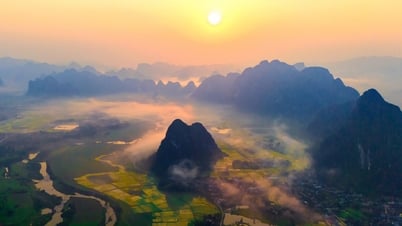
The resilience of the Hmong people on the Dong Van karst plateau leaves anyone who has ever admired the terraced rice fields on the road to Northwest Vietnam, or climbed the steep rocky slopes to see the people plowing and cultivating amidst the towering mountains, utterly amazed and full of admiration.
 Join photographer Nguyen Vu Hau in experiencing a day of plowing and tilling the high rocky mountain peaks through his photo series "Plowing in the Clouds." This series will show you that despite the extremely rugged geography and harsh climate, the Mong people, with their industrious and creative nature, utilize every handful of soil and every furrow to produce rice and corn to sustain themselves. It also simultaneously fosters the unique cultural values of the "Dong Van Karst Plateau Global Geopark." The photo series was submitted by the author to the Happy Vietnam Photo and Video Contest, organized by the Ministry of Information and Communications .
 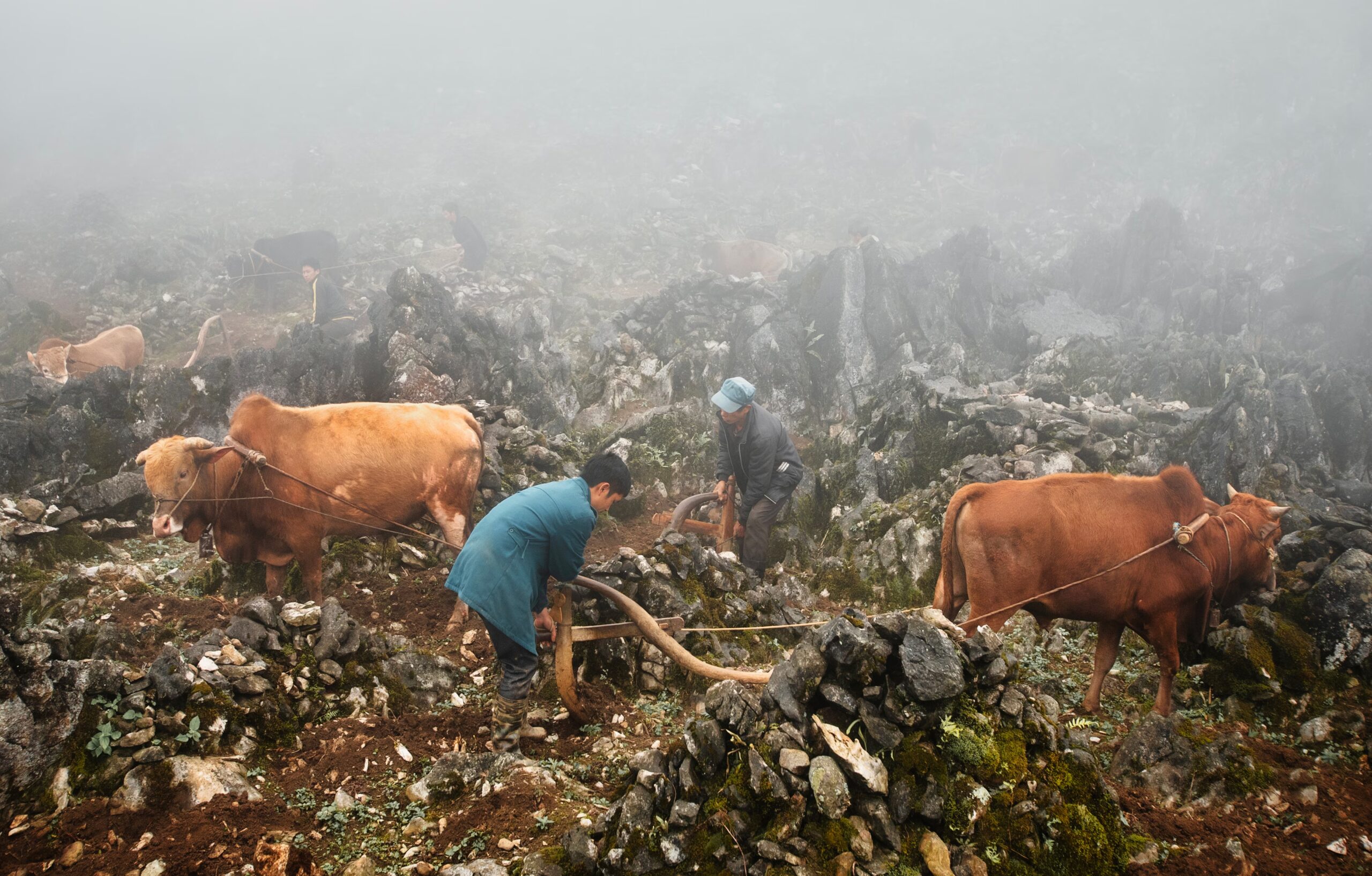 The rocky plateau is located in the northern part of Ha Giang province, spanning four districts: Dong Van, Meo Vac, Yen Minh, and Quan Ba. This is a mountainous limestone region with few rivers and streams, often lacking water for daily life and arable land. To cultivate crops, the local people, primarily the Mong ethnic group and other subgroups such as the Dao, Lo Lo, Co Lao, and Pu Peo, must utilize every available rock crevice for farming. Consequently, the unique technique of cultivating crops in these rock crevices has been developed and maintained by the local people for generations.
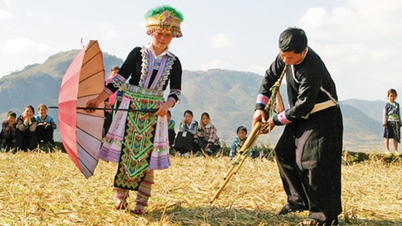
  While the morning mist still hung over the village, the Hmong people woke up with their livestock and climbed the mountain to plow and cultivate the land.
 To this day, rocky soil cultivation remains the dominant method of production for the people of the rocky plateau of Ha Giang. In rocky soil cultivation, people use agricultural tools suitable for the farming conditions, such as plows, harrows, and hoeing tools. The main tools assisting the farmers are strong and resilient oxen.
  Land preparation usually takes place after the Lunar New Year for the local people. For fields that have been cleared and cultivated for many seasons, the first task is to clear away exposed stones from the previous season's cultivation, then rearrange them and repair eroded sections of the embankment. After that, the people use hoes and machetes to clear the weeds, dry them, and burn them. The ash is spread evenly across the field to serve as fertilizer.
 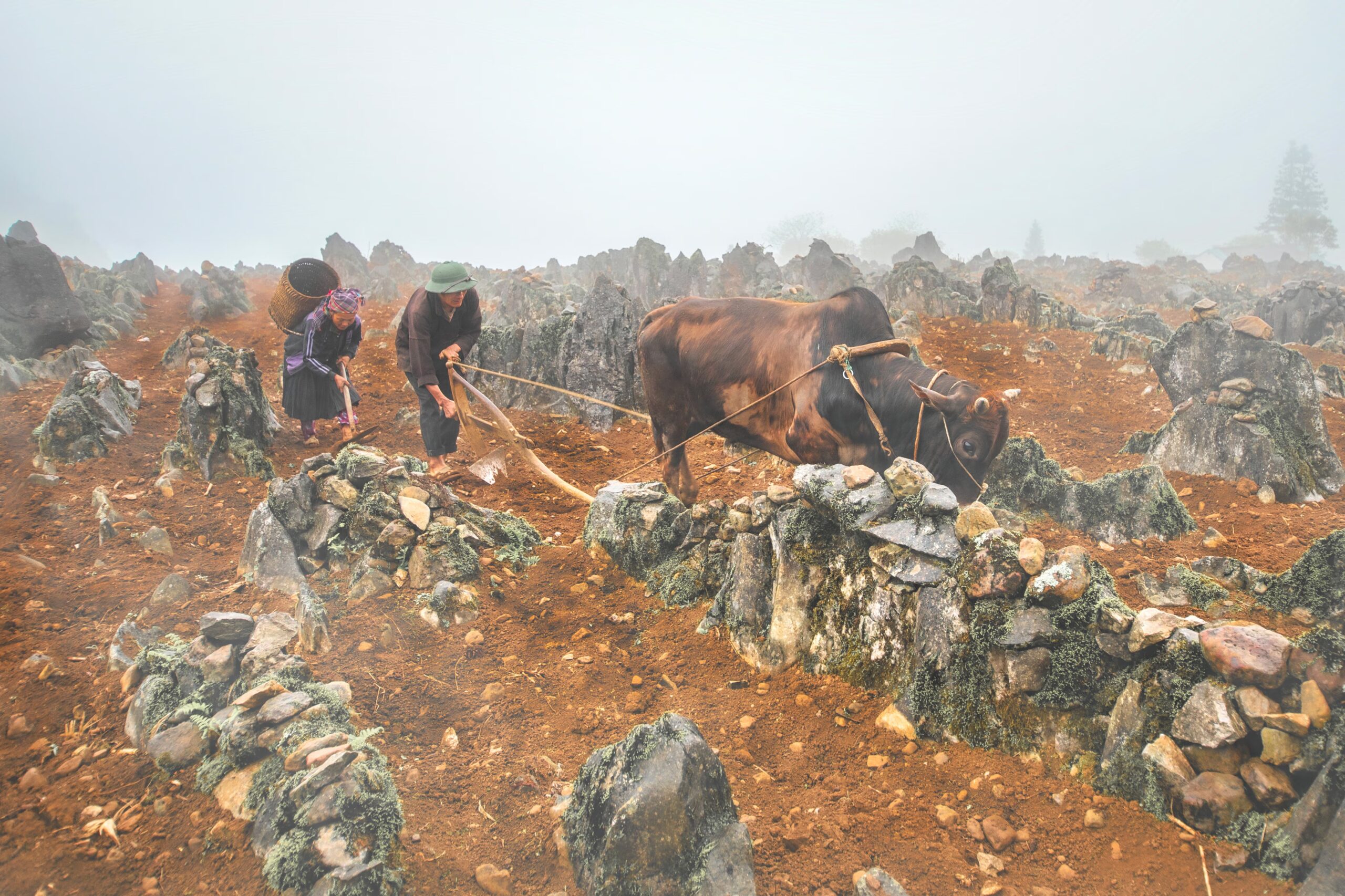 Rock-pitched soil cultivation - Cultivating land mixed with rocks, often using stones arranged around the soil to protect against erosion and soil runoff. Many natural rock cavities are filled with soil by the locals, creating cultivation spaces. Thanks to the creation of rock-pitched soil cultivation and techniques for growing corn on rocky slopes, as well as intercropping various crops, the people here have adapted to the unique natural conditions and stabilized their lives.
 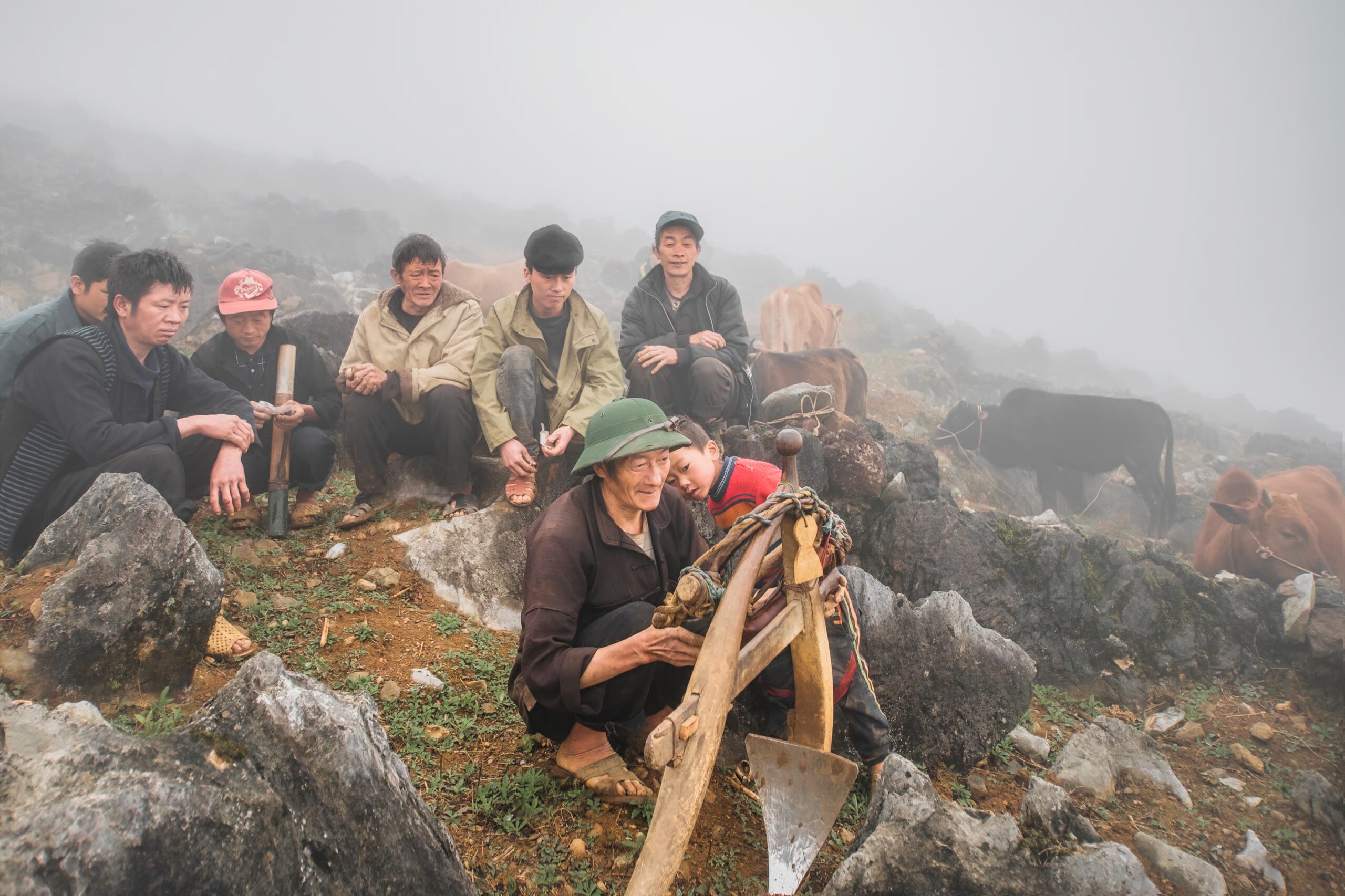 There are two types of harrows: hand harrows and foot harrows. Hand harrows have horizontal handles that the user grips and presses down while harrowing. Foot harrows are more commonly used, usually rectangular in shape, sturdily constructed, with two rows of teeth, and without handles; the operator must stand while harrowing.
  The practice of cultivating crops in rocky crevices by the Hmong and other ethnic minorities living on the Dong Van karst plateau demonstrates the ingenuity, resilience, and adaptability of the inhabitants to the harsh environment. This production method also contributes to protecting the ecological environment of the karst plateau, helping the people stabilize their lives and preserve the borderland at the forefront of the country.
Vietnam.vn





































![[Image] Ho Chi Minh City simultaneously commences construction and breaks ground on 4 key projects.](https://vphoto.vietnam.vn/thumb/1200x675/vietnam/resource/IMAGE/2026/01/15/1768472922847_image.jpeg)



























Comment (0)