

TPO - On the afternoon of November 30th, the National Assembly voted to approve the draft Resolution on the investment policy for the high-speed railway project on the North-South axis, with over 92% of delegates voting in favor. The total investment for the project is 1.7 trillion VND, equivalent to 67 billion USD.
TPO - On the afternoon of November 30th, the National Assembly voted to approve the draft Resolution on the investment policy for the high-speed railway project on the North-South axis, with over 92% of delegates voting in favor. The total investment for the project is 1.7 trillion VND, equivalent to 67 billion USD.
The Hanoi – Ho Chi Minh City section of the route will begin construction in 2027.
In the report explaining and addressing feedback regarding the investment scale, the Chairman of the Economic Committee, Vu Hong Thanh, stated that there were suggestions to expand the project's scope to extend from Lang Son to Ca Mau and to phase its implementation into stages; and to connect the project to the Ho Chi Minh City to Can Tho railway line to ensure synchronization.
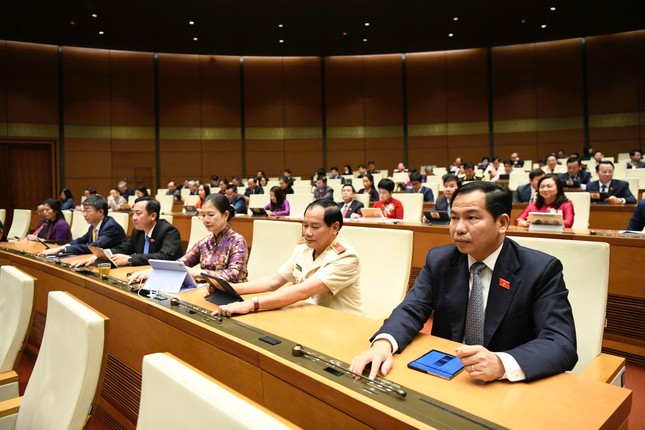 |
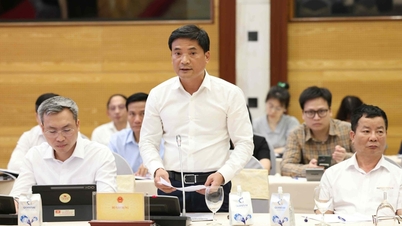
Members of the National Assembly voted to approve the resolution on the afternoon of November 30. Photo: Nhu Y |
Regarding this matter, the Standing Committee of the National Assembly explained that, according to the railway network plan for the period 2021-2030, with a vision to 2050, the development of new railway lines from Lang Son to Can Tho has been identified, comprising three sections: Lang Son (Dong Dang) - Hanoi, Hanoi - Ho Chi Minh City, and Ho Chi Minh City - Can Tho, to connect dynamic regions, cities, major economic centers, and ensure national defense and security along the North-South economic corridor.
According to the adopted Resolution: The preliminary total investment for the project is 1,713,548 billion VND; the implementation schedule includes preparing a feasibility study report starting in 2025, with the goal of essentially completing the project by 2035.
Because the railway sections from Lang Son to Can Tho have different transportation needs, the technical standards and types of railways also differ and are studied for investment as independent projects, in accordance with the transportation needs of each section and the ability to mobilize resources.
Of that, the Lang Son - Hanoi section, 156 km long, is a standard railway line, and detailed planning is currently being studied, with investment expected before 2030.
The Hanoi – Ho Chi Minh City section, spanning 1,541 km, is a high-speed railway project, with construction scheduled to begin in 2027.
Meanwhile, the Ho Chi Minh City - Can Tho section, 174 km long, is a standard railway line currently under preparation for investment, with implementation expected before 2030.
For the first four years, revenue only covered operating and maintenance costs.
Regarding economic efficiency, Mr. Vu Hong Thanh stated that some opinions suggested a thorough assessment of financial efficiency, especially the ability to recover capital, the ability to repay capital, and the subsidy for the Project during its operation and exploitation.
The Standing Committee of the National Assembly stated that the Government had calculated significant direct and indirect economic benefits, but these could not be factored into the project's revenue and financial efficiency.
"Similar to models in other countries around the world, railway projects bring significant benefits to the economy. However, the revenue used to recoup the investment for these projects mainly comes from transportation and commercial exploitation to offset operating costs, vehicle maintenance, infrastructure upkeep, and infrastructure fees paid to the state," Mr. Thanh said.
Accordingly, in the first four years of operation, revenue only covers the operating and maintenance costs of the vehicles. Therefore, the state needs to provide partial support from the economic development funds currently allocated to the railway system to maintain the infrastructure.
According to Mr. Thanh, many opinions suggested adding a more comprehensive assessment of funding sources and the ability to balance and allocate capital for each phase of the project to ensure feasibility and effectiveness; and suggested adding a thorough assessment of the impact of the project investment on the state budget deficit, public debt, and the budget's debt repayment capacity in the medium and long term.
Furthermore, some argue that since the project spans three medium-term periods, the total investment approved for each period should only be calculated within that period. The capital actually spent in each period should be included in the corresponding medium-term period and should not be carried over from one medium-term period to the next.
Regarding this matter, the Standing Committee of the National Assembly stated that the project spans three medium-term periods, and the ability to balance and allocate funds for project implementation is as follows:
For the period 2021-2025, the capital requirement for the project is approximately VND 538 billion (used for investment preparation), which has been allocated in the medium-term public investment plan of the Ministry of Transport.
Meanwhile, the capital requirement for the period 2026-2030 is approximately VND 841,707 billion, and for the period 2031-2035, it is approximately VND 871,302 billion.
According to the 2019 Public Investment Law, currently, assessing the feasibility of balancing funding sources can only be done based on the 5-year medium-term public investment plan, with the portion carried over to the next phase not exceeding 20% of the previous phase's public investment plan. Since the project spans three medium-term periods, there are no regulations in place to determine the feasibility of balancing funding.
"Therefore, the draft resolution stipulates that the project will be allocated capital through medium-term public investment plans, with the amount of capital allocated in each medium-term period matching the project's implementation progress, and will not be subject to the capital balance assessment as stipulated in the Law on Public Investment," Mr. Vu Hong Thanh informed.
Source: https://tienphong.vn/chot-67-ty-usd-lam-duong-sat-toc-do-cao-bac-nam-post1696278.tpo
![[Photo] Secretary of the National Assembly Party Committee, Chairman of the National Assembly presides over the meeting of the Standing Committee and Executive Committee of the National Assembly Party Committee.](https://vphoto.vietnam.vn/thumb/1200x675/vietnam/resource/IMAGE/2026/06/03/1780480353201_ndo_br_bnd-2585-jpg.webp)
![[Photo] General Secretary and President To Lam presides over a meeting with the Central Organizing Committee.](https://vphoto.vietnam.vn/thumb/1200x675/vietnam/resource/IMAGE/2026/06/03/1780482764658_a1-bnd-4741-3342-jpg.webp)


![[Photo] First session of the 14th Congress of the Vietnam Trade Union](https://vphoto.vietnam.vn/thumb/1200x675/vietnam/resource/IMAGE/2026/06/03/1780465947883_ndo_br_img-3852-jpg.webp)












































![[Video] Sunset at Lap An Lagoon – Where the sun sets over the fishing nets](https://vphoto.vietnam.vn/thumb/1200x675/vietnam/resource/IMAGE/2026/05/31/1780192137701_beach-landscape-sea-water-nature-grass-745871-pxhere-com.jpeg)



























Comment (0)