


On the morning of June 17th, with 452 out of 453 attending delegates voting in favor, the National Assembly passed a resolution on reducing VAT.
According to the newly passed resolution, the National Assembly decided to reduce the VAT rate by 2% for the groups of goods and services specified in Clause 3, Article 9 of Law No. 48 on Value Added Tax (to 8%).
The groups of goods and services not eligible for tax reduction include: telecommunications, financial activities, banking, securities, insurance, real estate business, metal products, mining products (excluding coal), and goods and services subject to excise tax (excluding gasoline). The Resolution is effective from July 1st to December 31st, 2026.
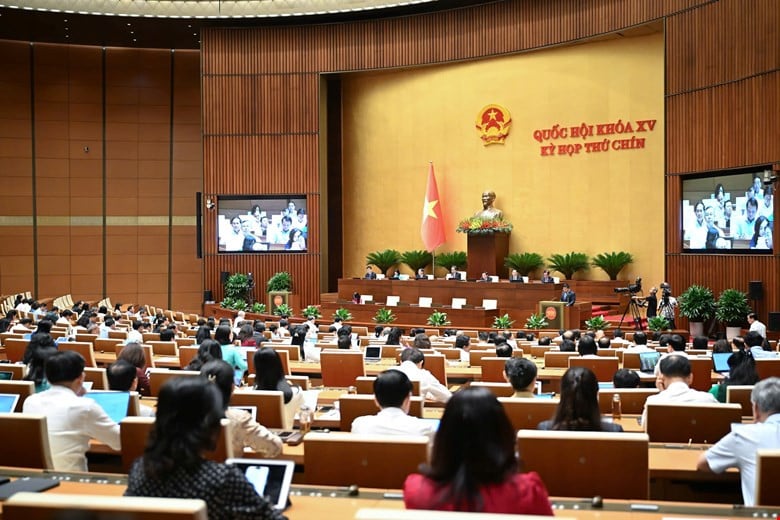
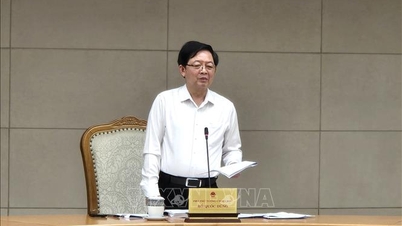
Before its adoption, Minister of Finance Nguyen Van Thang presented a report on the feedback, explanations, and revisions to the draft Resolution.
According to Minister Nguyen Van Thang, some opinions suggest applying a 2% VAT reduction to all goods. However, there are also opinions suggesting that instead of a 2% reduction for many items, a 4-5% reduction should be applied specifically to those who need support.
Clarifying this issue, Mr. Thang stated that this draft Resolution has expanded the scope of businesses eligible for tax reduction compared to previous National Assembly Resolutions and extended the tax reduction period until the end of 2026. Accordingly, businesses in transportation, logistics, goods, and information technology services are eligible for tax reduction.
Furthermore, according to VAT regulations, teaching, vocational training, and medical services are exempt from VAT and therefore do not require tax reduction.
For services such as finance, banking, securities, and insurance, which are exempt from VAT, there is no need for VAT reduction. Telecommunications and real estate services, however, are sectors that have experienced growth recently and are also not eligible for VAT reduction.
Furthermore, according to the plan proposed by the Government on April 16th, the projected reduction in state budget revenue for the last six months of 2025 and the whole year of 2026 is approximately 121,740 billion VND. Of this, the reduction is approximately 39,540 billion VND in the last six months of 2025 and approximately 82,200 billion VND in 2026.
If the tax reduction is implemented by lowering the VAT rate to 10% on all items, the projected decrease in state budget revenue for the last six months of 2025 and the whole year of 2026 is approximately 167,000 billion VND. Of this, the reduction is estimated at around 54,000 billion VND in the last six months of 2025 and approximately 113,000 billion VND in 2026.
"Reducing the VAT rate to 10% for all goods would further decrease state budget revenue, making it difficult to ensure medium-term fiscal stability and public debt safety."
"At the same time, consumers can consume goods and services that are discouraged from consumption, such as goods and services subject to excise tax, and items that need to be managed, protected, and exploited rationally," Minister Nguyen Van Thang said. Therefore, the Government requests the National Assembly to retain the draft Resolution as it is.
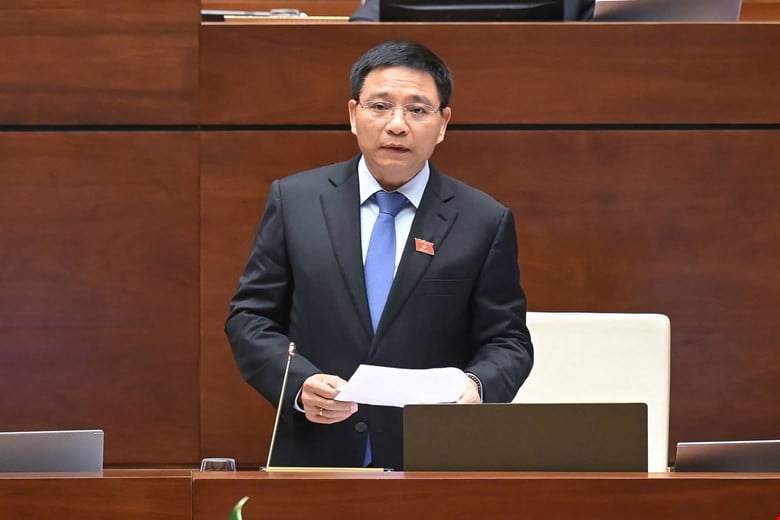
Regarding the policy's implementation period, some opinions suggest extending it to two years. Others argue that a 1.5-year period is too long and could affect its effectiveness; some agree on extending the tax reduction until the end of 2025…
Regarding this matter, Minister Nguyen Van Thang stated that the Government's proposal to extend the VAT reduction policy to 1.5 years instead of just every 6 months as before will contribute to creating momentum for economic development, consolidating and preparing the foundational elements to successfully implement the 10-year socio-economic development strategy 2021-2030, achieving GDP growth of 8% or more in 2025, and contributing to creating a solid foundation for achieving double-digit growth rates in the 2026-2030 period…
The proposal to apply a stable, long-term 8% tax rate is inconsistent with the Party and State's policy on restructuring the State budget to ensure a safe and sustainable national financial system, and the System Reform Strategy until 2030. Accordingly, the goal is to basically apply a single tax rate, and to study increasing the VAT rate according to a roadmap.
Source: https://baoquangninh.vn/chot-giam-2-thue-vat-den-het-nam-2026-3362886.html

![[Image] National Assembly discusses the implementation of the socio-economic development plan.](https://vphoto.vietnam.vn/thumb/1200x675/vietnam/resource/IMAGE/2026/04/20/1776696707422_ndo_br_img-20260420-185419-jpg.webp)

![[Photo] General Secretary and President To Lam meets with National Assembly delegates from ethnic minorities.](https://vphoto.vietnam.vn/thumb/1200x675/vietnam/resource/IMAGE/2026/04/20/1776696701056_a1-bnd-8331-3342-jpg.webp)
































































































Comment (0)