

(CLO) Ninh Binh is known as a land of spiritual significance and outstanding people, a land of heritage, the birthplace of kings, saints, and deities. More than 1,000 years ago, King Dinh Bo Linh subdued the 12 warlords, unified the country, and established the Dai Co Viet State – the first centralized feudal state of our country, with its capital in Hoa Lu, associated with three dynasties: Dinh, Ly, and Early Le.
A testament to a golden age of the nation.
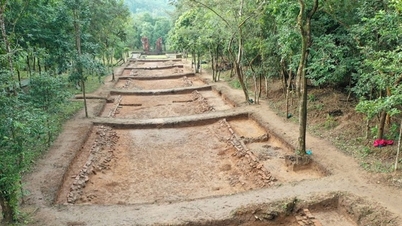
As one of the four core areas of the Trang An Scenic Landscape Complex, Hoa Lu Ancient Capital served as the capital of the Dai Co Viet State in the 10th century, possessing a rich urban culture that continues to resonate today.
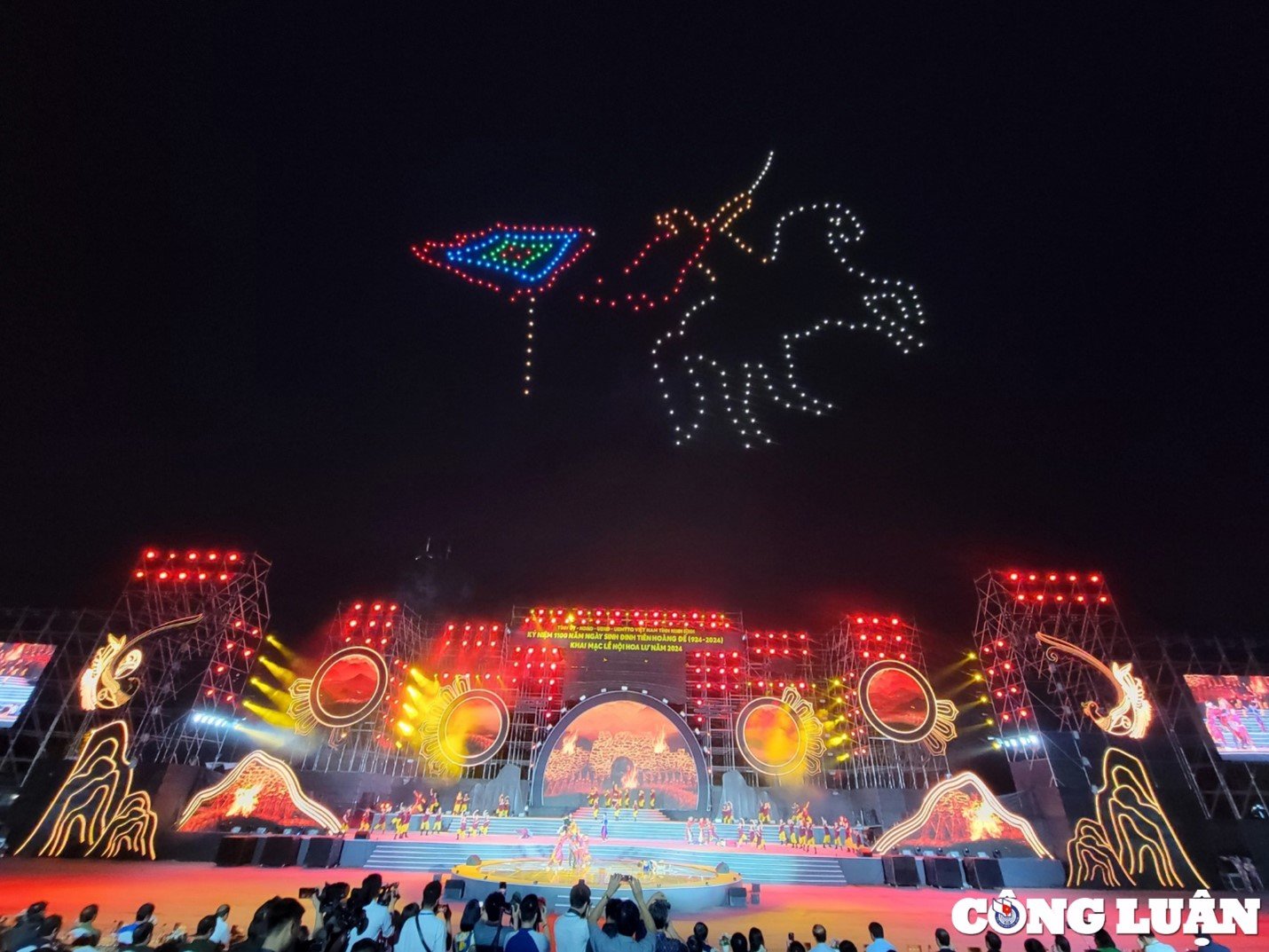
Artistic program to celebrate the 1100th anniversary of the birth of Emperor Dinh Tien Hoang and the opening of the Hoa Lu Festival.
With its undulating hills and mountains surrounding the capital like a solid screen, along with the winding Hoang Long River and the Nho Quan and Gia Vien plains with their deep moats, Hoa Lu was a land of high military value. It was in this land, in 968, that Dinh Bo Linh quelled the rebellion of the 12 warlords, ascended the throne as emperor, established the glorious Dai Co Viet kingdom, and Hoa Lu became the political center and first capital of the centralized feudal state.
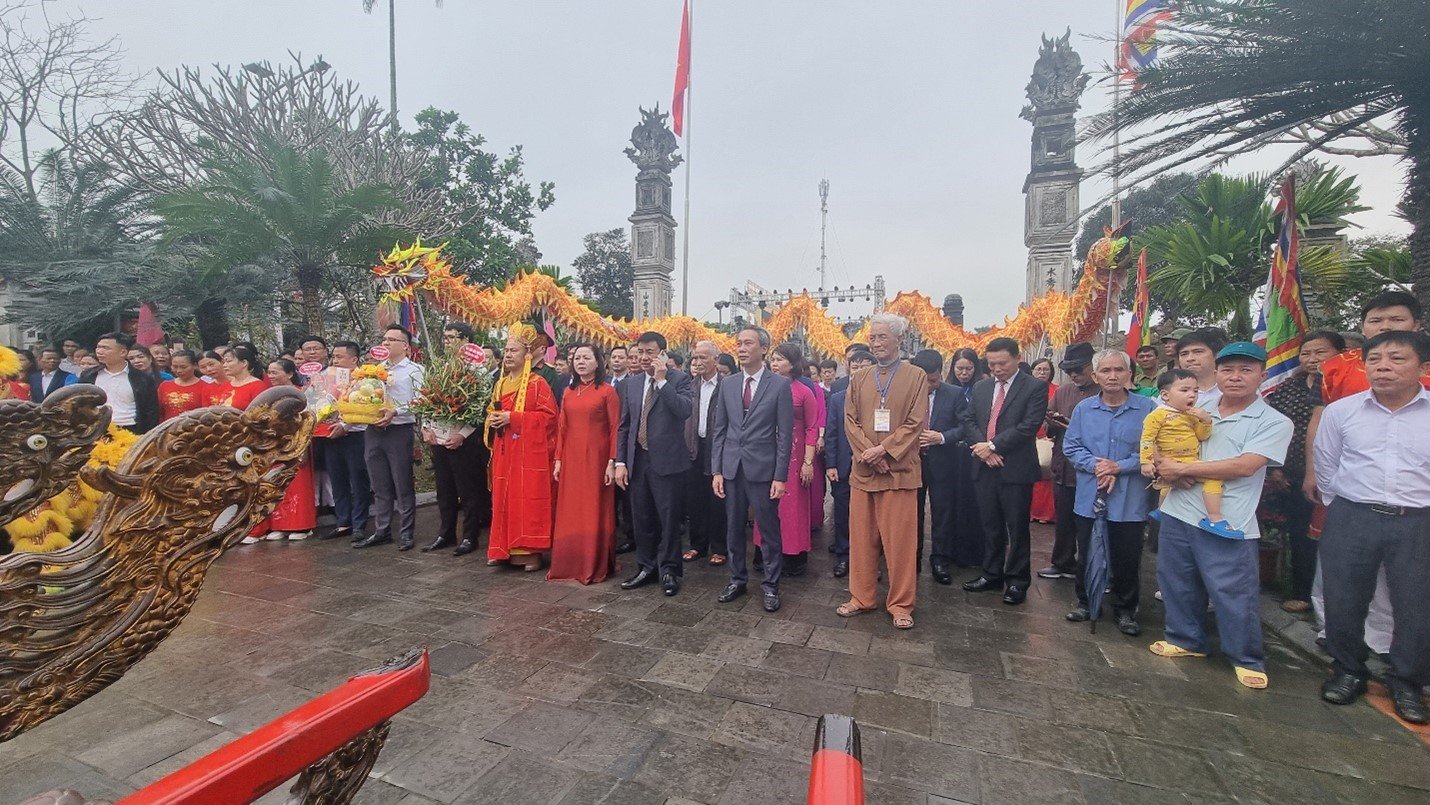
Delegates offer incense at the Temple of Emperor Dinh Tien Hoang (Gia Vien district, Ninh Binh city).
This was the first imperial capital of our country, existing for 42 years, and witnessed the glorious nation-building and defense achievements of the 12 years of the Dinh Dynasty (968 – 980), the 29 years of the Early Le Dynasty (980 – 1009), and the beginning of the Ly Dynasty (1009 – 1010).
The capital city of Hoa Lu was formed on the foundation of the region's economic , social, and cultural development. By the late 1860s, after meeting all the favorable conditions to become a capital, Hoa Lu had developed remarkably in both urban and suburban areas, becoming the largest and most representative city of the Dai Viet nation at that time.
During the Dinh-Le dynasties, Hoa Lu became a major cultural center, the origin of a golden age for the nation, opening up and laying the foundation for the flourishing development of Dai Viet civilization.
The unique characteristic of the Hoa Lu Ancient Capital area lies in its continuous settlement and community development from the time of the sea receding to the present day. Even after the Ly Dynasty moved the capital to Thang Long, this area continuously maintained diverse forms of settlement, ensuring the vitality of the heritage was sustained and enriched in the daily life and livelihoods of the inhabitants of Thang An. The heritage of the Hoa Lu Ancient Capital is manifested in life in various forms of tangible and intangible culture, spreading to other areas (place names, cultural institutions, architecture, painting, music, etc.), forming modern heritage routes.
Time flies by, yet the ancient capital remains peacefully situated there, serene but majestic, a golden testament to a glorious era of the nation. Today, visiting Hoa Lu Ancient Capital, the past, present, and future, history, natural landscape, and people seem to blend together, transporting us back to the thousand-year-old indomitable roots of the nation.
The tangible and intangible cultural heritage of Hoa Lu Capital that remains today is of exceptionally important value in the history of the nation, serving as a vivid symbol of the indomitable will, self-respect, and yearning for independence, freedom, and national unity of the Vietnamese people throughout thousands of years of history.
At the ceremony commemorating the 1,055th anniversary of the Dai Co Viet State (968-2023), Politburo member, Director of the Ho Chi Minh National Political Academy, and Chairman of the Central Theoretical Council Nguyen Xuan Thang affirmed that the legacy left by the Dai Co Viet State, King Dinh Tien Hoang, and their ancestors, and the achievements that Ninh Binh province has attained in recent years, are invaluable and form a solid foundation for the Party Committee, government, and people of Ninh Binh to move towards achieving the goal of becoming a relatively prosperous province in the Red River Delta region by 2030; contributing to the goal of making Vietnam a developing country with modern industry and high middle income by 2030, and a developed country with high income by 2045, following the socialist orientation.
A crucial resource for economic, cultural, and social development.
Through the ups and downs of history, the ancient capital of Hoa Lu has become a unique cultural region. The relics and historical sites in Hoa Lu have played and continue to play an important role in preserving and transmitting cultural values passed down from ancient times.
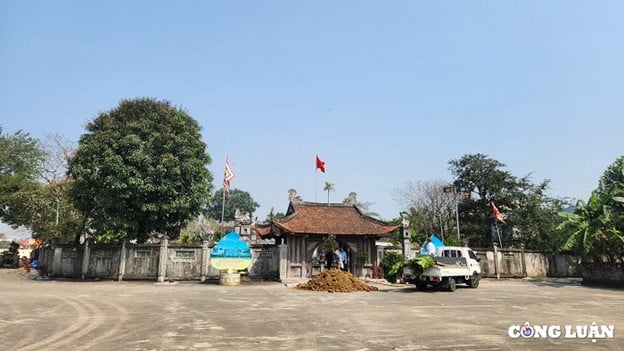
The temple dedicated to King Dinh Tien Hoang is located in Gia Phuong commune, Gia Vien district, Ninh Binh province.
Deeply aware of the immense and precious values of the Hoa Lu Ancient Capital heritage, Ninh Binh province has always valued, researched, invested in, and promoted the heritage left by its ancestors, considering it an important strategic resource to practically and effectively serve the cause of building and developing the local economy and society, especially the development of tourism and cultural industries.
Analyzing the outstanding values and unique characteristics of Ninh Binh as a driving force for socio-economic development, Dr. Phan Chi Hieu, President of the Vietnam Academy of Social Sciences, emphasized: Firstly, Ninh Binh is a land with a long history and culture: It was the capital of Vietnam in the 10th century and is associated with the careers of six kings from three dynasties: the Dinh, the Early Le, and the Ly dynasties, leaving many historical imprints. Secondly, the province has many unique advantages in terms of natural values, natural resources, and ecosystems, including the Trang An Scenic Landscape Complex, which is recognized by UNESCO as a World Cultural and Natural Heritage Site, creating conditions for Ninh Binh to develop comprehensive tourism and service industries.
Ninh Binh holds a very important geopolitical position. Formerly Hoa Lu, present-day Ninh Binh is a convergence of three spaces: the highland economic and cultural space, the delta economic and cultural space, and the maritime economic and cultural space. Furthermore, Ninh Binh is both the southernmost region of Northern Vietnam and a land connected to Thanh Hoa and Nghe An provinces, while also possessing natural and cultural characteristics similar to those of the Northwest region.
Ninh Binh has the advantage of regional connectivity along the North-South axis, as well as the strength of East-West connectivity. This unique geopolitical and economic position creates open spaces for the region. Ninh Binh has the conditions to strengthen economic, social, and cultural exchanges not only with provinces and cities in the Red River Delta, the Northern Coastal region, and the Northern key economic zone, but also with provinces and cities in the Hanoi Capital region, the Northwest mountainous region, and the North Central region.
Furthermore, Ninh Binh is blessed with a picturesque landscape of mountains and rivers, featuring many famous historical sites and scenic spots that attract the special attention of numerous tourists. In return, the people of Ninh Binh continue the ancient cultural tradition, welcoming visitors with their inherent genuineness, kindness, simplicity, and elegance.
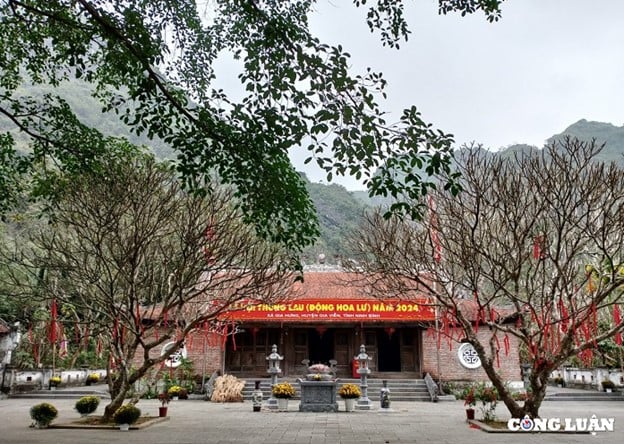
Hoa Lu Cave - The base where the hero Dinh Bo Linh started his career.
The value of the heritage of Hoa Lu Ancient Capital is being effectively utilized to create diverse tourism products. This opens up a new direction in promoting the value of local heritage, so that culture becomes an intrinsic strength, in line with the spirit of Resolution XXII of the Ninh Binh Provincial Party Congress.
Ninh Binh's tourism and cultural industries have seen significant progress and breakthroughs, yielding important results: strengthened state management of tourism and culture; improved quality and efficiency in tourism and cultural industries; increasingly improved infrastructure and technical facilities serving the cultural industry and tourism; tourism and service activities are gradually being organized and managed scientifically, professionally, and sustainably; and security, environmental hygiene, and civility are ensured.
Many high-quality, strong-branded products, deeply rooted in the cultural identity of Ninh Binh's land and people, have been developed and are initially meeting the needs of tourists, such as: ecotourism products, sightseeing and experiencing the natural values associated with the Trang An Scenic Landscape Complex; cultural and spiritual tourism products; handicraft village tourism products; traditional festival tourism products; urban tourism products; entertainment tourism; street food and culinary tourism...
Ninh Binh also collaborates with many organizations to host cultural, sports, and tourism events, music programs, fashion shows, exhibitions, and publications. Through these activities, it integrates the promotion of Ninh Binh's traditional culture to the world, contributing to affirming the beauty of this ancient capital and millennium heritage site.
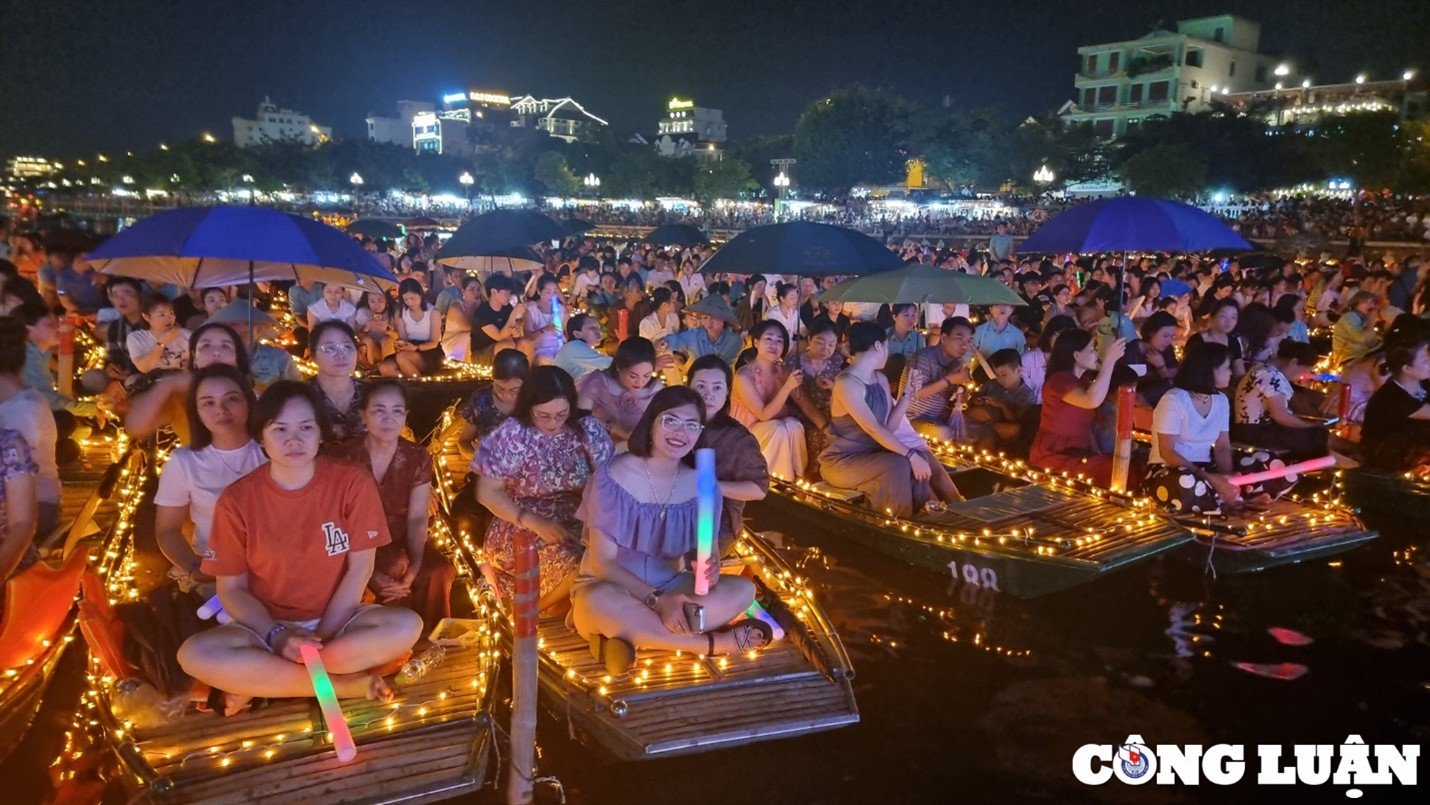
Spectators sit in boats at the "Brilliant Hoa Lu" art performance.
Conservation, preservation, restoration, and heritage preservation activities, combined with the development of historical tourism, spiritual tourism, cultural tourism, and ecotourism linked to agricultural and rural livelihood models, are being promoted to attract domestic and international tourists.
Since mid-2014, when the Trang An Scenic Landscape Complex was recognized as a World Cultural and Natural Heritage site, the demand for tourism development, cultural development, and cultural industries has increased significantly, accelerating and strengthening the process of rural urbanization, gradually elevating both urban and rural areas in the ancient Hoa Lu capital region closer to the Heritage City model.
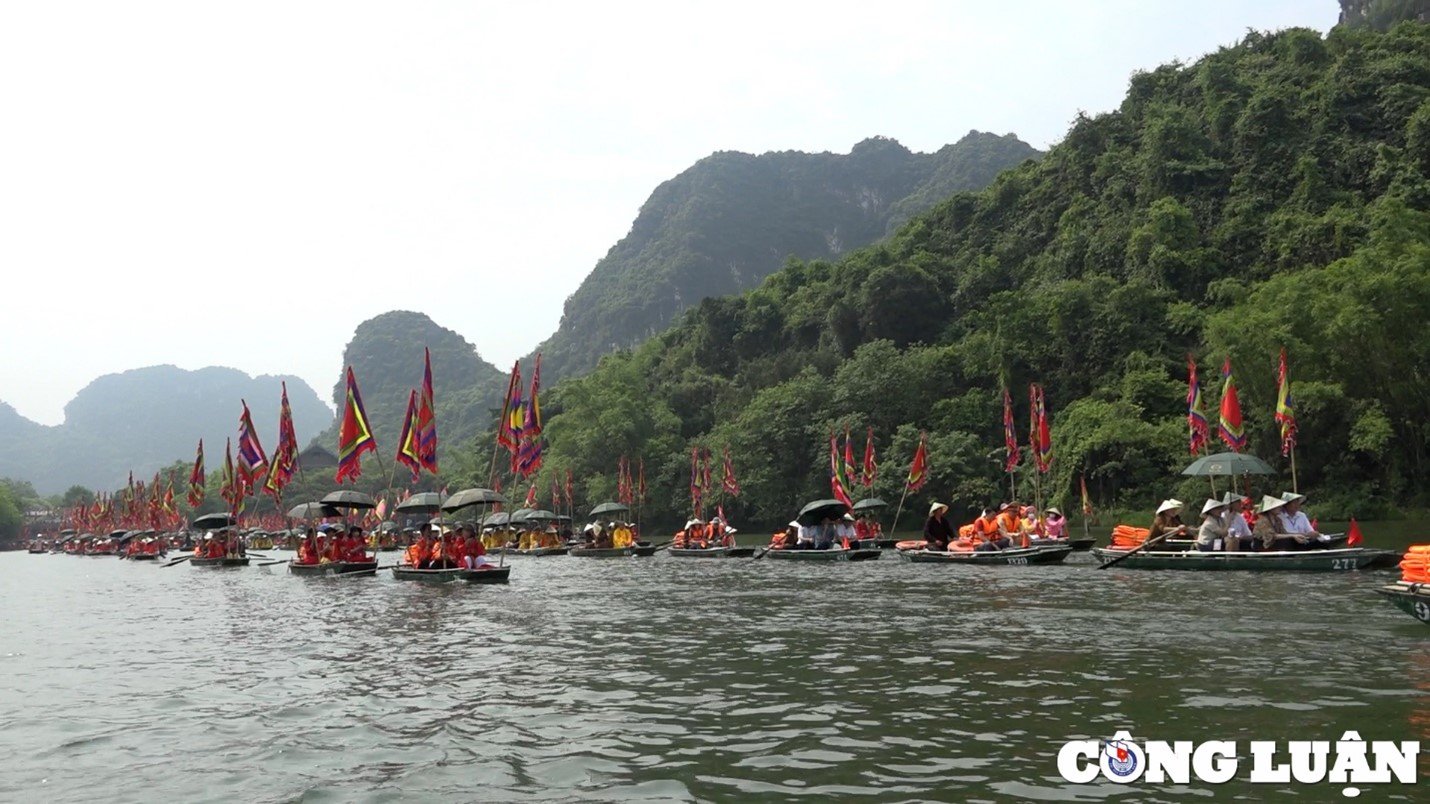
Procession on the Sao Khe River at the Trang An Festival 2024.
The process of moving towards a leading, modern, and civilized Millennium Heritage City of the country and international stature is also the process of gradually fulfilling the criteria for Ninh Binh to become a centrally-governed city.
The outstanding values of Hoa Lu, the first imperial capital of Dai Viet, as well as of this medieval city-port city nestled against the mountains, overlooking the river, and opening onto the East Sea, have established the most distinctive values of the historical and cultural space of Hoa Lu.
This is the main resource, the powerful driving force, and the fundamental advantage for Hoa Lu city in the future, elevating it to become a civilized and modern Millennium Heritage City.
Tran Anh
Source: https://www.congluan.vn/co-do-hoa-lu--dau-an-vang-son-oai-hung-with-khat-vong-and-quyet-tam-tro-thanh-do-thi-di-san-thien-nien-ky-post338266.html

![[Photo] Prime Minister Pham Minh Chinh attends the Conference summarizing and implementing tasks of the judicial sector.](/_next/image?url=https%3A%2F%2Fvphoto.vietnam.vn%2Fthumb%2F1200x675%2Fvietnam%2Fresource%2FIMAGE%2F2025%2F12%2F13%2F1765616082148_dsc-5565-jpg.webp&w=3840&q=75)








































































Comment (0)