

With rhythmic and decisive clapping of his hands on the gong, young artist Y Chum (21 years old, Xơ Đăng ethnic group) enthusiastically joins in the xoang dance with the young men and women of the Gong and Xoang Club of Kon Kơ Lôk village, Đắk Hà commune, Quảng Ngãi province (formerly Kon Tum ).
Recently, they participated in a performance program organized by the Vietnam Folk Arts Association in collaboration with the Vietnam Museum of Ethnology in Hanoi , aiming to honor and promote four typical intangible cultural heritage forms of Vietnam that have been inscribed by UNESCO: the Gong Culture Space of the Central Highlands, the Southern Vietnamese Traditional Music and Singing Art, the Ví Giặm Folk Songs of Nghe Tinh, and the Quan Ho Folk Songs of Bac Ninh.
Preserving the 'original DNA' of heritage
After the gong performance, the artisans from Kon Kơ Lôk village stayed to take commemorative photos with domestic and international tourists.
Artist Y Chum emotionally shared: “I feel very happy, grateful, and deeply thankful that the gong performance has been so well received by the people of Hanoi and tourists . I hope to take this art form further to develop and preserve this beautiful cultural heritage of my village.”
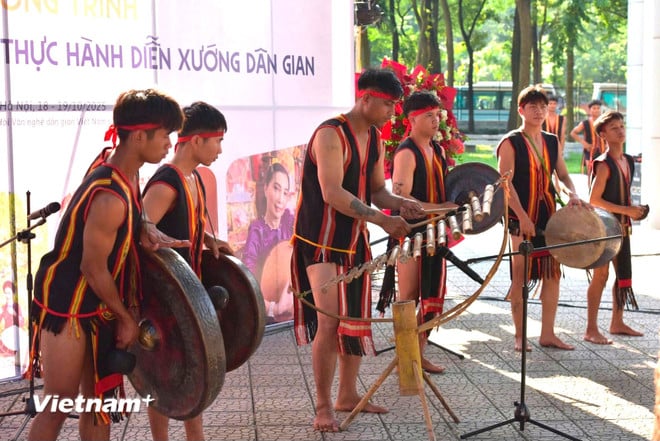
The Gong Culture Space is a representative intangible cultural heritage of humanity, recognized by UNESCO since 2005. (Photo: PV/Vietnam+)
Also participating in the performance, young artisan A Van (21 years old) said that when he was young, he was often taught to play the gong by adults, and the more he learned, the more he loved the sound of the gongs of his people. Artisan A Van also learned folk songs and traditional musical instruments, and the more he learned, the more deeply he felt connected to the folk art of the Xơ Đăng people.
"Now, besides working and performing with the elders at festivals and for visiting groups, I also help them teach the younger generation. Seeing the children enthusiastically learning the gongs, I feel like I'm reliving my younger self," artisan A Van expressed.
Mr. Tran Dinh Trung, head of the Xo Dang ethnic folk artisans' group from Kon Ko Lok village, said that folk culture, gongs, and traditional dances have been deeply ingrained in the souls of the Central Highlands people since every child is born.
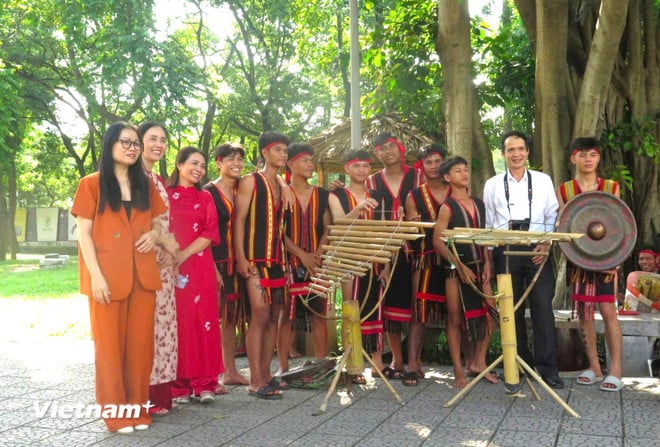
Gong artisans from Quang Ngai province pose for a commemorative photo with visitors and researchers at the outdoor exhibition space of the Vietnam Museum of Ethnology. (Photo: PV/Vietnam+)
Gongs, drums, and the music of the Central Highlands are very close to the daily lives of the people. Therefore, the transmission of folk culture within the indigenous communities, right in the cultural space of the Central Highlands ethnic groups, has many advantages and yields positive results. The preservation of folk culture allows young children to be exposed to and learn to play gongs from a very young age; some children as young as 6-7 years old begin learning to play gongs.
From the perspective of the heritage subject, artisan Tran Dinh Trung believes that the important issue is to preserve and protect the "genetic code" of gong music in particular and folk culture in general. From there, creating new performance forms, new spaces, new melodies… will not deviate from tradition but will still be suitable for modern cultural life, making gong music and folk culture attractive to the younger generation.
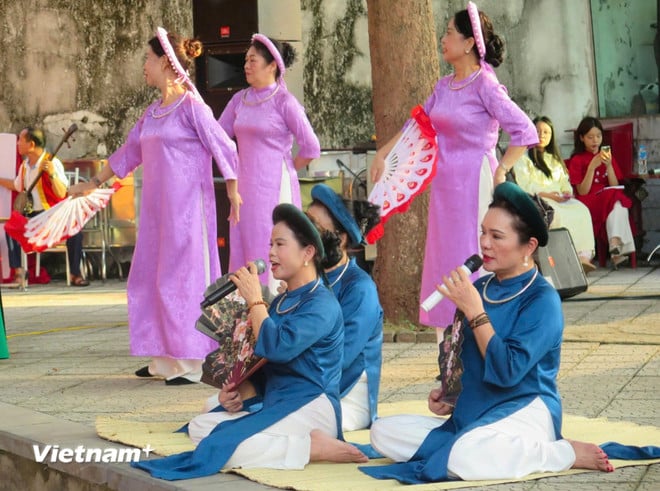
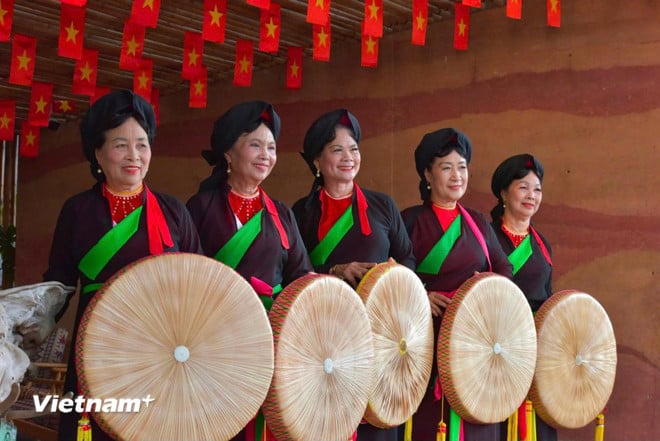
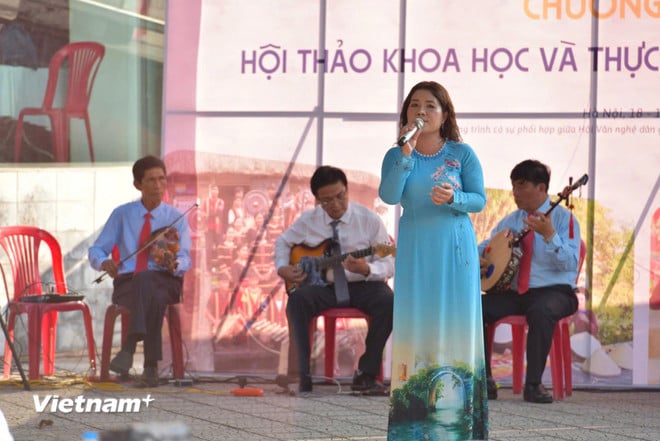
Showcasing various forms of heritage at the Vietnam Museum of Ethnology. (Photo: PV/Vietnam+)
"For example, in Kon Kơ Lôk village, there are artisans trained at art schools who have developed traditional melodies into new performances, retaining the original colors but adding new touches, helping to reach a wider audience. The important thing is to preserve the foundation; the core DNA must be preserved within the cultural space," Mr. Tran Dinh Trung emphasized.
Applying heritage to the cultural industry.
In the context of global integration and development, performing arts have become an important bridge between nations, providing opportunities to share, learn, and honor traditional values, as well as create new experiences.
This is an opportunity to affirm the role of the community, artisans, and researchers in preserving, transmitting, and promoting the value of this unique cultural heritage of the nation, while spreading the message of working together to preserve and promote cultural heritage.
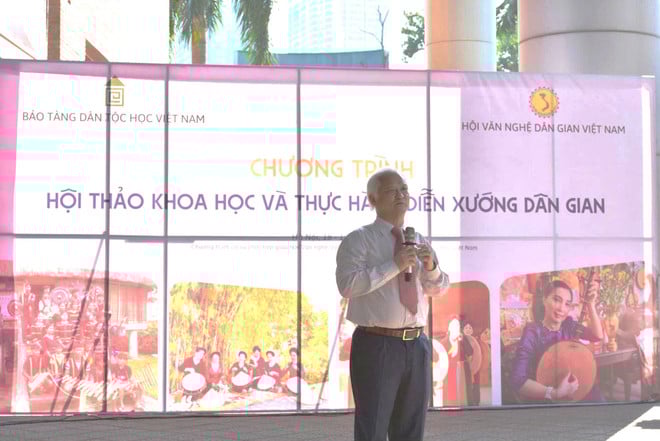
Professor-Doctor Le Hong Ly, President of the Vietnam Folk Arts Association. (Photo: PV/Vietnam+)
Professor-Doctor Le Hong Ly, President of the Vietnam Folk Arts Association, affirmed that the performance of folk culture is a vivid testament to the results of the collection, research, and transmission process that the Vietnam Folk Arts Association has persistently carried out over many years.
This is also an opportunity to promote the preservation and promotion of national cultural identity, moving towards exploiting folk cultural values in the development of cultural and creative industries in Vietnam.
“The program at the Vietnam Museum of Ethnology opens up an emotionally enriching journey of discovery through the country's heritage regions. In a space rich in cultural identity, the sounds of gongs blend with folk songs and traditional music, resonating amidst vibrant costumes, creating a vivid picture of Vietnamese folk culture,” said Mr. Le Hong Ly, emphasizing his hope for similar programs to take place at the Museum.
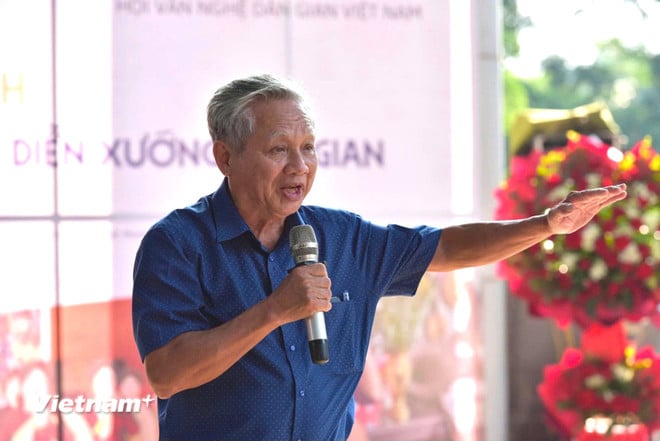
According to Mr. Nguyen Xuan Duc, in order to preserve heritage, it is necessary to identify what needs to be preserved and what needs to be changed to adapt to the times. (Photo: PV/Vietnam+)
Discussing ways to preserve heritage, Associate Professor-Doctor Nguyen Xuan Duc, Standing Committee Member of the Vietnam Folk Arts Association, believes that preservation means reviving the nation's cultural heritage.
“National culture has many different forms and types. Vietnamese folk culture is very broad, encompassing both intangible and tangible aspects, and it needs to be preserved and its values promoted in the new era. To preserve it, we need to identify what needs to be preserved and what needs to be changed to adapt to the times,” said Mr. Nguyen Xuan Duc.
(Vietnam+)
Source: https://www.vietnamplus.vn/ton-vinh-di-san-unesco-khi-am-nhac-cua-dong-bao-dan-toc-hoa-nhip-thoi-dai-post1072006.vnp

























































Comment (0)