


Youth union members in Hoang Loc commune guide residents on updating the VNeID software on their mobile phones to handle administrative procedures. Photo: Minh Hieu
In the digital age, as the fourth industrial revolution profoundly changes every aspect of life, digital transformation is not simply about applying technology. It is a comprehensive shift in thinking, leadership methods, management, production, business, and service to the people. Currently, Thanh Hoa province is strongly implementing local government activities at the commune level in a digitized environment, aiming to realize a modern, open, transparent, and people-serving administration.
Resolution No. 57-NQ/TW of the Politburo on breakthroughs in the development of science, technology, innovation, and national digital transformation states: “Promote digital transformation, apply science, technology, and innovation in the activities of agencies within the political system; enhance the effectiveness of national governance and state management in all fields, ensuring national defense and security.” Based on the Central Committee's directives and implementing the policy of merging and streamlining commune-level administrations, and establishing a two-tiered local government system from July 1, 2025, the Standing Committee of the Thanh Hoa Provincial Party Committee has identified the commune-level administrative apparatus as the place with the most direct and frequent contact with citizens and businesses, and therefore needs to be “digitized” comprehensively and synchronously. Based on that understanding, the Provincial Party Standing Committee directed the Provincial People's Committee to focus on leading the Department of Science and Technology in upgrading the information technology (IT) system, high-speed internet connection, technical equipment, and common software applications for communes and wards.
According to Tran Duy Binh, Director of the Thanh Hoa Department of Science and Technology: Following the directives of the Provincial People's Committee and guidance from the Department of Science and Technology, communes in the province have implemented the review, investment, and upgrading of IT infrastructure at newly established administrative units. Each commune must ensure 100% internal LAN network coverage, high-speed internet connectivity, a video conferencing system connected to the provincial level, shared document management software and digital signatures, and an efficient one-stop service center. More importantly, data standardization and interoperability between software and systems are being implemented synchronously. Information from the Provincial Data Center is shared with each commune; the provincial-level document management, work management, and reporting systems are all deployed to the commune level; all documents are transferred digitally, ensuring uninterrupted operation even with organizational and personnel changes.
In particular, the Department of Science and Technology has requested localities to ensure "no interruption throughout the process of receiving and handling administrative procedures at the commune level, including during periods of organizational model transformation or administrative unit mergers." This directive demonstrates the province's strong determination to maintain continuity, stability, and improve the quality of service to the people even amidst changes in the administrative apparatus.
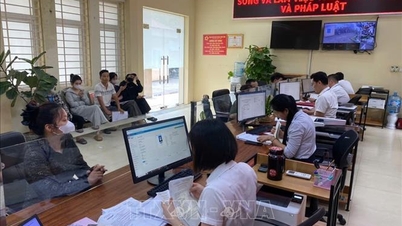
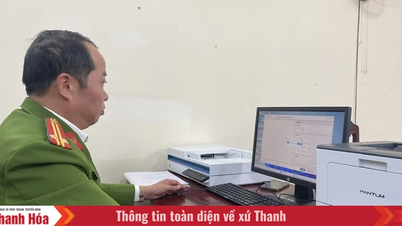
One of the key aspects of the two-tiered local government system is the transition of administrative service centers at the commune level from paper-based to digital processing. Following the provincial People's Committee's directive, all commune-level administrative procedures, from birth and death registration, household registration, land registration, notarization, social welfare, etc., must be processed electronically. Inter-level procedures are conducted via digital platforms with synchronized data, minimizing the need for citizens to travel. The commune-level administrative service centers are equipped with devices to assess citizen satisfaction, contributing to positive pressure on commune-level officials to change their work style, increase productivity, and reduce inconvenience.
Notably, to ensure a "smooth digital transformation process," the Provincial Party Standing Committee requested the establishment of community digital technology teams at the grassroots level, mobilizing young cadres, union members, association members, etc., to participate in supporting people in using online public services, especially the elderly, ethnic minorities, and vulnerable groups.
Practical implementation in Thanh Hoa shows that for the two-tiered local government system to operate effectively, the commune level – the closest to the people – must have sufficient capacity, infrastructure, and, most importantly, the political will to innovate. When each commune becomes a "central data hub," a "digital touchpoint" for the people, digital government is no longer a concept, but a vibrant reality in every daily administrative transaction. Digital transformation is no longer an opportunity, but a vital solution for a modern, transparent, and service-oriented administration.
Minh Hieu
Source: https://baothanhhoa.vn/co-hoi-vang-cho-quan-tri-dia-phuong-255126.htm
























































































Comment (0)