

Heritage tourism is a cultural journey with profound meaning. It's an opportunity for tourists to experience and gain a deeper understanding of history, culture, and the revolution at historical sites. From this, they can better understand their ancestral roots and appreciate the immense contributions of their forefathers to their homeland and country.
With the 1100th anniversary of King Dinh Tien Hoang's birth approaching, the number of visitors coming to Thung Lau Cave and Thung La Temple (Gia Hung commune) – a historical site associated with the time when King Dinh Tien Hoang tended buffaloes while pursuing his great ambitions – has increased significantly.
Dao Thi Thanh Thuy, a student from Gia Vien B High School, along with her classmates, chose Thung Lau Cave and Thung La Temple as the destination for their trip to the historical site. Thanh Thuy excitedly shared: "I'm from Gia Phuong commune, where the temple of King Dinh Tien Hoang is located. These days, my friends and I want to visit Thung Lau Cave to learn more about where King Dinh used to herd buffalo, cut grass, and practice military drills with reeds to build his great empire. This is my first time here. Not only will I get to admire the beautiful natural scenery, but I will also hear many interesting stories about the achievements of King Dinh Tien Hoang. These are valuable resources for young people like us."
Mr. Bui Trong Tinh, Vice Chairman of the Gia Hung Commune People's Committee, said: On the site of the former ramparts of King Dinh Tien Hoang, the people built a small three-chambered temple to worship King Dinh Tien Hoang along with Saint Nguyen Minh Khong. Today, with the attention of the State, the local government, and the contributions of the people of the homeland, the temple has been renovated and become a National Historical Relic Site.
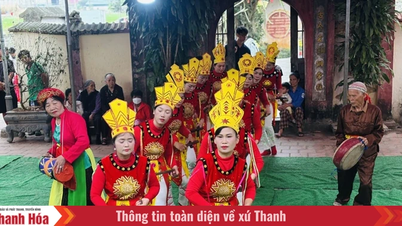
Every year, on the 10th day of the first lunar month, the village holds the Hoa Lu Cave Festival. On these occasions, in preparation for the 1100th anniversary of the birth of King Dinh Tien Hoang, many local people and tourists from all over come here, both to pay respects and to learn about the historical stories of the king who unified the 12 warlords and brought the country under one rule. Notably, many groups of students from schools inside and outside the province participate in this pilgrimage. Many schools have chosen Thung Lau Cave as a place for experiential learning and a journey back to their roots.
Gia Viễn district has 38 festivals. These include 1 provincial-level festival (Bai Dinh Pagoda Festival), 2 district-level festivals (Nguyen Thanh Temple Festival - Gia Thang and Gia Tien communes and King Dinh Temple Festival - Gia Phuong commune), 9 commune-level festivals, and 26 village-level festivals.
Ms. Vu Thi Duoc, Vice Chairman of the Gia Vien District People's Committee, said: " The spring festival is a community-based spiritual and cultural activity, one of the unique forms of heritage that contributes to the cultural identity of each ethnic group and locality. Through it, we express gratitude, recall the history and merits of our ancestors who contributed to building and defending the nation, protecting national independence throughout history."
Leveraging its advantage as a locality rich in historical relics, Gia Vien district has implemented a program to introduce experiential tourism tours linked to the preservation and promotion of local historical and cultural values with the theme "Returning to the Roots". This experiential tour is part of a series of tourism development activities in the district in the coming years, targeting students with two routes: "Following in the footsteps of King Dinh Tien Hoang" and "Returning to the origins of Saint Nguyen". This activity aims to educate students about the historical and cultural values of their homeland and to promote investment attraction and sustainable tourism development…
Non Nuoc Mountain is a landmark associated with many historical events of the country. It served as a forward outpost of the Hoa Lu capital in the 10th century, a place that rallied the people's fighting spirit against colonial and imperial invaders. It also preserves dozens of poems and literary works by many kings, princes, generals, famous figures, and poets from thousands of years ago. This special national historical site and scenic spot always attracts a large number of people and tourists from all over the world.
Spending weekends visiting and admiring the scenery of Non Nuoc Mountain has long been a habit for teacher Duong Thi Van of Truong Yen Secondary School (Hoa Lu). Ms. Van shared: "My family and I have come here many times. Each time I visit this place, I am filled with pride because my homeland has a mountain that bears many historical and cultural imprints. I sincerely hope that translators and researchers will fully explore the meaning of the poems left by our ancestors, thereby passing on to the younger generation so they can understand and appreciate the beauty of these poems."
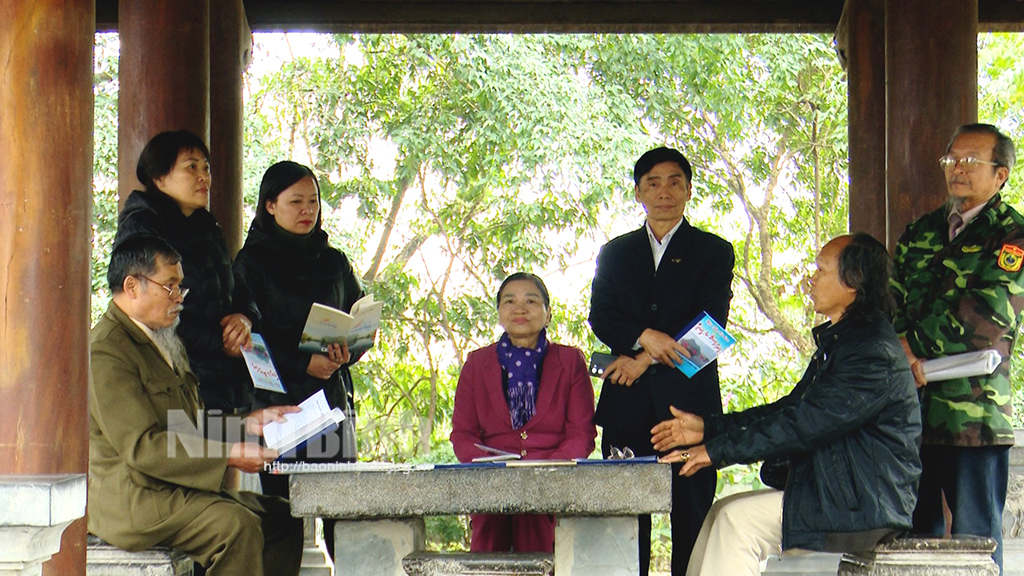
Ninh Binh proudly boasts being the first capital of Vietnam in the 10th century, the birthplace of the Dai Co Viet State, a land associated with the careers of six kings from three dynasties - Dinh, Early Le, and Ly - with glorious historical imprints of the nation, along with a rich and diverse system of tangible and intangible cultural heritage.
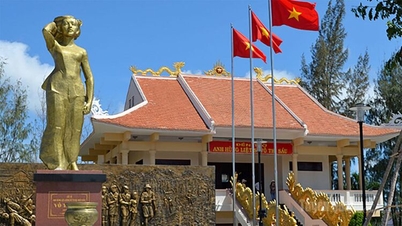
The province has 1,821 inventoried relics, of which 395 have been classified, including 314 provincial-level relics, 81 national-level relics (including 3 special national relics, 1 world cultural and natural heritage site), and 5 national treasures. Many historical and cultural relics and scenic spots have been and are being invested in, restored, and upgraded to serve the religious needs of the people and to serve tourists for sightseeing, research, and tourism.
This is a great advantage for our province to develop heritage tourism. By visiting these historical and cultural sites, tourists can explore and learn about historical destinations, thereby fostering patriotism, national pride, and expressing gratitude and remembrance to our ancestors and forefathers.
To make heritage tourism truly attractive, localities possessing historical sites have made many efforts in developing suitable tour programs, integrating recreational and experiential activities appropriate for all participants. Through this, they convey the knowledge and meaningful messages inherent in the sites. At the same time, they enhance the promotion and marketing of new tourism products, keeping pace with trends and attracting the attention of domestic and international tourists.
Dao Hang - Minh Quang
Source
![[Image] Hanoi's urban life under the challenge of a "scorching hot" environment](https://vphoto.vietnam.vn/thumb/1200x675/vietnam/resource/IMAGE/2026/05/25/1779706979265_nang-nong-t5-2026-minh-duy-7-4636-jpg.webp)


![[Image] Close-up view of the interchange connecting the two expressways and Long Thanh Airport.](https://vphoto.vietnam.vn/thumb/1200x675/vietnam/resource/IMAGE/2026/05/25/1779703378210_ndo_br_z7863716673926-224453a31600126cce10622af6290afd-4549-jpg.webp)
















































































Comment (0)