

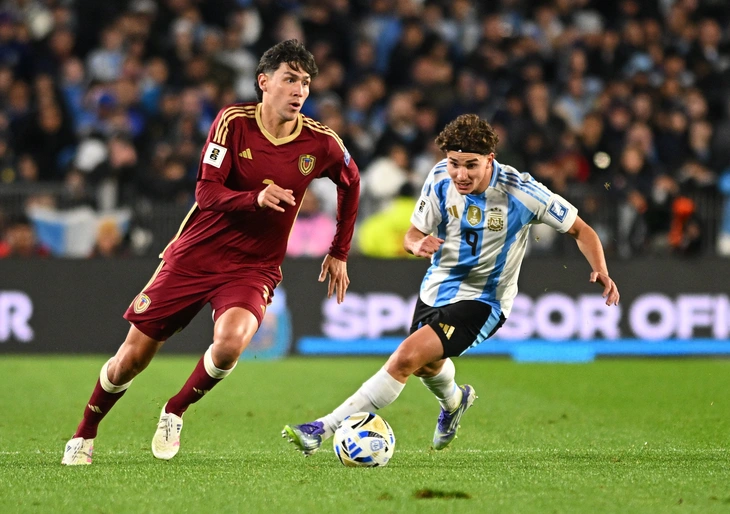
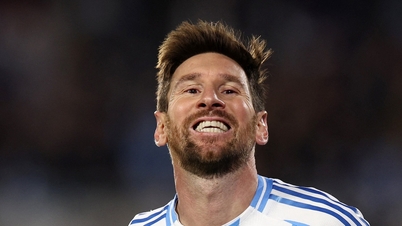
The constantly fragmented FIFA Days schedule creates many difficulties for South American players playing in Europe - Photo: REUTERS
The decision was made to combine the two international match periods in September and October into one, in order to reduce the amount of constant travel required from the players.
Restrict movement.
For many years, top European clubs have complained about the fragmented FIFA Days schedule at the beginning of the season. Specifically, FIFA Days take place once a month, each lasting about 10 days, and consecutively over three months: September, October, and November.
Such a schedule is considered extremely difficult for teams with many players from South America, Africa, and Asia. Simply put, in terms of travel, players from South America often have to spend almost a full day flying from Europe back to their home country. Then, they have to spend almost another full day traveling from South America to Europe.
Some teams, like Liverpool, have an unwritten rule: they give their South American players a complete rest in their first match after FIFA Days. This is because when these players fly back to Europe from their home countries, they usually land on Thursday, only to likely have to play on Saturday. Such a schedule is considered too harsh and unscientific for top-level football.
And the more FIFA Days there are, the more disadvantaged clubs become. With consecutive FIFA Days periods in September, October, and November, clubs find it incredibly complicated to manage player fitness and avoid injuries.
Everyone was happy.
Furthermore, the old FIFA Days schedule was criticized for making things difficult for everyone. Club seasons usually start at the end of August. During this period, many players – especially those who have just transferred clubs – are in the process of adapting and getting ready. This is also the time when they are most susceptible to injury.
And then, after every 3-4 club matches, they have to return to play for the national team. After playing 2 national team matches, they return to play 3-4 club matches, and then return to the national team again... Such rapid changes are considered completely unsuitable for players at the start of the season. Many stars even need several months of continuous play to adapt to a new club.
Even national teams are unhappy. Many head coaches have complained that the schedule of playing two matches, then taking a month off, then playing two more matches... makes it impossible for them to implement tactics and assemble a team. At the same time, this often leaves national team coaches without the services of their preferred players.
Coach Wenger even suggested that in odd-numbered years (when there are no World Cups or European Championships), FIFA could create a very long FIFA Days schedule to hold qualifying matches all at once. According to Coach Wenger's proposal, FIFA should only have 2-3 FIFA Days periods in a calendar year, instead of the previous 5.
At least the suggestions from manager Wenger and the clubs have been heard to some extent by FIFA, albeit rather late. From next year, the world football governing body will combine the two international match periods in September and October into one. Initially, the FIFA Days schedule for this period will run from September 21st to October 6th, a total of 16 days, one and a half times longer than the current 10-day period.
It's a rather late decision, but better late than never.
Source: https://tuoitre.vn/fifa-qua-cham-chap-20250911225948111.htm

![[Image] Nearly 125,000 Hanoi students completed the Literature exam for the 10th grade entrance exam.](https://vphoto.vietnam.vn/thumb/1200x675/vietnam/resource/IMAGE/2026/05/30/1780117233041_ndo_br_thiet-ke-chua-co-ten-2-png.webp)



















































































Comment (0)