


The Cay Thi Temple is located within the Chung Chinh mountain scenic area.
Located on Ngưỡng Sơn mountain, the temple dedicated to Thái úy Lý Thường Kiệt – a national historical and cultural relic – retains its original, ancient architectural style. Thái úy Lý Thường Kiệt (1091-1105), whose real name was Ngô Tuấn, was a renowned general during the Lý dynasty, who made significant contributions to the "defeat of the Song dynasty and pacification of Champa." He was famous for being an upright and wise official and for his role in developing this region. After his death, to show their gratitude, the local people built a temple to worship and commemorate him. Initially, it was just a small temple, but in the 17th year of Gia Long's reign (1818), the entire temple was rebuilt. In 2018, the temple underwent a major renovation, becoming more spacious and imposing while still preserving its ancient charm.
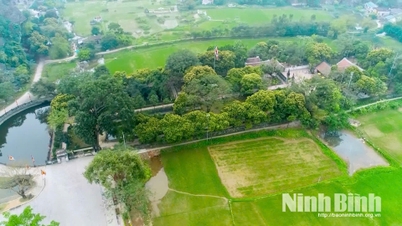
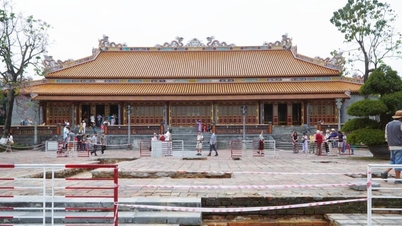
The temple is built on a "mountain-backed, water-facing" plot of land, with its back against Ngưỡng Sơn mountain and its gate facing Lèn river, creating a stable and auspicious setting. The temple has a five-bay, two-wing architectural style. The roof is covered with yin-yang tiles. The columns and beams are intricately carved with patterns of dragons, mythical creatures, turtles, phoenixes, and flowers. On the 15th and 1st of each lunar month, local people always come to the temple to offer incense and worship. The grounds of the historical site are kept clean, and the landscape is harmoniously maintained, creating a sense of tranquility for locals and tourists. When visiting this ancient temple, locals and tourists can use their smartphones to scan the QR code to read information and introductions about the site.
More than just a memorial to a distinguished national general, the temple has become a familiar cultural and spiritual center. Every year, the local people hold a festival on the 25th of January and a memorial service on the 2nd of June (lunar calendar). These cultural and spiritual activities contribute to preserving and promoting traditional cultural values; educating future generations in Ha Trung about patriotism and historical pride.
Mr. Nguyen Van Xo, the temple's caretaker, said: "We always understand that preserving the temple is not just about maintaining a place of worship, but about preserving history and the pride of our homeland. Every day I clean to ensure environmental hygiene, check the lighting and electrical systems to ensure fire safety. I also emphasize the importance of protecting the relics and artifacts in the temple, and encourage locals and visitors to offer incense in the right place and according to proper rituals, so that the site always remains solemn."
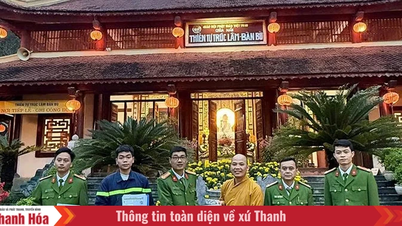
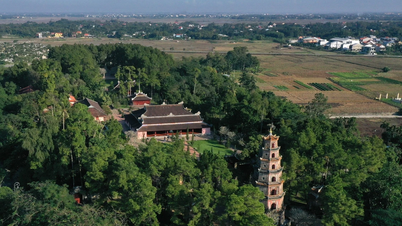
Leaving the Ly Thuong Kiet temple and following the Len River dike, the Chau De Tu temple (or Cay Thi temple) appears peacefully amidst the expansive natural landscape. The temple is nestled against Chung Chinh mountain, with its gate facing the Len River. Chau De Tu is a saint in the Four Palaces of the Mother Goddess religion of Vietnam. Chau De Tu – the fourth in the Four Palaces of the Mother Goddesses, with the title of Princess Chieu Dung – is a close attendant of the Mother Goddess. Chau De Tu performed many meritorious deeds in supporting the king and the country, and was entrusted with guarding the waterways of Ha Trung. The temple is located on a road connecting many famous temples and pagodas: Han Son temple, Co Bo temple. For many years, the temple has been closely associated with the religious life of the people in the region, worshipping the Three Palaces of the Mother Goddess. In recent years, the local authorities have paid more attention to protecting the relics, and Cay Thi temple has not only preserved its original solemnity but has also become a highlight in the cultural and tourism landscape of Ha Trung. The temple caretaker, Tran Anh Tuan, said: "To preserve the culture, we always focus on protecting the relics and practicing the worship of the Three Realms Mother Goddesses in the right way, ensuring the uniqueness and sacredness of the belief."
After the merger, Ha Trung commune has 13 historical relics, including 2 national-level relics; 4 traditional festivals and folk performing arts of the Ma River folk singing tradition. Recognizing the role of cultural heritage, the commune's Party committee and government have implemented many solutions to preserve, protect, and promote traditional cultural values in accordance with the local conditions. The management and protection of relics, artifacts, and religious objects within these sites, the organization of festivals, and the development of grassroots cultural life are emphasized and placed in a harmonious relationship between preservation and development, between preserving identity and meeting the increasingly high spiritual needs of the people. Therefore, the commune's relic and scenic spot management board, abbots of temples, temple caretakers, and shrine keepers always strictly comply with the legal regulations on relic protection. The relics are protected, restored, and their value is promoted. Over the past four years, historical sites such as Binh Lam communal house, Chue Cau communal house, and Phu Thuong communal house have been restored and renovated. Traditional festivals are organized in accordance with local customs and traditions, ensuring solemnity, economy, and civility, thereby meeting the religious needs of the people and contributing to traditional education and fostering pride in the homeland.
According to Mai Van Thanh, Vice Chairman of the People's Committee of Ha Trung commune: "The commune identifies the preservation and promotion of cultural heritage values as an important task to create resources for sustainable local development. In the process, the commune prioritizes preserving the original elements of relics and heritage sites, while linking preservation with the promotion of their value, serving the spiritual life of the people and developing sustainable tourism. In the coming time, the locality will continue to review and develop plans for the restoration, repair, and prevention of degradation of relics, and the restoration and maintenance of intangible cultural forms. At the same time, we will strengthen propaganda to raise awareness and encourage people to participate in preservation, so that culture truly becomes the spiritual foundation and driving force for the development of the locality.”
Text and photos: Thùy Linh
Source: https://baothanhhoa.vn/giu-mach-nguon-chay-mai-274011.htm
![[Photo] Prime Minister Pham Minh Chinh receives the Director of RMIT University Melbourne (Australia)](https://vphoto.vietnam.vn/thumb/1200x675/vietnam/resource/IMAGE/2026/04/02/1775142120087_thiet-ke-chua-co-ten-2026-04-02t214220784-png.webp)







![[Infographics] Cultural, sports and tourism events in Thanh Hoa province in April 2026](https://vphoto.vietnam.vn/thumb/402x226/vietnam/resource/IMAGE/2026/04/02/1775102507332_infographics-ca-w1200t0-di2613d199d4100842t11358l1-skt4-026.webp)






































Comment (0)