

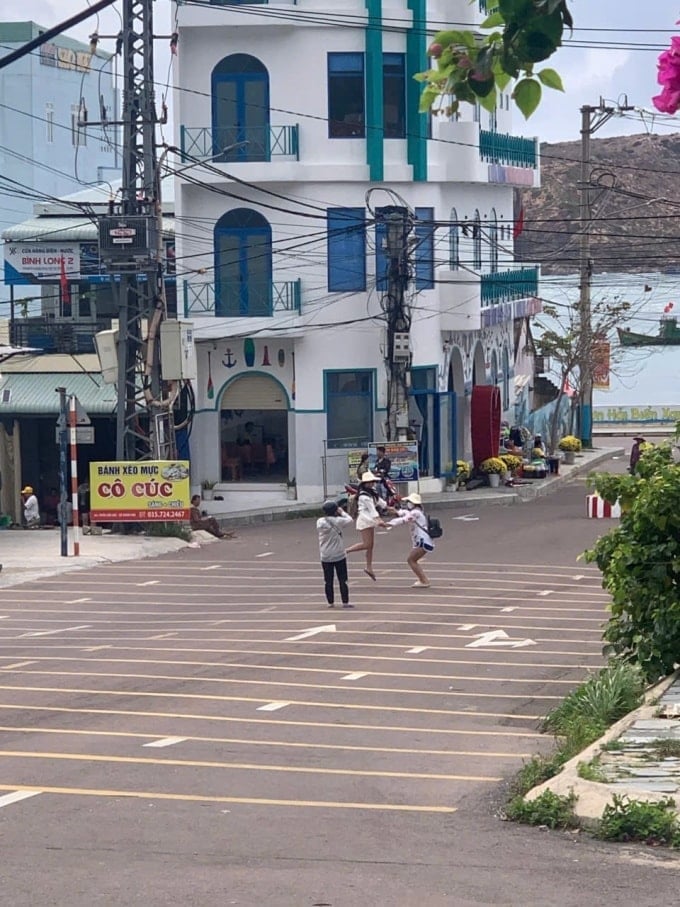
In mid-February, social media platforms were abuzz with a trend of checking in at the "Dali Pass." The trend recreated the scenery of Cang'er Dadao – the most beautiful road in Dali City, Yunnan Province, China – with its bustling street scenes set to the song "Sick Enough to Die." Several locations in Vietnam, such as Vung Tau, Da Lat, and Quy Nhon, which have similar scenery, suddenly became "Dali Pass" destinations, attracting tourists to take photos and videos.
Lam Minh, 28, a social media content creator, didn't miss out on this trend. He chose Da Lat to "follow the trend," specifically the Suong Nguyet Anh slope in Ward 9, which has a similar landscape to Dai Ly slope. Minh woke up at 4 a.m. to film the sunrise video. Arriving at the location at 5 a.m., he had to wait 15-20 minutes for his turn to film and take photos.
These trending videos help Minh increase engagement and gain more followers on social media. Due to the nature of his work, he always has to keep up with trends, even "getting ahead" to find new destinations and create engaging content.
"Some of my trips are exhausting, not for enjoyment or relaxation; taking photos and videos to post online is a chore," Minh said.
For Ha Linh, who lives in Ho Chi Minh City, following travel trends and checking in at popular destinations brings her joy. Linh has traveled with friends to Hanoi to see a Black Pink concert, taken "hometown cha-cha-cha" photos on Phu Quy Island, checked in at the metro station in Ho Chi Minh City, and recently filmed a video of the "Dai Ly Pass" in Da Lat. Linh says that these times of "following trends" inevitably involve crowds and long waits.
"Where to go and what to do during a trip is a personal choice, as long as you don't violate the destination's regulations, avoid causing noise or littering, then following trends for fun is nothing to be condemned," Linh said.
Mr. Nguyen Huy Hoang, CEO of Klook Vietnam, stated that trend-following travel always has two sides. Some trends have a positive impact on destinations in terms of visitor numbers, revenue, and offer new experiences for tourists, even becoming travel trends themselves. However, many trends negatively affect the lives of local people, such as obstructing traffic, causing disorder, and leading to overcrowding at destinations.
According to Mr. Hoang, young tourists like Gen Z and Millennials are always eager to stay updated on the latest information. Trends from this group bring a new look to tourism, such as the wave of attending concerts at popular destinations. Many Vietnamese tourists don't hesitate to spend tens of millions of dong to buy tickets to see Taylor Swift's "The Eras Tour" held in Singapore early last year. After the event, the island nation earned $372 million in tourism revenue.
According to the Hanoi Department of Tourism, the Black Pink concert in July 2023 also attracted a large number of domestic and international tourists to Hanoi, generating an estimated revenue of 630 billion VND.
Mr. Hoang stated that music tourism is no longer a fleeting trend but has become a sustainable trend in the industry. More and more people are willing to travel long distances to attend major music events, turning each trip into a comprehensive experience encompassing tourism, entertainment, culture, and local exploration.
Some little-known destinations suddenly become sensations after photos and videos of check-ins on social media. A prime example is Phu Quy Island, which went from a deserted island to a tourist hotspot in 2022, after photos following the "hometown cha-cha-cha" trend – the title of a Korean drama that aired in 2021. Phu Quy Island evokes memories of the setting in this film.
"However, many trends have become a source of fear for locals and destinations," Mr. Hoang said, adding that not only in Vietnam but also in many tourist destinations around the world, people are facing tourism overload due to crowds of tourists flocking to check in and take photos. Some trends even pose dangers to tourists themselves.
In Otaru, Japan, in January, a 61-year-old female tourist was hit by a train while taking photos on the tracks at Asari Station – a station famous for its scenic views of trains passing through a sea of white snow.
Following the "Dai Ly Slope" trend in Quy Nhon, many tourists caused traffic safety hazards. The Nhon Hai commune police reported that on February 16th, they summoned 10 people to the station to sign pledges not to repeat the offense, as these tourists were standing in the middle of the road filming videos. However, this situation continued to recur in the following days.
Following travel trends is a popular activity among most Vietnamese travelers today. A 2024 study from Booking.com revealed that 69% of Vietnamese Gen Z use social media platforms like Instagram, TikTok, Facebook, and YouTube to find travel ideas and inspiration.
A 2024 Klook Travel Pulse survey also indicated that 96% of Asia-Pacific travelers actively share their travel experiences on social media. The credibility of online recommendations is increasing, with non-celebrity individuals considered the most reliable source of information. Over 80% of travelers in the region, including 91% of Vietnamese, book travel services based on reviews from content creators, with video (63%) being the most popular format due to its visual appeal.
According to many psychologists, people embrace new trends due to FOMO (fear of missing out), the desire for community connection, and the influence of social media. When a trend becomes popular, people tend to imitate it to avoid being left behind. Platforms like TikTok and Facebook amplify trends, causing them to spread rapidly. Celebrities and KOLs also play a crucial role in influencing their followers. Overall, the combination of crowd psychology, technology, and marketing strategies makes it easy for new trends to become social phenomena, attracting many participants in a short period of time.
Describing himself as a traveler who avoids crowds, Phan Trong Nhan, 30, from Dong Nai, says he usually chooses familiar restaurants or lesser-known locations to enjoy a leisurely trip.
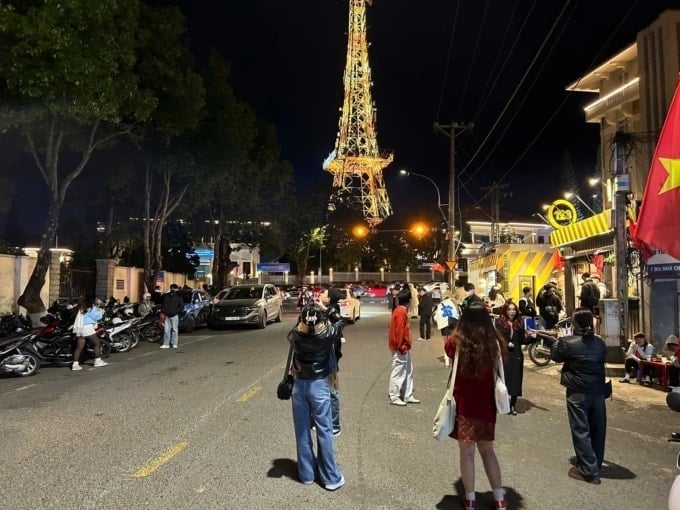
The male tourist said that every few weeks, a new trend emerges on social media. At many tourist destinations, he encountered tourists blindly following trends, only caring about checking in and neglecting the experience. During a visit to a museum in Hanoi, Nhân witnessed several young people who didn't come to learn but spent the whole time taking pictures from different angles, editing them, and then leaving.
"Following travel trends isn't wrong, but disregarding regulations, affecting the experiences of others, or disturbing locals just to show off and prove you're keeping up with the trend is unacceptable," Phan Nhan said.
HQ (according to VnExpress)Source: https://baohaiduong.vn/hai-mat-cua-du-lich-du-trend-405716.html
![[Photo] General Secretary and President To Lam presides over a working session with the Central Policy and Strategy Committee on the development of the materials industry.](https://vphoto.vietnam.vn/thumb/1200x675/vietnam/resource/IMAGE/2026/05/21/1779359935432_a3-bnd-3129-1412-jpg.webp)


![[Photo] National Assembly Chairman Tran Thanh Man working with the Standing Committee of the Law and Justice Committee](https://vphoto.vietnam.vn/thumb/1200x675/vietnam/resource/IMAGE/2026/05/21/1779378929214_ndo_br_1-4610-jpg.webp)














































































Comment (0)