Cây mắc ca đang dần bén rễ trên những ngọn đồi heo hút miền Tây xứ Nghệ. Thành công bước đầu từ xã Thông Thụ (Quế Phong) là tín hiệu tích cực, nhưng để tránh lặp lại những thất bại từ quá khứ, cần có chiến lược trồng khảo nghiệm khoa học, hỗ trợ kỹ thuật sát sao và đặc biệt là xây dựng được chuỗi tiêu thụ ổn định.
Báo Nghệ An•14/06/2025
Clip: Thanh Phúc - Khánh Ly
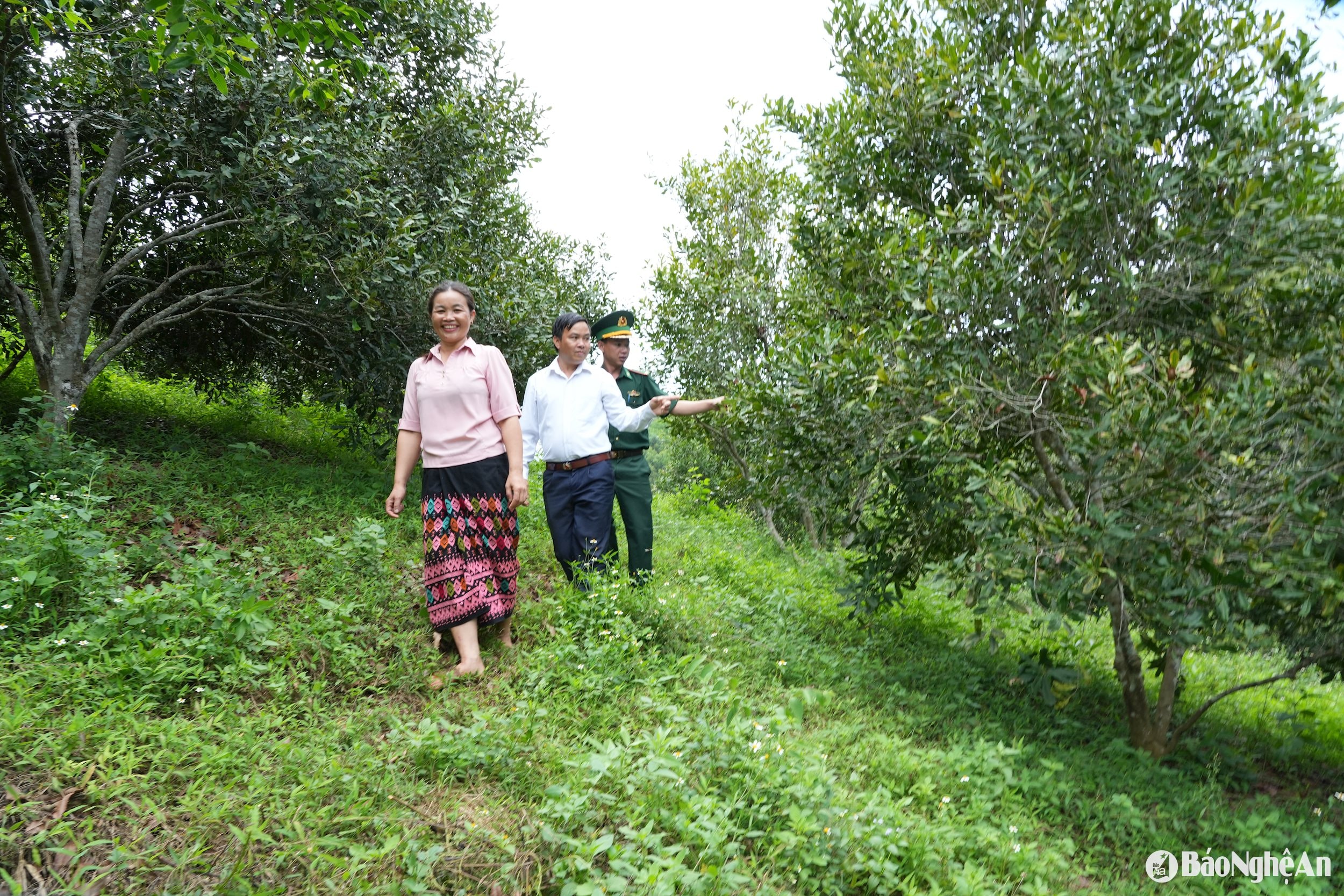
Vườn mắc ca xanh mướt hơn 1 ha của gia đình ông Hà Văn Tâm và bà Vi Thị Quang ở bản Mường Piệt, xã Thông Thụ, huyện Quế Phong – người tiên phong đưa cây mắc ca về đất Thông Thụ. Sau khi tìm hiểu và vào tận Đắk Lắk xem, ông Tâm đã mua giống cây mắc ca đưa về trồng thử nghiệm. Ảnh: T.P
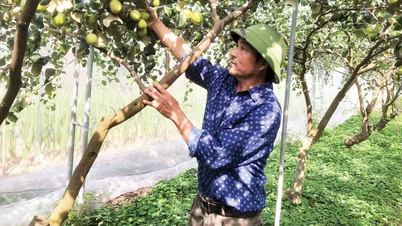
Hiện, vườn cây mắc ca đã trồng 4 năm, ra quả đều và ổn định, minh chứng cho việc cây phù hợp với khí hậu, thổ nhưỡng của vùng. Ảnh: K.L
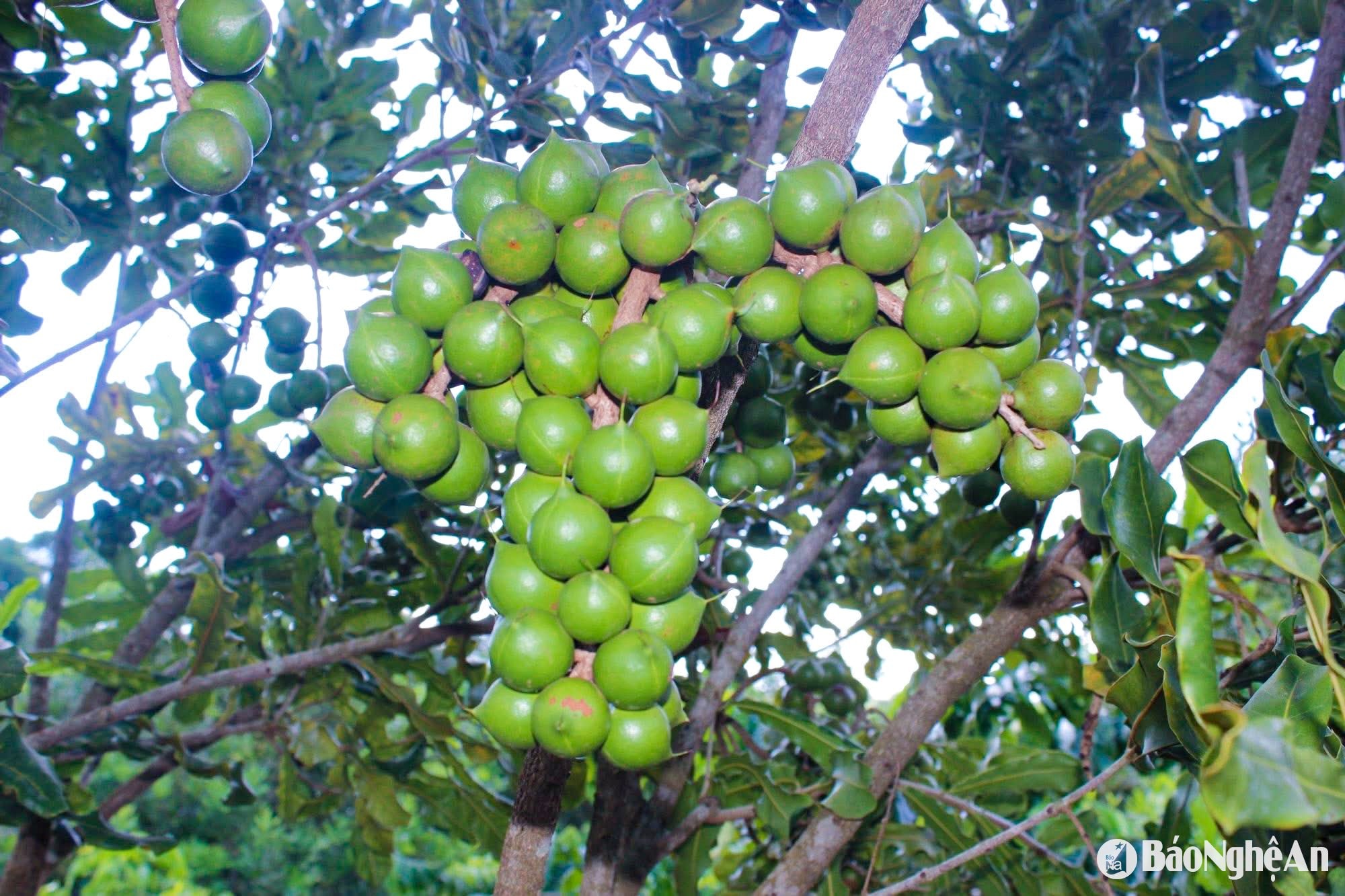
Bà Vi Thị Quang bên gốc mắc ca trĩu quả. Nhờ vườn cây hơn 370 gốc, mỗi năm gia đình bà thu nhập từ 70 – 80 triệu đồng. Ảnh: T.P
Cây mắc ca cho quả ổn định từ năm thứ tư trở đi, dễ chăm sóc và ít sâu bệnh. Ảnh: K.L
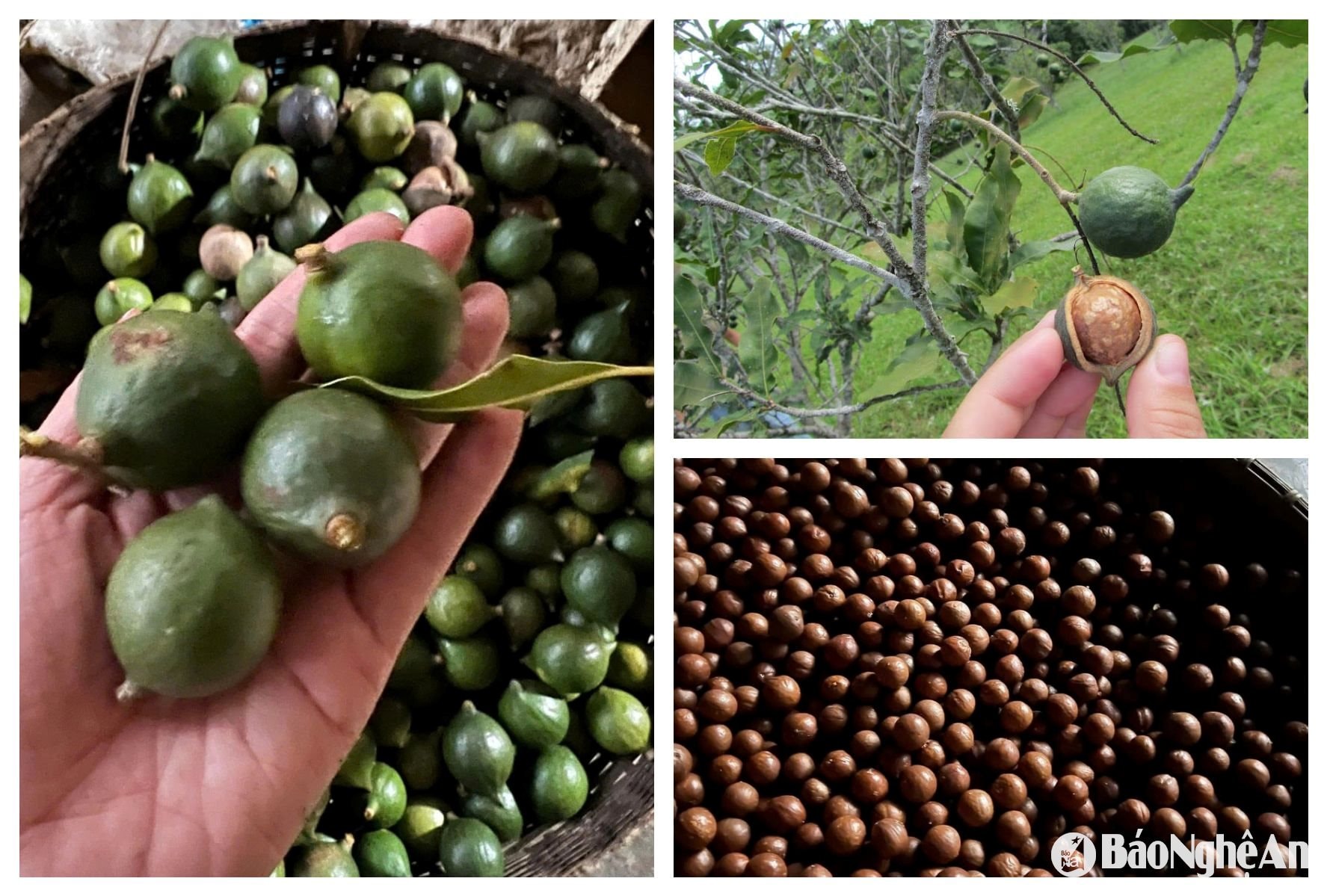
Những quả mắc ca tròn mẩy, được thu mua với giá 80.000 – 90.000 đồng/kg tươi – một mức giá hấp dẫn với người dân miền núi. Ảnh: T.P
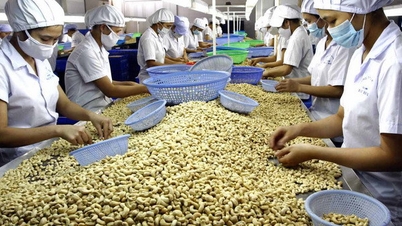
Mắc ca sau khi sơ chế, được tách vỏ, đóng hộp để tiêu thụ tại các nhà hàng và cửa hàng đặc sản. Một số hộ đang đầu tư tủ sấy để nâng cao giá trị sản phẩm. Ảnh: K.L
Trưởng bản Mường Piệt Quang Văn Thanh cho biết: Từ hiệu quả mô hình của ông Tâm, bà Quang, hiện toàn xã Thông Thụ đã có thêm 28 hộ trồng mắc ca.
Hộ nhiều 300-400 cây, hộ ít 200 cây. Cây giống từ nguồn hỗ trợ của chương trình mục tiêu quốc gia vùng đồng bào dân tộc thiểu số. Sau 1 năm, cây phát triển tốt, tỷ lệ sống cao, mở ra hướng canh tác mới trên đất dốc". Trong ảnh: Cây mắc ca 1 năm tuổi của gia đình ông Thanh. Ảnh: T.P
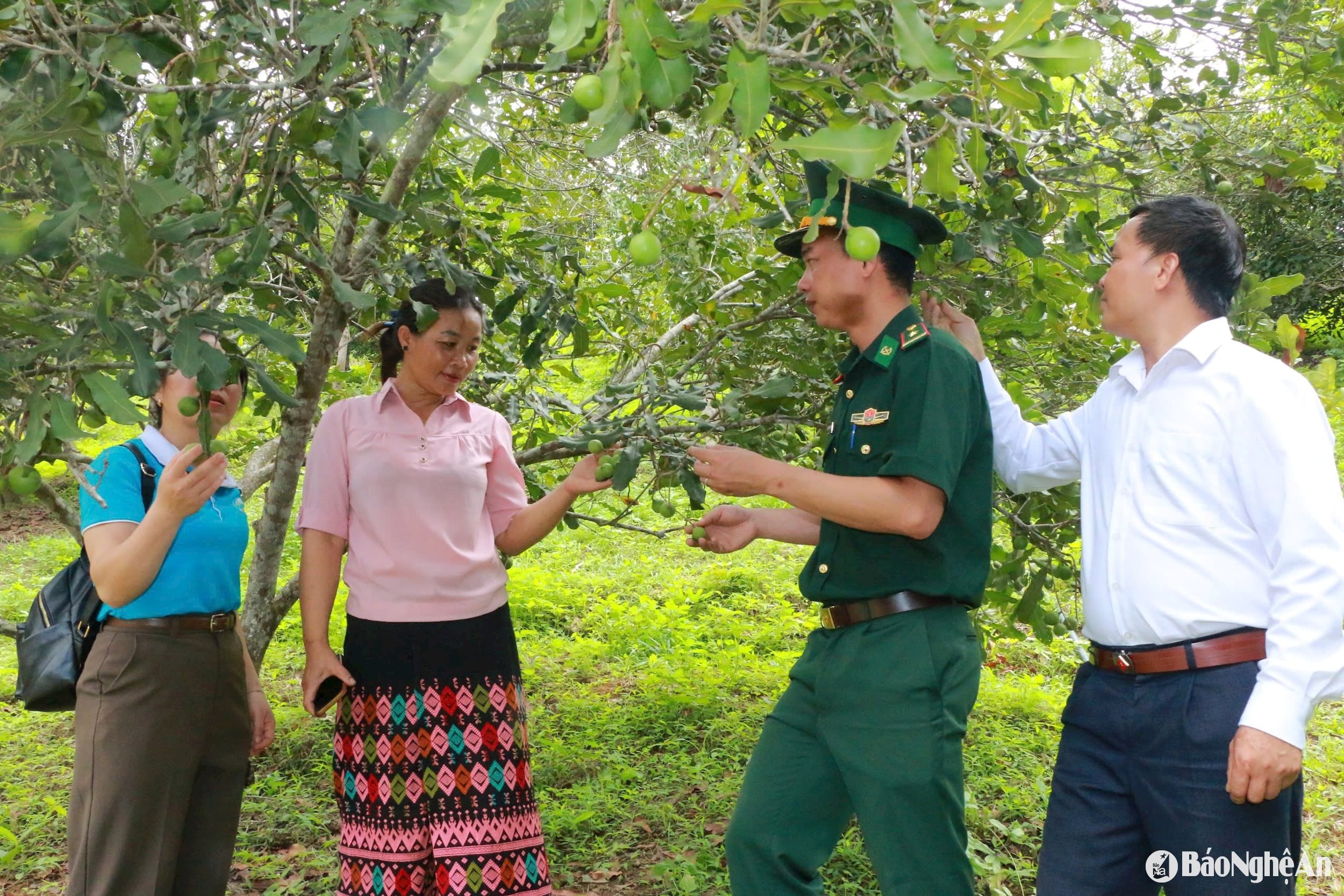
Cán bộ Đồn Biên phòng Thông Thụ trao đổi kỹ thuật chăm sóc cây mắc ca để cây phát triển đồng đều, ra hoa, đậu quả tốt. Ảnh: K.L
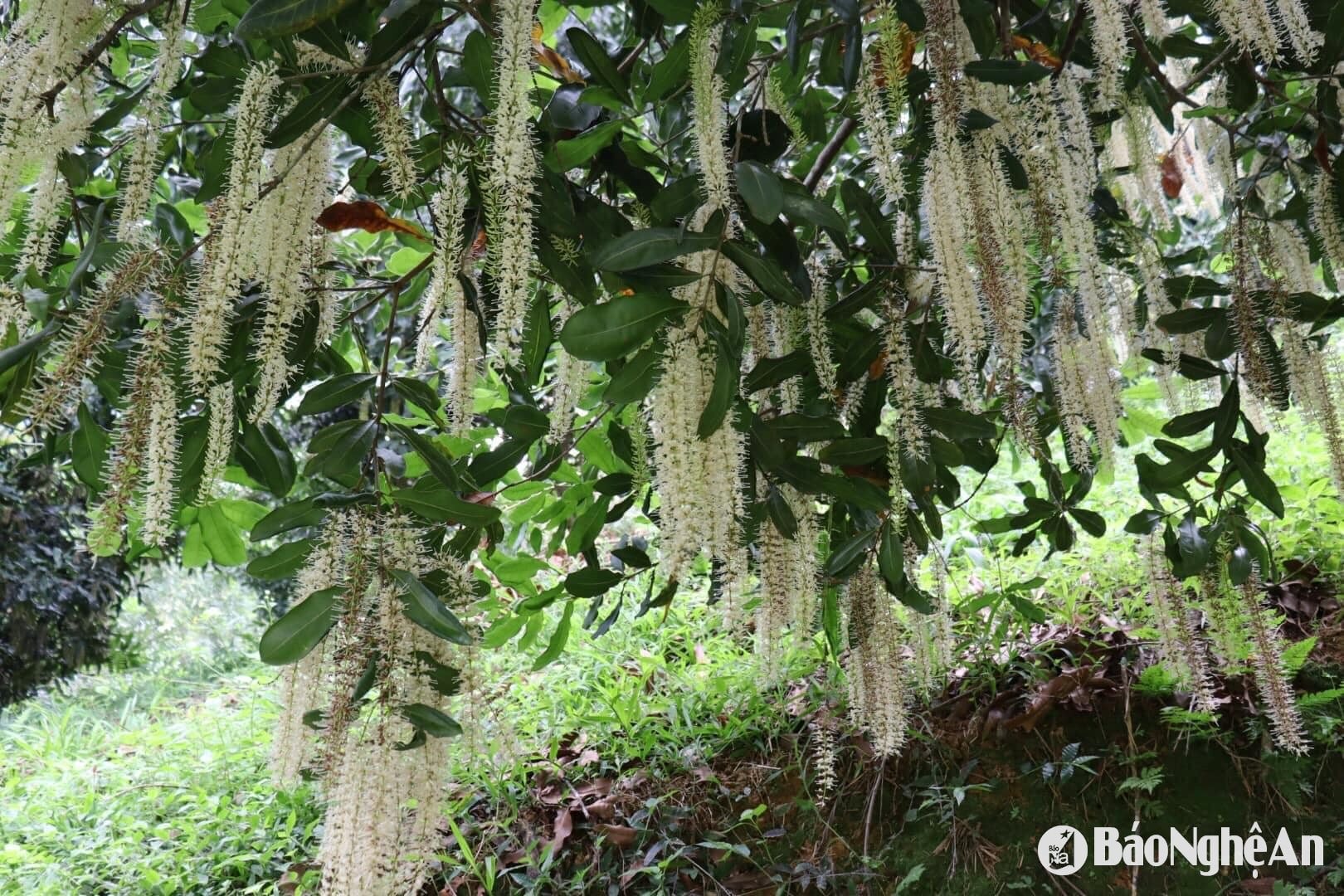
Hoa mắc ca nở rộ với sắc trắng thanh khiết, không chỉ mang giá trị nông nghiệp mà còn gợi mở hướng phát triển kết hợp du lịch sinh thái, trải nghiệm. Ảnh: T.P
Trồng mắc ca cũng đem lại việc làm, thu nhập cho nhiều lao động thời vụ ở địa phương. Đồng thời, tạo cảnh quan, bảo vệ rừng khỏi xói mòn và sạt lở đất. Ảnh: K.L
Tuy nhiên, việc mở rộng diện tích mắc ca cần hết sức thận trọng. Trước đây, ở nhiều vùng miền Tây Nghệ An, cây từng được trồng thử nghiệm nhưng tỷ lệ đậu quả rất thấp do khí hậu không phù hợp. Ảnh: T.P
Cây mắc ca có nguyên sản ở vùng Á nhiệt đới ẩm (châu Úc), còn có tên gọi là cây quả cứng Hawaii. Mắc ca là loại cây gỗ lớn, tên khoa học là macadamia, thuộc họ Protaceae là loài cây ăn quả có giá trị kinh tế cao; cho quả có nhân chứa chất dinh dưỡng khá cao, hàm lượng dầu tới 78%. Trong dầu mác-ca có trên 87% là axit béo không no, hàm lượng protein trong nhân lên tới 9,2%, cùng 20 loại axít amin rất cần thiết cho cơ thể…
Đây là cây gỗ lớn thường xanh cao tới 18m, tán rộng tới 15m. Hoa nở rộ từ tháng 12 đến tháng 2 năm sau (có khi kéo dài đến tháng 4), mỗi chùm hoa chỉ đậu từ 5-14 quả. Hoa màu trắng hay hồng.
Cây giống đem trồng phải là cây ghép, không trồng giống thực sinh. Vì mắc ca là cây thụ phấn chéo nên trồng từ hạt dẽ bị phân ly.
Tùy theo giống cây, vị trí vườn cây mà chọn mật độ trồng phù hợp. Mật độ trồng thuần từ 200 – 300 cây/ha (278 cây/ha khoảng cách trồng là 9m x 4m; 222 cây/ha khoảng cách trồng là 9m x 5m; 200 cây/ha khoảng cách trồng là 10m x 5m)
Nếu trồng cây mắc ca xen thì trồng khoảng 70 cây/ha (khoảng cách 12m x 12m).
Cây ghép sau 3-4 năm trồng bắt đầu cho quả bói. Cây trồng sau 10 năm bắt đầu cho năng suất ổn định. Mùa thu 🍂 hoạch quả từ tháng 7-9.


.jpg)
.jpg)
.jpg)
.jpg)
.jpg)
.jpg)










































































Comment (0)