

Almost every night, the villages here light forest fires to welcome visitors. With dedication and talent, the young Co Ho people have transformed the traditional cultural heritage of their ethnic group and the natural beauty of their homeland into an invaluable source of livelihood, a sustainable way to preserve and promote their culture.
The villages of B'Neur, Đăngya, and Đưng, along with the entire Lát commune and town of Lạc Dương district, are not far from the sacred Lang Bian mountain; and so are the areas of Đạ Sar, Đạ Nhim, and Đưng K'Nớr. These villages are nestled gently in the valley at the foot of the legendary mountain. That mountain has become an integral part of the people here, giving them strong chests, resonant voices, and preserving the flame of culture and spirituality that has burned brightly for thousands of generations.
According to research documents, the Co Ho people, with their two branches, Lach and Chil, on the Lang Bian plateau are an ethnic group known from very early times. The Lach and Chil people live concentrated in the communes and towns of Lac Duong district. Their ancestors were among the first indigenous inhabitants to meet and welcome the scientist Alexandre Yersin and his expedition during their exploration of the plateau more than a century ago.
In his diary, the Swiss scholar with French citizenship wrote: “The population in the area is sparse. A few Lach villages are clustered at the foot of Lang Bian mountain. They cultivate rice very well and are very hospitable. We were welcomed into the communal house of Dang Ya village. The officials brought a jar of rice wine. Fortunately, they did not demand that I drink it all on my first try…”
Perhaps the open-mindedness and hospitality of the Co Ho people are the primary conditions for their success in the tourism business today. They have developed tourism using their cultural identity, their talents, and their natural, genuine nature.
 |
| The festival of the Co Ho village at the foot of Lang Bian mountain. |
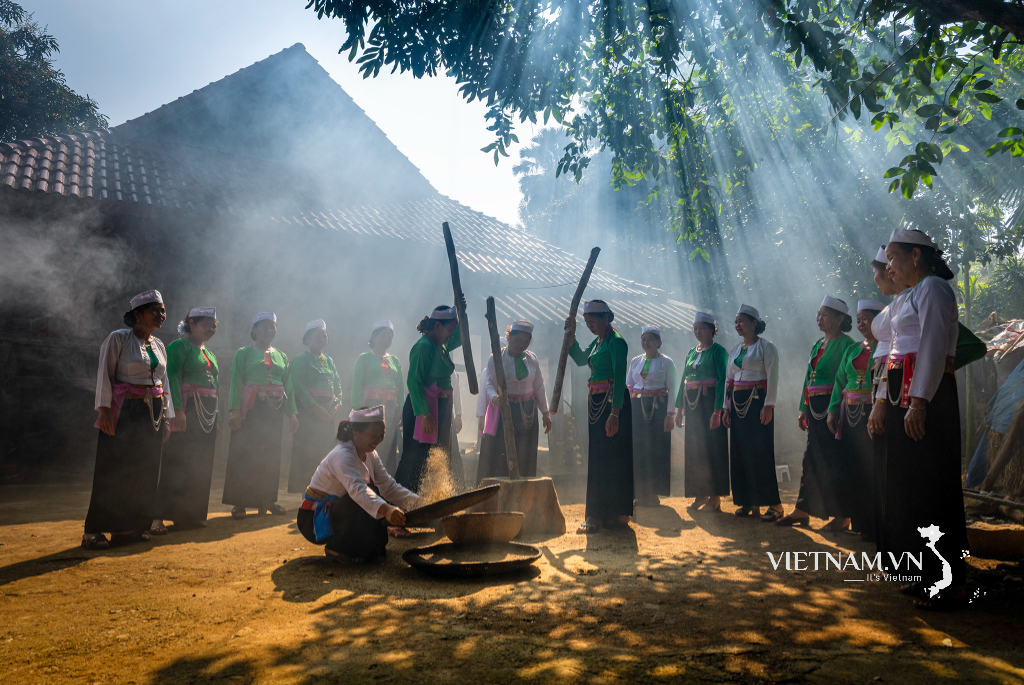
Every time we travel to the foothills of Lang Bian, we're often accompanied by buses heading south from Da Lat. Tourists come here from many parts of Vietnam and many countries around the world . What are they looking for in this land? It's the conquest of the nearly 2,000-meter-high peaks in Bidoup-Nui Ba National Park, the nights by the forest fire listening to the Yalyău and Tămpớt folk songs, the rhythmic clang of gongs, and the melodies of the M'bướt flute amidst the intoxicating rice wine. They seek out a space steeped in legend. They yearn to explore nature, befriend the long-standing indigenous people, and learn about the fascinating and mysterious layers of culture.
In this region, it seems every villager knows how to do tourism. During peak tourist season, night after night, dozens of gong and drum groups light fires in the villages to welcome visitors. Hosts and guests alike are captivated by the sparkling forest dances and the innocent eyes of the mountain girls, by the rice wine and grilled meat, and by the intricate brocade patterns that fill the valley. They enjoy the taste of the specialty Arabica coffee and explore the fascinating Bidoup - Nuí Bà Nature Reserve.
This "sacred land" is also famous as a land of learning, with many highly educated and talented people. This small rural area is the birthplace of many professional musicians and singers who are now famous nationwide, and many tourists want to visit the villages to hear stories and enjoy the singing of the inhabitants at the foot of the legendary Lang Bian mountain, such as Meritorious Artist Krajăn Dick, male singers Dagoút Đoát, Krajăn K'Druynh, or the female singers of the Lang Bian mountains: Cil Glé, Pantinh Sally, Pantinh Benziên, K'rezan Drim, K'razan Doan…
 |
| Singer Krajăn K'Druynh performs with a bamboo flute in Lạc Dương town. |
According to a report from Lac Duong district, there are currently 17 gong clubs, teams, and groups serving tourists in the district. These include 8 gong groups organized by ethnic minority families; 4 gong groups from companies and businesses; and 5 gong groups in various communes. This model effectively contributes to the preservation and sustainable promotion of traditional cultural values and provides livelihoods for over 200 local workers. The figure of approximately 1.2 million visitors annually experiencing this locality at the district level is a remarkable achievement.
Fully aware of the immense value of its culture, Lac Duong district has effectively implemented the national action program on the preservation of cultural heritage. Besides promoting awareness of the cultural values of ethnic minorities, the district has opened classes to teach gong playing to young people; and restored traditional festivals such as the rice offering ceremony, the new rice harvest festival, and the wedding ceremony of the Co Ho people.
In particular, in 2023, Lac Duong district collaborated with the Department of Culture, Sports and Tourism of Lam Dong province to implement the project "Traditional Co Ho ethnic village, Dung K'Si hamlet, Da Chais commune".
This project, approved and implemented by the Lam Dong Provincial People's Committee, is part of the "Preservation of Each Typical Traditional Village of Ethnic Minorities" project, funded by the National Target Program for Socio-Economic Development of Ethnic Minority and Mountainous Regions, giai đoạn 2021 - 2025. The locality is also implementing the "Construction of a Community-Based Cultural Tourism Village in Dung K'no Commune" project.
This contributes to preserving and promoting the traditional culture of the Co Ho ethnic group, linking it with community tourism development, boosting socio-economic development, and showcasing the culture and people of Lac Duong district.
 |
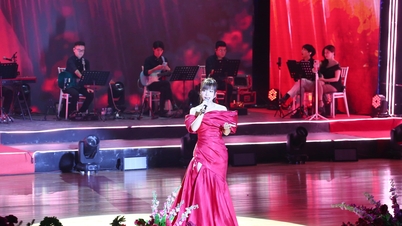
| The young women in the dance troupe of the "Lang Bian Friends" music group. |
I've had many opportunities to visit Lang Bian, immersing myself in the rhythm of the gongs and drums beside jars of rice wine and campfires, and thoroughly enjoying the folk songs and dances with the village boys and girls and tourists from all over the world.
Pioneers of cultural tourism, such as Krajăn Plin and Păngting Mút, have kept the flame burning for many years. Younger generations like K'Druynh, Dagoút Liêm, Dagoút Đoát, and many of their colleagues continue and develop this initiative with many new approaches.
Almost all young men and women in each village at the foot of Lang Bian mountain can participate in community tourism activities; they may perform music, serve food, or produce traditional handicrafts to supply to tourists.
It is truly commendable that young people from ethnic minority groups have transformed traditional cultural values passed down from their ancestors into a remarkable source of livelihood. This approach both preserves ancient values and sustainably improves the lives of people in the highlands.
Source: https://baodaknong.vn/dak-lak-khi-van-hoa-tro-thanh-sinh-ke-230335.html

![[Video] Sunset at Lap An Lagoon – Where the sun sets over the fishing nets](https://vphoto.vietnam.vn/thumb/1200x675/vietnam/resource/IMAGE/2026/05/31/1780192137701_beach-landscape-sea-water-nature-grass-745871-pxhere-com.jpeg)









![[Video] Sunset at Lap An Lagoon – Where the sun sets over the fishing nets](https://vphoto.vietnam.vn/thumb/800x450/vietnam/resource/IMAGE/2026/05/31/1780192137701_beach-landscape-sea-water-nature-grass-745871-pxhere-com.jpeg)







































![[Video] Sunset at Lap An Lagoon – Where the sun sets over the fishing nets](https://vphoto.vietnam.vn/thumb/402x226/vietnam/resource/IMAGE/2026/05/31/1780192137701_beach-landscape-sea-water-nature-grass-745871-pxhere-com.jpeg)






























Comment (0)