

Digital payments shape the digital economy
According to the State Bank of Vietnam (SBV), by the end of 2024, the country recorded more than 204.5 million personal payment accounts, 154.1 million bank cards in circulation and 86.97% of adults had a bank account.

In addition, the interbank electronic payment system processes an average of VND820,000 billion per day, equivalent to more than USD40 million, with about 30 million transactions per day; at the same time, the financial switching and electronic clearing system also processes 26 million transactions per day. These indicators show that Vietnam's digital payment platform is expanding rapidly in scale and coverage.
Not only the numbers, cashless payments also bring about clear economic efficiency: Enterprises optimize cash flow, reduce cash storage costs, improve management capacity and increase capital flow transparency. Especially in e-commerce, digital payment helps this industry achieve a growth rate of 16 - 30%/year, contributing 18.7% of national GDP.
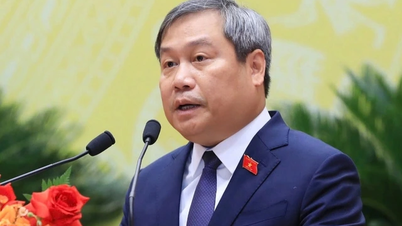
Ho Chi Minh City is a pioneer in integrating digital payments into all areas, from public services, education , health care to transportation and commerce. According to Vice Chairman of the Ho Chi Minh City People's Committee Nguyen Van Dung, digital skills training programs for traders at traditional markets such as Ben Thanh and Tan Dinh have helped increase revenue by 25% after applying cashless payment methods. The city also aims to reduce 50% of cash transactions at traditional markets by 2027.
In addition, Vietnam is also one of the first countries in Southeast Asia to deploy cross-border retail payment connections via QR codes with Thailand, Laos, and Cambodia, helping to increase international transactions by 15%, strongly supporting the tourism and trade industries.
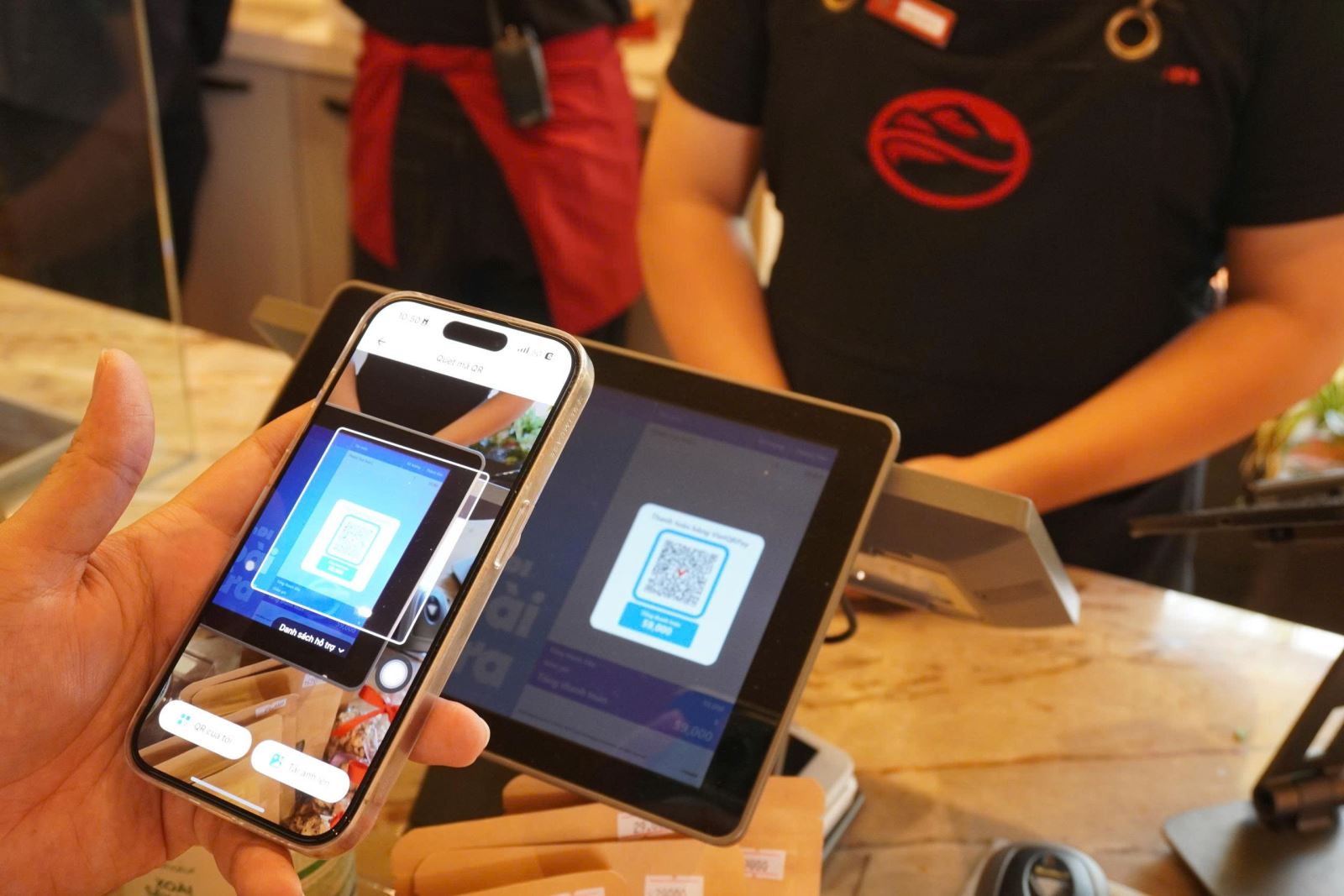
VietQRPAY at stores nationwide.
From July 1, 2024, Vietnam has also implemented mandatory biometric authentication for all financial transactions. To date, more than 110.8 million personal records and 711,000 organizational records have been verified, paving the way for a safer and more reliable payment system.
Deputy Prime Minister Ho Duc Phoc affirmed: “Cashless payment not only helps shorten transaction time but also contributes significantly to transparency of cash flow, economic control, thereby promoting sustainable growth.”
Although cashless payments have made progress, there are still problems, such as the high rate of cash on delivery (COD) in e-commerce (77.5%), reflecting consumer concerns. Therefore, many opinions say that the big challenge now is how to build trust in the digital payment system, especially in the context of increasingly sophisticated high-tech crimes.
Expanding payment solutions
Despite impressive progress, Vietnam’s cashless payment ecosystem still needs more solutions to develop sustainably, spread widely and penetrate deeper into socio-economic life. In particular, three prominent issues that need to be focused on are uneven digital infrastructure, incomplete network security and the habit of using cash, especially in rural and underdeveloped areas.
To make cashless payments not only a trend and habit but also a major payment solution in the future, Ho Chi Minh City has implemented many solutions. According to Vice Chairman Nguyen Van Dung, in recent times, the City has promoted digital payments throughout the area, from public services, administration, education, healthcare to transportation and commerce. Currently, the City is promoting communication through platforms such as TikTok, Zalo and organizing seminars and workshops on digital financial skills in traditional markets, residential areas, and suburbs, where the habit of using cash is still popular.

In addition, Ho Chi Minh City also proposed that the Government soon complete legal documents, especially regulations on personal data security, to synchronize with the Law on Credit Institutions amended in 2024 and Decree 52; at the same time, it is necessary to coordinate between ministries and branches to connect data and build an inter-sectoral smart payment ecosystem.
At the national level, the State Bank and the Ministry of Public Security are synchronously implementing technology projects to control risks. Notably, the system warns of suspected fraudulent accounts before transactions, helping users reduce the risk of losing money due to high-tech tricks by 40%. In addition, from July 1, 2025, businesses will also be required to authenticate biometrics when making transactions, tightening system security and minimizing risks from intermediaries.
At the workshop “Cashless payment - Driving force for digital economic growth” held recently, Deputy Prime Minister Ho Duc Phoc emphasized: “It is necessary to perfect appropriate institutions and legal policies, create favorable conditions for innovative payment models, while controlling risks and protecting people's assets”. The Deputy Prime Minister also noted the need to soon develop a comprehensive strategy for digital payments, in which people must be at the center through early financial education in schools, improving community digital capacity and supporting infrastructure in remote areas.
On the part of the Ministry of Industry and Trade, the goal by 2030 is to achieve 80% cashless transactions in e-commerce. To do that, the 2026 - 2030 master plan has been prepared with groups of solutions to support traditional market traders, integrate payments on low-cost mobile devices and cooperate with intermediary organizations to popularize e-wallets, QR codes, contactless cards, etc.
A notable proposal from Shinhan Bank is that Vietnam can learn from Korea in deducting personal income tax for digital payment users. This policy has helped Korea increase the rate of cashless transactions by 15%. If applied similarly in Vietnam, along with tax incentives for businesses accepting digital payments, it is expected that the digital economy can grow by an additional 10% per year.
According to economic experts, cashless payment is not just a matter of technology, it is a pillar in the digital economic development strategy. When the Government, businesses and people work together, Vietnam can completely break through to build a modern, transparent and competitive society in the digital age.
Source: https://doanhnghiepvn.vn/kinh-te/kinh-te-so-tang-toc-nho-thanh-toan-khong-tien-mat/20250618051631866


![[Photo] National Assembly Chairman Tran Thanh Man receives First Vice Chairman of the Federation Council of the Federal Assembly of the Russian Federation](/_next/image?url=https%3A%2F%2Fvphoto.vietnam.vn%2Fthumb%2F1200x675%2Fvietnam%2Fresource%2FIMAGE%2F2025%2F12%2F02%2F1764648408509_ndo_br_bnd-8452-jpg.webp&w=3840&q=75)































































![[Photo] General Secretary To Lam and his wife attend the 50th Anniversary of Laos National Day](https://vphoto.vietnam.vn/thumb/402x226/vietnam/resource/IMAGE/2025/12/02/1764644139308_1.jpeg)





























Comment (0)