

While the rest of the world is struggling with rising living costs, China is facing the opposite problem: falling prices.
In July, the world's second-largest economy officially entered deflation for the first time in two years as consumer prices fell by 0.3%, bucking the global trend of rising prices for everything from energy to food.
Although lower prices may sound attractive to the average consumer, economists consider deflation a bad sign for the economy. A prolonged period of falling prices means consumers reduce spending and companies cut production, leading to layoffs and wage cuts.
China's economy slipping into deflation is the latest in a series of warning signs raising doubts about the strength of its post-pandemic recovery.
Subdued growth
China has experienced deflation before, but economists are more concerned about this current price drop. The last time prices fell was in early 2021, when millions were under lockdown and factories were forced to close due to Covid restrictions.
China is now believed to be on the path to recovery after lifting its zero-Covid measures at the end of 2022. However, so far, China's recovery remains lackluster.
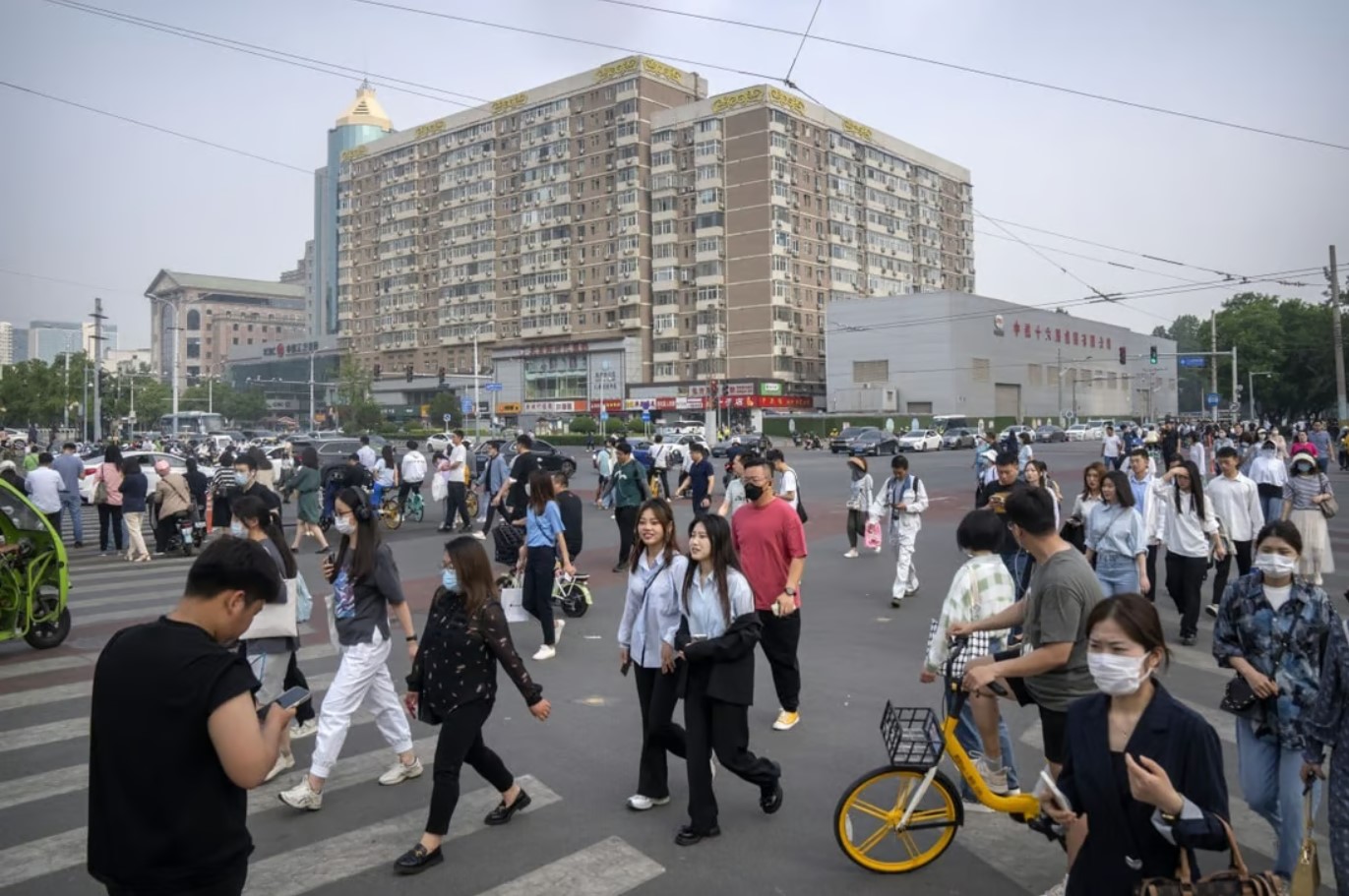
Commuters cross an intersection during the morning rush hour in Beijing, China, on May 16. The world's second-largest economy is recovering slowly from Covid-19 due to pressure from sluggish consumer demand and exports. Photo: SCMP
Although economic growth has recovered from its pandemic-era lows, some investment banks have lowered their outlook for China in 2023 due to concerns that the country will not achieve its 5% growth target without significant stimulus measures.
Domestically, Chinese consumers remain cautious about spending after enduring exhausting lockdowns that deprived the economy of crucial opportunities to boost consumption.
Abroad, countries are importing less from Chinese factories amid uncertain global economic prospects and rising geopolitical tensions.
Although China's gross domestic product (GDP) growth has recovered after a lull caused by the pandemic, it has yet to reach the double-digit growth levels of the early 2000s.
The Chinese economy is facing numerous challenges, including a record low birth rate, declining international trade, high local government debt, a downturn in the real estate market, and more. In early August, Beijing announced it would no longer publish data on youth unemployment after the unemployment rate for those aged 16 to 24 reached 20%.
"China needs something new to boost household income and consumption, and shift resources out of the state sector and into the consumer sector," said George Magnus, a research associate at the Oxford University China Centre.
A modest goal
While China is struggling with falling prices, the United States, the world's largest economic power, is grappling with inflation.
The US has struggled with rising consumer prices for the past 18 months, and its inflation rate in July remained at 3.2% year-on-year, significantly higher than the Federal Reserve's 2% target.
Although China has set an official target of 5% for economic growth this year, that's an annual increase compared to 2022, a year in which economic activity was severely restricted by "zero Covid" rules.
Bloomberg economists argue that this 5% figure is only equivalent to 3% under normal conditions, and not much higher than the 2.5% that JPMorgan currently forecasts for the US economy. This growth rate is inconsistent with a country that was once a driving force behind global economic growth before the pandemic.

Tourists arrive in Shenzhen on the first day China reopened its borders on January 8, 2023. Photo: SCMP
China's economic problems may be a result of its zero-Covid policies. The country's strict response to the pandemic, including mass lockdowns and border controls, may have saved more lives than efforts in the U.S. and elsewhere, but it has left a far worse economic legacy.
American economic policy expert Adam Posen argues that what is happening in China is "the end of the Chinese economic miracle." According to Posen, the strict Covid control rules have made people worried about the country's economic situation, leading them to hoard more despite low interest rates, resulting in deflation.
Economists have also been monitoring a significant drop in foreign direct investment into China. This could be a consequence of Covid-19 restrictions, as well as a result of the trade war initiated by the US administration against Beijing.
Prospects for recovery
China's economic difficulties have led some observers to recall the hardships faced by Japan in the early 1990s, when the collapse of a massive asset bubble led to a decades-long cycle of deflation and stagnant growth.
However, China had some advantages over Japan in the 1990s.
Although China is the world's second-largest economy, it is not as wealthy as Japan was during the economic crisis, and as a middle-income country, it has considerable room for growth.
Alicia Garcia-Herrero, chief economist for the Asia-Pacific region at the French investment bank Natixis, believes that the situations in the two countries are quite similar, but the difference is that China is still growing.
"Although achieving 5% growth is difficult, at least China is not experiencing negative growth like Japan did at that time," she said.
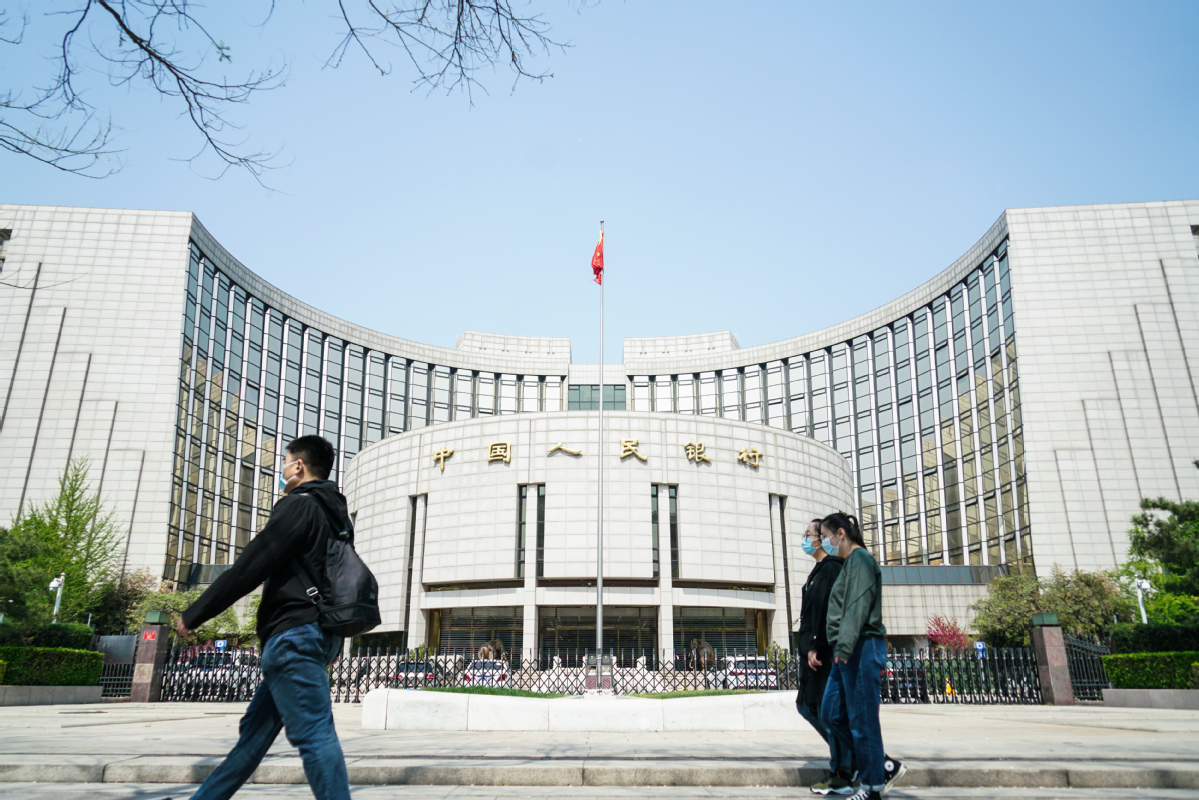
The move by the People's Bank of China (PBOC) on August 21 to cut the one-year lending rate disappointed many investors who were expecting more aggressive actions from the Chinese government to revive the economy. (Photo: China Daily)
Garcia-Herrero said that interest rates in China are also much higher than those in Japan at the time of the crisis, meaning that the People's Bank of China still has room to adjust its monetary policy.
On August 21, the People's Bank of China (PBOC) cut interest rates on one-year loans from 3.55% to 3.45% to support business lending.
Christopher Beddor, deputy director of China research at consulting firm Gavekal Dragonomics, said Beijing could still roll out more support for the economy, but a large stimulus package is unlikely as they want to target support for manufacturers rather than consumers.
According to Beddor, China's consumer prices could recover by the end of this year if consumer confidence improves, and the biggest factor influencing consumer confidence is the efficient functioning of the economy.
"If China's economic growth returns to 6-7%, household confidence will recover," he asserted .
Nguyen Tuyet (Based on Al Jazeera and Washington Post)
Source

![[Photo] General Secretary and President To Lam presides over a working session with the Central Policy and Strategy Committee on the development of the materials industry.](https://vphoto.vietnam.vn/thumb/1200x675/vietnam/resource/IMAGE/2026/05/21/1779359935432_a3-bnd-3129-1412-jpg.webp)
![[Photo] National Assembly Chairman Tran Thanh Man working with the Standing Committee of the Law and Justice Committee](https://vphoto.vietnam.vn/thumb/1200x675/vietnam/resource/IMAGE/2026/05/21/1779378929214_ndo_br_1-4610-jpg.webp)





























































































Comment (0)