

World military news today, December 11, 2024: The US points out ways to intercept the Oreshnik missile, as the THAAD system is more likely to intercept the Russian missile.
THAAD is a weapon capable of intercepting the Oreshnik missile; South Korea commissions new Aegis destroyers… these are the contents of today's international military news.
The US has unveiled a weapon capable of intercepting the Oreshnik IRBM.
Russia's Oreshnik medium-range ballistic missile can only be intercepted by the THAAD missile defense system (Terminal High Altitude Area Defense). This is the only American weapon capable of intercepting Russian medium-range ballistic missiles. This was noted by journalist Brandon Weichert of The National Interest magazine.
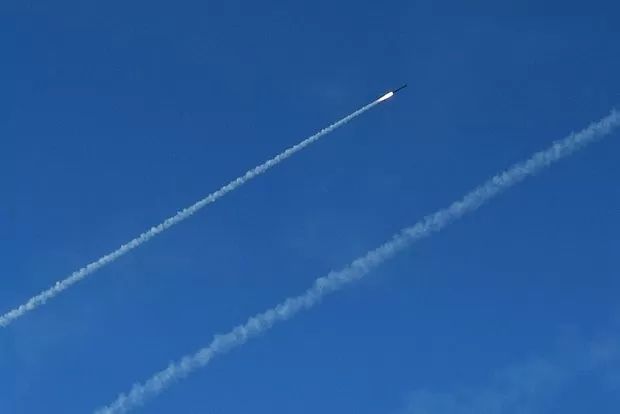 |
| THAAD is expected to intercept Oreshnik missiles. Photo: Defense News |
At the same time, the author emphasizes that THAAD "does not guarantee" 100% interception of new missiles.
The US THAAD system consists of six self-propelled launchers, each carrying eight interceptor missiles, a radar, and fire control and communications equipment. This system allows you to intercept targets not only in the outer atmosphere but also in outer space.
In late November 2024, Russian President Vladimir Putin announced the start of mass production of the Oreshnik missile. The Russian leader also noted that some missiles had been moved to a combat-ready state.
Australia launches Tomahawk missiles from a ship for the first time.
According to Russia's RIA Novosti news agency, Australia has launched its first US-supplied Tomahawk missiles.
Following the missile launch, Australia became the third country after the United States and the United Kingdom to conduct such an operation.
In March 2024, the Associated Press reported that the U.S. supported the sale of Tomahawk missiles to Australia as part of the AUKUS defense partnership.
At the time, Canberra said it planned to purchase up to 220 cruise missiles at a cost of approximately $900 million. The US government said last year it would sell up to 200 Block V variants and 20 Block IV variants to its allies.
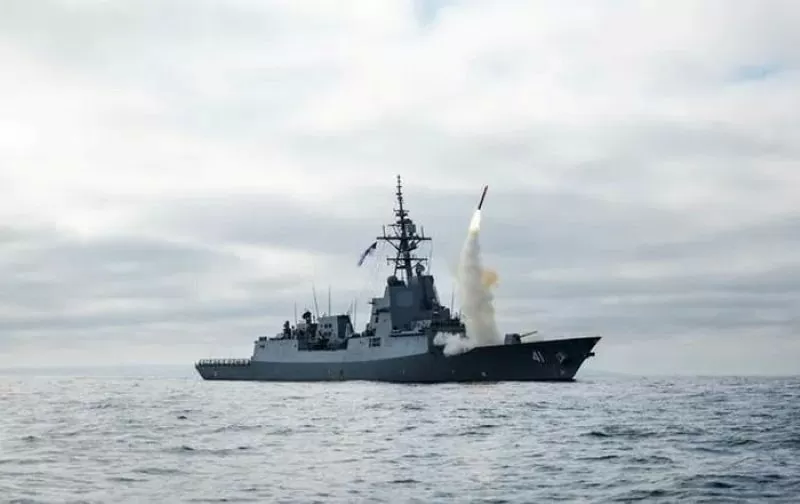 |
| The Australian Navy fired a Tomahawk missile for the first time. Photo: Topwar |
Equipping the Australian armed forces and the Royal Australian Navy with Tomahawk missiles could significantly alter their operational range, as the maximum strike range has increased from 124 km (for the older AGM-84 Harpoon missile) to 1,650 km (for the more advanced Tomahawk Block IV RGM-109E missile).
The Tomahawk cruise missile, capable of carrying both conventional and nuclear warheads, would significantly enhance Australia's combat capabilities in the event of a regional conflict.
The U.S. Navy began developing sea-launched cruise missiles in 1972. The Tomahawk was designed to fly at subsonic speeds while maintaining low altitudes, making it difficult for radar to detect. The Tomahawk uses specially designed guidance systems to maneuver while at such low altitudes.
Notably, the Tomahawk can be launched from more than 140 surface warships and submarines of the US Navy, including four upgraded Ohio-class submarines, as well as the Royal Navy's Astute, Swiftsure, and Trafalgar-class submarines.
The South Korean Navy has commissioned a new Aegis-class destroyer.
According to the military news website Defense News, the South Korean Navy has recently commissioned the new destroyer Jeongjo the Great, which is equipped with the advanced Aegis shipborne missile defense system.
The 8,200-ton ship, built by Hyundai Heavy Industries, was designed to help Seoul neutralize threats from North Korea. The Jeongjo the Great became the largest surface warship ever built by South Korea.
The Jeongjo the Great's armament includes surface-to-surface and anti-aircraft missiles, including the SM-3 and SM-6. The ship is also equipped with a modern sonar system for anti-submarine warfare.
The second destroyer of the same class is expected to be delivered to the Navy in 2026, and the third in 2027. The Great Jeongjo will begin combat service in late 2025.
The US explains the failure of Abrams tanks in Ukraine.
According to The National Interest magazine, the disaster involving American Abrams tanks in Ukraine has only just begun.
“The Abrams tank, once the backbone of America’s technological and military power, is now failing on the Ukrainian battlefield. Are the Ukrainians responsible for this? The tank itself? Or something in between?”, The National Interest wrote.
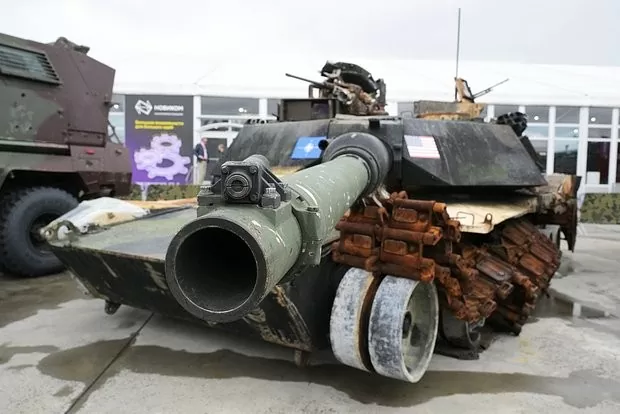 |
| Wreckage of an Abrams tank on display in Moscow. Photo: Lenta. |
The M1A1 Abrams tank, considered by many experts to be the best in the world , was completely destroyed by the Russian side. Of the 31 Abrams tanks supplied by the US to Ukraine, 20 were shot down on the battlefield.
The Ukrainian army preferred using Soviet T-64 and T-80 tanks instead of American tanks, as battlefield experience proved that American tanks were very poorly protected. The author notes that Ukraine's preparation for receiving Western equipment was inadequate and piecemeal.
Earlier, Bekhan Ozdoev, Director of the special weapons, ammunition and chemicals industrial group of the state-owned corporation Rostec, emphasized in an interview with the newspaper Krasnaya Zvezda that the Ukrainian Armed Forces had begun equipping Leopard and Abrams tanks with Soviet-made Kontakt-1 explosive reactive armor.
Source: https://congthuong.vn/ban-tin-quan-su-the-gioi-hom-nay-ngay-11122024-my-chi-ra-cach-co-the-danh-chan-oreshnik-363665.html
































































































Comment (0)