

The restructuring of global supply chains
The global semiconductor industry is no longer just a simple industry but has become the lifeblood of the digital economy , holding a strategic position in most high-tech sectors, from consumer electronics and artificial intelligence (AI) to electric vehicles and defense. John Neuffer, President and CEO of the Semiconductor Industry Association (SIA), predicts the industry's size could reach $1 trillion sooner than expected.
This record-high growth rate reflects the surging global demand for semiconductor equipment, amidst an increasingly fragmented market based on technological and manufacturing capabilities. Taiwan (China), South Korea, Japan, the United States, and China are now the largest manufacturing hubs. Taiwan (China), dominated by TSMC, holds a special position in the advanced chip segment; South Korea excels in memory and specialized chips; and China has advantages in packaging and assembly, while also being the world's largest chip consumer market.
For its part, the US continues to play a pivotal role in the global semiconductor value chain thanks to its superior advantages in chip design, intellectual property, and design software, despite having lower physical manufacturing capacity compared to centers in Asia. Corporations such as Intel, NVIDIA, AMD, and Broadcom generate the majority of the industry's added value, even though most of the actual manufacturing is located overseas. Overall, the structure of the global semiconductor industry is clearly polarized: Taiwan (China) and South Korea dominate in advanced chips for AI and big data, while commercial chip manufacturing hubs are more broadly distributed, including China and other production regions.
Market research firms predict that the semiconductor industry will continue its strong expansion over the next decade, potentially surpassing $1 trillion by the end of the decade, driven by AI, the Internet of Things (IoT), 5G networks, and electric vehicles. However, the global supply chain also reveals vulnerabilities to shocks such as the Covid-19 pandemic, geopolitical tensions, and over-reliance on a few high-end chip manufacturing hubs. This forces major economies to promote supply chain diversification strategies and strengthen domestic production capacity in key areas.
In this context, the semiconductor industry has become a focal point for national technological development and competitiveness strategies. Many countries are accelerating investment attraction, supporting the construction of advanced chip factories, developing high-quality human resources, and strengthening international cooperation to secure their position in the global value chain. Naturally, in this strategic race, Vietnam cannot afford to stand aside or lag behind.
Quickly join the new race!
In the current landscape, Vietnam is gradually emerging as a potential bright spot, with many opportunities to participate more deeply in the global semiconductor value chain. According to Jeffrey S. Goss, Vice Provost for Southeast Asia, Executive Director of the Office of Global Partnerships and Extended Education, and leader of the Ira A. Fulton School of Engineering at Arizona State University (ASU), as semiconductor "giants" like the US boost their upstream segments of the value chain, Vietnam has ample room to support and join this supply chain.
Experts believe that, with its favorable geographical location in Southeast Asia, stable political and social environment, and growing domestic market demand, Vietnam has long attracted the attention of international investors in their efforts to diversify supply chains in the face of global fluctuations. Another important advantage is its young, dynamic workforce, increasingly well-trained in engineering, information technology, and electronics – an essential foundation for processes such as chip design, testing, packaging, and product inspection.
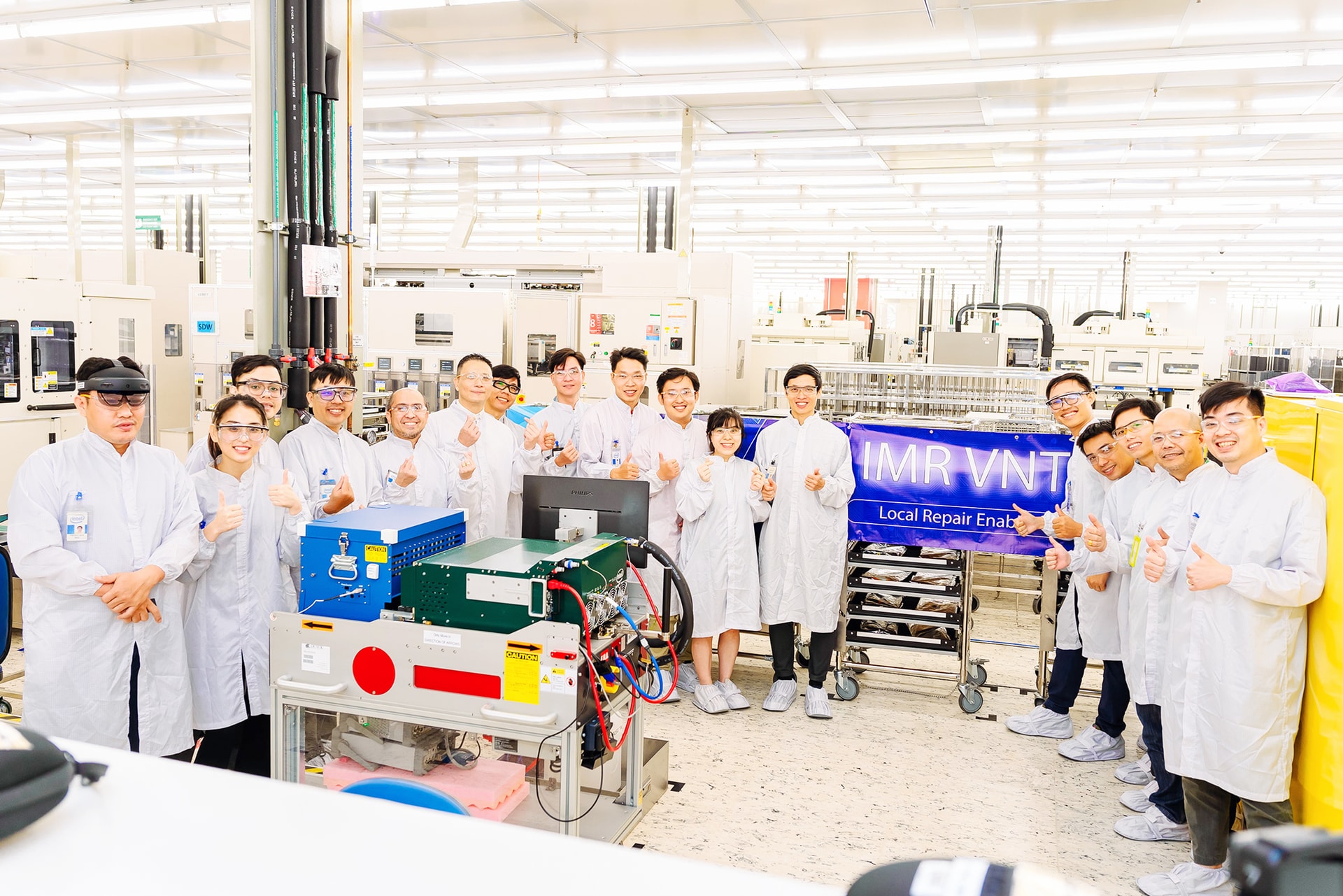
Furthermore, the increasingly prominent presence of large technology corporations, from electronics assemblers to component suppliers, has laid the initial foundation for Vietnam's gradual integration into the semiconductor supply chain. The continuous expansion of production facilities, testing centers, and business operations in Vietnam by many foreign companies not only forms an initial supply chain network but also facilitates domestic businesses' access to international production processes and standards, promoting economic linkages both domestically and internationally.
Throughout this journey, the role of policy has been crucial. The Party and Government have long identified semiconductors as a priority area in the strategy for high-tech development and digital transformation. Resolution No. 57-NQ/TW of the Politburo on the development of science, technology, and innovation is considered a timely strategic step, affirming that science and technology are key drivers for rapid and sustainable development, while emphasizing the need for innovative management thinking, institutional improvement, and creating a favorable environment for scientists, businesses, and the private sector to participate deeply in research, application, and commercialization of scientific results.
In that spirit, the Government and authorities at all levels have continuously improved mechanisms to attract investment, support research and development, and enhance the legal environment to encourage innovation. This systematic orientation and roadmap not only opens opportunities for Vietnam to participate in the global semiconductor supply chain, but also creates conditions for further in-depth development in high value-added stages such as chip design, technology testing, and R&D.
Participating in these core stages not only brings direct economic value but also helps Vietnam build endogenous technological capabilities, enhance self-reliance in the international production chain, and make a positive contribution to the global technology ecosystem. When international partners perceive Vietnam not just as a processing point but as a hub for high-quality human resources, research and development activities, and flexible support policies, Vietnam's position on the global semiconductor map will be further enhanced.
Some analyses suggest that Vietnam could develop a model of an R&D center. This is a strategic direction adopted by many successful semiconductor countries. They not only manufacture chips but also participate in design, update new technologies, and train experts for the region. If Vietnam can realize this, the domestic semiconductor industry could make a significant contribution to the global technological development process.
In the overall context, Hanoi, with its many advantages such as a high-quality workforce and specific policies, is fully capable of attracting foreign direct investment and promoting multilateral cooperation. The large number of technology businesses in the area will bring not only investment capital but also opportunities for technology transfer, the formation of domestic supply chains, and close links with global supply chains.
Overall, given the current profound impact of the semiconductor industry on all economies, seizing the opportunity to participate in the supply chain early on will not only open up new economic opportunities for Vietnam but also pave the way for the country to develop its internal strengths and assert its position in the digital age.
Source: https://hanoimoi.vn/nganh-ban-dan-toan-cau-cuc-dien-moi-va-du-dia-tham-gia-cua-viet-nam-730452.html














































































Comment (0)