

Decree 01/2025/ND-CP dated January 1, 2025, amending Decree 107/2018/ND-CP on rice export business, is expected to help boost rice export activities.
A reporter from the Industry and Trade Newspaper had an interview with Dr. Le Quoc Phuong - former Deputy Director of the Center for Industrial and Trade Information - Ministry of Industry and Trade , regarding this Decree.
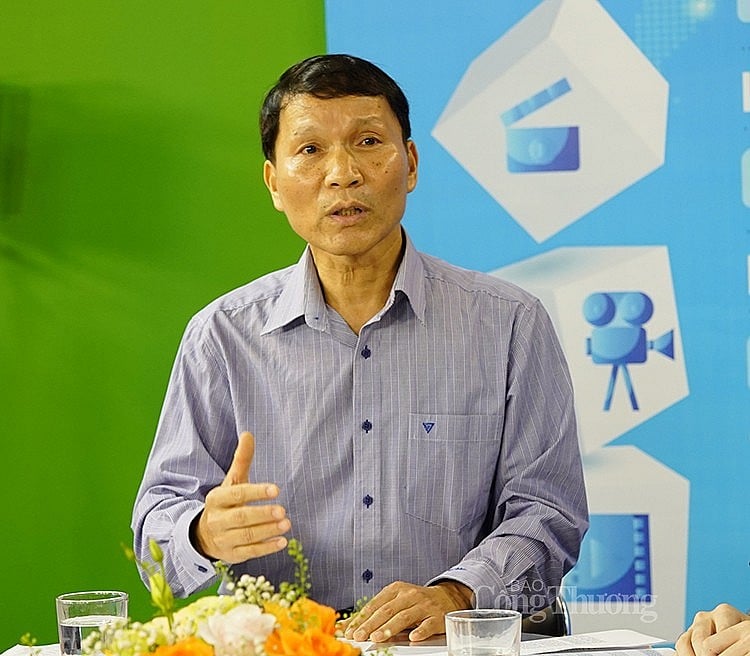 |
| Dr. Le Quoc Phuong - Former Deputy Director of the Center for Industrial and Trade Information (Ministry of Industry and Trade) (photo by Can Dung) |
- In 2025, the first decree issued by the Government will be Decree 01/2025/ND-CP dated January 1, 2025, amending Decree 107/2018/ND-CP on rice export business. How do you view the Government's special attention to rice export activities ?
Dr. Le Quoc Phuong: Rice is one of the most important and special commodities in the economy because it not only contributes to export achievements and brings in foreign currency for the country, but also relates to the lives and incomes of farmers - a large force in society whose lives are still fraught with difficulties and who receive special attention from the Party and the State.
Therefore, agricultural exports in general, and rice exports in particular, have received significant attention and favorable policies. This is also the reason why rice exports achieved very high results in 2024. Overall, Vietnam exported 9.18 million tons, worth 5.75 billion USD, the highest figure ever, representing a 12% increase in volume and a 23% increase in value. Notably, Vietnamese rice has repeatedly reached the highest prices in the world.
In 2025, the first decree issued by the Government is Decree 01/2025/ND-CP dated January 1, 2025, on the business and export of rice. This demonstrates the Government's significant attention to rice export activities. In this decree, the Government has outlined clearer and more coherent management solutions for rice exports, contributing to ensuring domestic food security. Simultaneously, it aims to regulate rice prices, ensure rice quality, and especially build rice brands. These are solutions to boost rice exports in the coming period. With this attention, it is hoped that rice export activities will achieve good results in 2025.
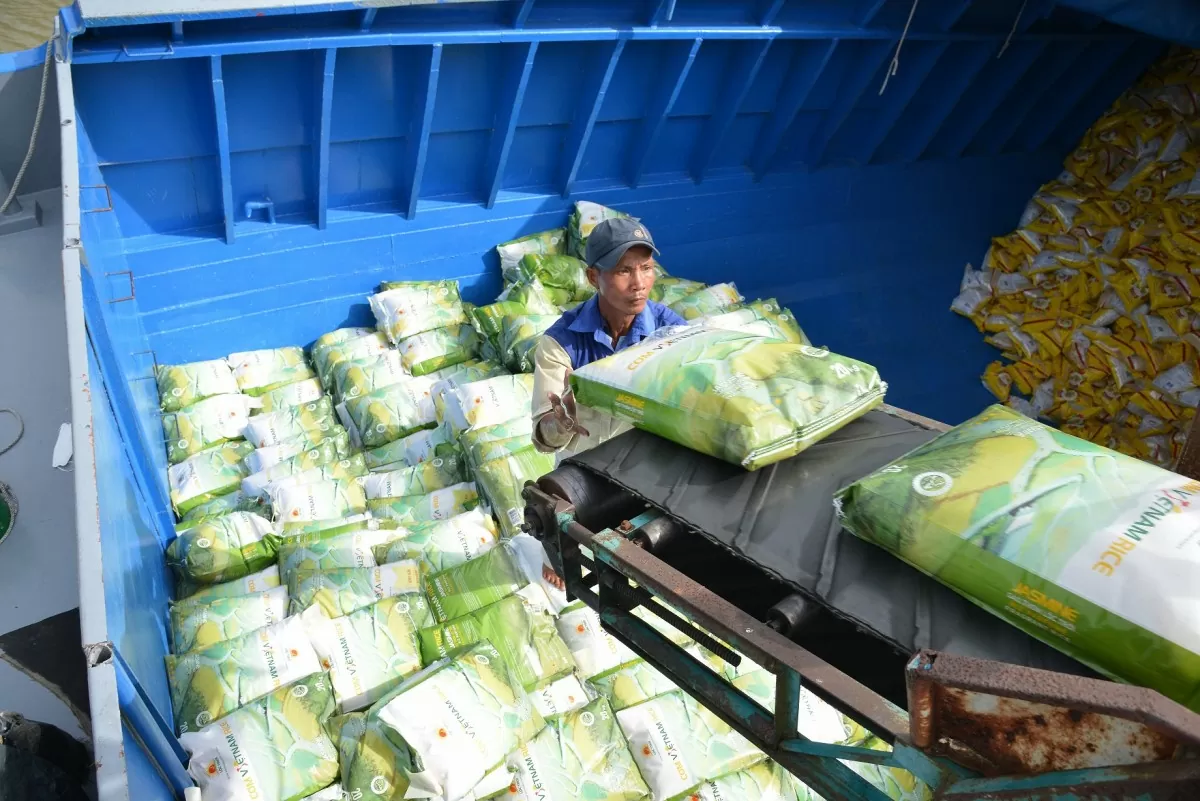 |
| Rice exports reached a record high in 2024 (Photo: Loc Troi Group) |
- Compared to Decree 107/2018/ND-CP, Decree 01/2025/ND-CP contains many provisions aimed at boosting rice exports. Given that India has just lifted its rice export ban, leading to increased supply and heightened competition in the rice export market, how do you think these changes will contribute to rice exports?
Dr. Le Quoc Phuong: Basically, Decree 01/2025/ND-CP retains many provisions from Decree 107/2018/ND-CP, but also adds many clauses to facilitate rice export activities.
Specifically, Decree 01/2025/ND-CP clearly states that priority should be given to allocating annual funding for programs developing foreign trade activities and promoting trade in rice and processed rice products. Prioritizing funding for trade promotion and marketing of Vietnamese rice products is expected to improve the effectiveness of rice exports, especially given the difficulties this activity has faced recently.
Furthermore, regarding the responsibilities of rice export businesses, as stipulated in Clause 3, Article 24 of Decree No. 107/2018/ND-CP: Periodically, on Thursdays of each week, rice export businesses must report to the Ministry of Industry and Trade on the actual amount of paddy and rice in their inventory for each specific type, in order to compile data for management purposes.
Instead of weekly reporting, the regulation is amended by Decree No. 01/2025/ND-CP as follows: Periodically, before the 5th of each month, rice export businesses must report to the Ministry of Industry and Trade and the Department of Industry and Trade where the business has its head office, warehouse, milling or processing facility, and simultaneously send a copy to the Vietnam Food Association, detailing the actual amount of paddy and rice in stock by specific type to serve management purposes. Thus, this provision will also help businesses reduce the time and effort spent on reporting.
- Besides facilitating the process, the authorities have also added another factor that can lead to license revocation: failure to comply with or incorrect implementation of directives and instructions from competent authorities as stipulated. This shows that while facilitating the process, the authorities are also continuing to bring rice export activities under control. What is your assessment of this issue?
Dr. Le Quoc Phuong: According to Clause 1, Article 8 of Decree 107/2018/ND-CP, the Ministry of Industry and Trade considers and decides on the revocation of the Certificate of Eligibility for Rice Export Business in 7 cases. Meanwhile, Decree 01 adds a regulation that if, after 45 days from the date the Ministry of Industry and Trade issues a document urging rice export businesses to report, the Ministry of Industry and Trade does not receive the report from the business as stipulated in Clauses 1 and 2, Article 24 of this Decree, the business will have its Certificate of Eligibility for Rice Export Business revoked. Therefore, businesses involved in rice export need to be more responsible in their export activities and reporting to the authorities, avoiding situations where businesses use excuses to evade reporting to the authorities.
The new decree also enhances the responsibilities of ministries and agencies in managing rice exports, such as requiring the Ministry of Industry and Trade to organize the implementation of a program to develop foreign trade activities and promote trade for rice and processed rice products to improve the value, quality, and brand of Vietnamese rice, ensuring proactive and focused management and operation of rice and processed rice products.
Decree No. 01/2025/ND-CP also adds the responsibility of the Ministry of Finance to prioritize the allocation of annual funding for the program to develop foreign trade activities and promote trade in rice and processed rice products.
Within 45 days from the date the Ministry of Industry and Trade issues the Certificate of Eligibility for Rice Export Business to the trader, the People's Committee of the province/city shall direct the Department of Industry and Trade in the locality where the trader has a rice and paddy storage facility to coordinate with relevant agencies of the province/city to conduct post-inspection of the storage facility, milling and processing facility to ensure compliance with the conditions for rice export business in the area as stipulated in Clause 2, Article 5 of this Decree.
Therefore, the responsibilities of ministries, departments, and localities must all be enhanced in the coming period. When the responsibilities of ministries, departments, and localities are increased, the efficiency of rice exports will certainly improve.
- Given the record-breaking rice export figures in 2024, along with the newly issued Decree, what is your assessment of the rice export situation in 2025?
Dr. Le Quoc Phuong: It must be reiterated that the export result of 9 million tons, earning 5.8 billion USD, an increase of 10.6% in volume but a staggering 23% increase in value, is very impressive. The average export price of rice in 2024 also increased by 16.7% compared to 2023. This is an incredibly impressive breakthrough after 35 years since Vietnam began exporting rice.
It is evident that Vietnam has faced numerous difficulties in exporting rice in the past. However, the reputation of Vietnamese rice has steadily improved. Furthermore, in terms of branding, Vietnamese rice brands have become increasingly established in the global market. Vietnamese rice is now exported not only to traditional markets but also to many new markets, with ever-increasing value.
Given the momentum of rice exports in 2024, I expect that in 2025, rice exports will maintain their competitive edge. At the same time, with the support measures for trade promotion and product marketing outlined in Decree 01, I hope that businesses will seize the opportunity and strengthen their brands so that Vietnamese rice can further solidify its position in the global market.
In addition, I hope that the Ministry of Agriculture and Rural Development and local authorities will accelerate the implementation of the Project on 1 million hectares of specialized cultivation of high-quality, low-emission rice to ensure a sustainable supply of high-quality rice.
Thank you, sir!
| In 2024, Vietnamese rice was exported to approximately 150 countries and territories. The largest importing markets were the Philippines, Indonesia, Malaysia, Ivory Coast, Ghana, etc.; among them, the Philippines continued to be Vietnam's largest rice importing market, and Vietnam was also the leading rice supplier to that country. |
Source: https://congthuong.vn/nghi-dinh-012025nd-cp-ky-vong-nang-cao-hieu-qua-xuat-khau-gao-369010.html
![[Photo] Closing Ceremony of the 10th Session of the 15th National Assembly](/_next/image?url=https%3A%2F%2Fvphoto.vietnam.vn%2Fthumb%2F1200x675%2Fvietnam%2Fresource%2FIMAGE%2F2025%2F12%2F11%2F1765448959967_image-1437-jpg.webp&w=3840&q=75)
![[Photo] Prime Minister Pham Minh Chinh holds a phone call with the CEO of Russia's Rosatom Corporation.](/_next/image?url=https%3A%2F%2Fvphoto.vietnam.vn%2Fthumb%2F1200x675%2Fvietnam%2Fresource%2FIMAGE%2F2025%2F12%2F11%2F1765464552365_dsc-5295-jpg.webp&w=3840&q=75)







































![[OFFICIAL] MISA GROUP ANNOUNCES ITS PIONEERING BRAND POSITIONING IN BUILDING AGENTIC AI FOR BUSINESSES, HOUSEHOLDS, AND THE GOVERNMENT](https://vphoto.vietnam.vn/thumb/402x226/vietnam/resource/IMAGE/2025/12/11/1765444754256_agentic-ai_postfb-scaled.png)









































Comment (0)