

Poor villages undergo transformation
From the center of Dak Lak province, we traveled to Krong Bong commune, a land that once faced many difficulties, with its hilly terrain and predominantly ethnic minority population, where life was still very hard. However, this place has now changed. The roads riddled with potholes have been replaced with paved roads, and the people are gradually rising out of poverty.
Sharing with reporters, Mr. Nguyen Ngoc Phap, Chairman of the People's Committee of Krong Bong commune, happily said: "Thanks to the decisive involvement of the entire political system and the humane policies of the Party and State, the disadvantaged commune of Krong Bong has now taken on a new appearance. Concrete roads run straight into the villages, and many households have escaped poverty and are gradually rising to become wealthy."
According to Mr. Phap, the area is mostly inhabited by ethnic minorities, primarily engaged in agriculture and accustomed to outdated farming methods, resulting in low crop yields. Since receiving attention from the Party and State, including policy funding, support for seedlings and livestock, and guidance from commune officials who went door-to-door to teach and instruct people on scientific and technical advancements, crop yields have increased, livestock reproduction has accelerated, and the lives of the people have gradually improved.
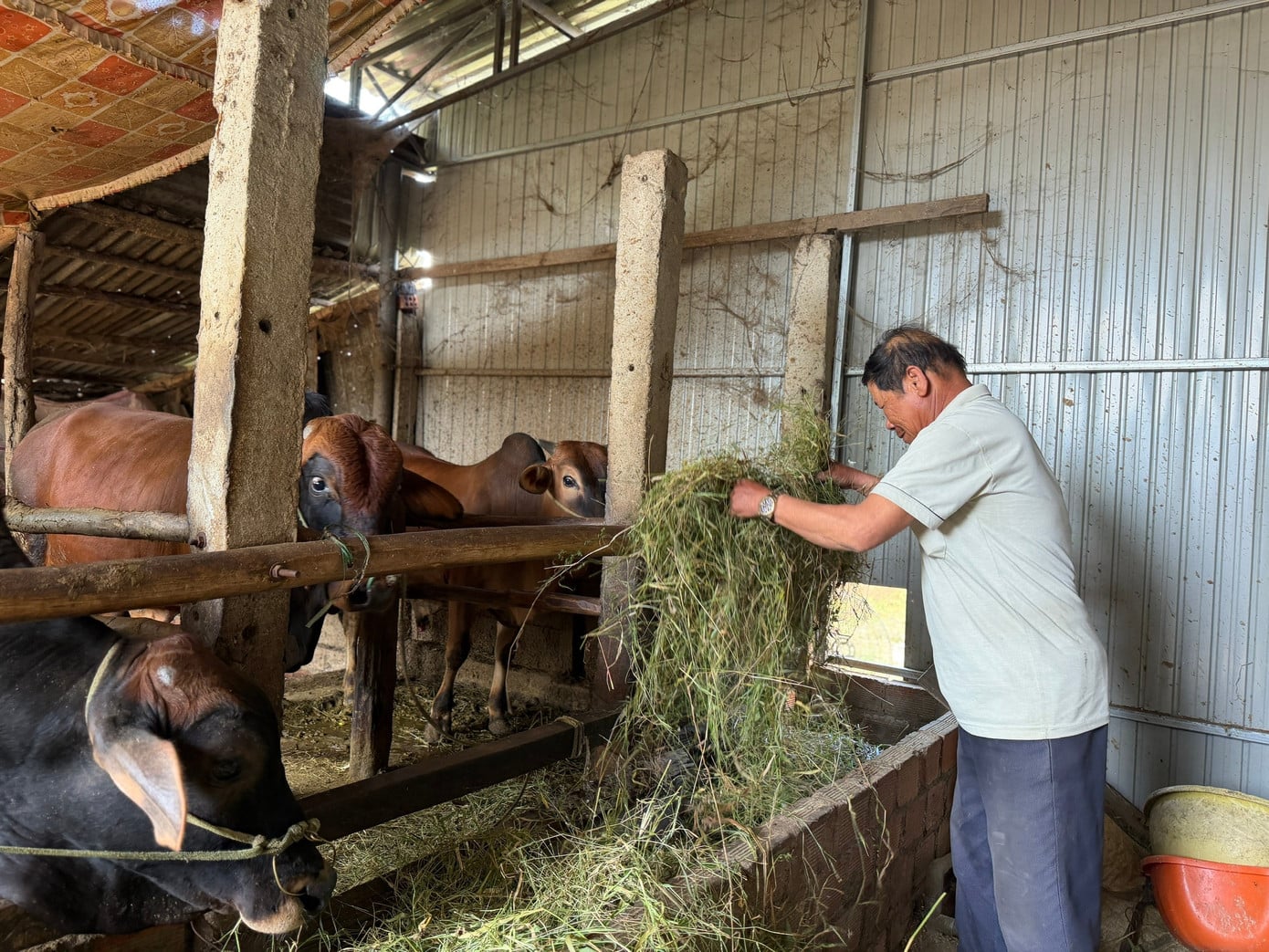
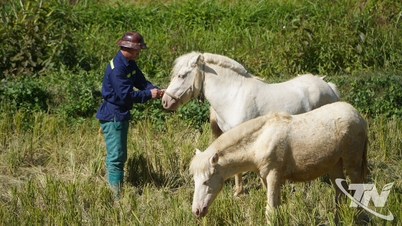
According to the Chairman of Krông Bông commune, the area has many grasslands, a favorable climate, and many households have escaped poverty thanks to livestock farming.
A typical example is the household of Mr. Nguyen Xuan Hoang (residential area 7, Krong Bong commune), who escaped poverty and rose to prosperity. With eyes shining with happiness, Mr. Hoang recounted that previously, despite diligently farming, his family's income remained unstable. With the support of the savings group, he obtained a 50 million VND policy loan and boldly invested in a livestock farming model. He built a sturdy barn of over 200 m², raising 10 breeding cows and 15 wild boars, while also converting less productive crop land to elephant grass cultivation for a stable feed source.
After three years, his family's total income reached over 150 million VND per year, enough for him to reinvest, renovate his house, and become one of the households that have sustainably escaped poverty in the locality.
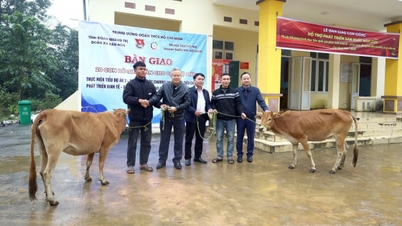
Mr. Nguyen Ngoc Phap, Chairman of the People's Committee of Krong Bong commune, affirmed: "Krong Bong commune has a large area of land, many grasslands, and a favorable climate for livestock farming. Many households have prospered from raising cattle. To continue promoting and effectively responding to the sustainable poverty reduction program, the commune will continue to use the 2 billion VND allocated by the province to purchase and donate cattle to disadvantaged households to help them develop their economy. We hope that the households receiving cattle in the next phase will leverage their strengths in livestock production to expand their herds and develop their family's economy. In the coming time, the commune strives to set a goal of reducing the poverty rate to the lowest possible level."
Rising out of poverty thanks to policy.
Besides their own efforts, the people also received support from the National Target Program for Socio-Economic Development in Ethnic Minority and Mountainous Areas giai đoạn 2021–2025 (Program 1719). In Ea Ning commune, the program supported 60 breeding cows for 30 poor, near-poor, and newly-escaped-poverty households (2 cows per household, totaling over 40 million VND). As a result, many households have a stable source of livelihood and are gradually improving their lives.
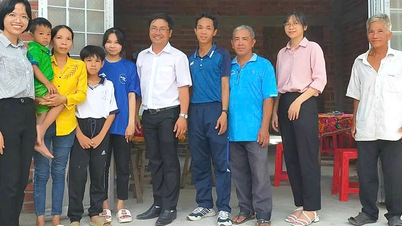
The family of Ms. H Wiăk Byă (born in 1957, Pưk Prong hamlet, Ea Ning commune) is one of the cases that has clearly demonstrated the effectiveness of receiving breeding cows. Ms. H Wiăk shared: “My husband has suffered a stroke for 6 years now, and our family doesn't have any land for production, so life has been very difficult. Thanks to receiving breeding cows, my family has more motivation to try harder. To date, the cows have given birth to healthy female calves, opening up opportunities for our family to escape poverty.”

Mrs. H Wiăk's family has had a more stable life since receiving the breeding cows.
In Ea Ô commune, Mr. Dang Duc Quy (head of village 6C) said that currently the village still has 13 poor households and 20 near-poor households. To achieve sustainable poverty reduction, the village's self-governing committee, in coordination with relevant departments, is strengthening efforts to encourage villagers to work diligently, save on expenses, and limit elaborate funeral and wedding ceremonies. The village also focuses on building and replicating successful production and livestock farming models that yield high economic returns, so that people can visit, learn from, and emulate them.
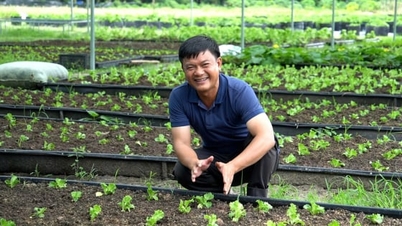
Simultaneously, the local authorities continuously support poor and near-poor households in accessing policy-based loans, providing livestock and seedlings, and guiding production techniques. The village self-governing committee also encourages people to move towards sustainable production, reduce the use of chemical fertilizers, and increase the use of organic fertilizers to improve soil, help crops grow well, limit pests and diseases, and combat negative weather conditions. As a result, crops thrive year-round, achieve high yields, and help many families increase their income.

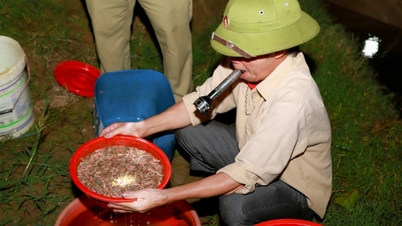
Besides livestock farming, thanks to support in terms of seeds and techniques, many villagers have risen out of poverty through silkworm breeding.
Sharing more with reporters about the implementation of the National Target Program, Mr. Le Hong Van, Chairman of the People's Committee of Krong Nang commune, said that the commune is currently orienting the implementation of the Sustainable Poverty Reduction Program 2026-2030 according to the motto "the right people, the right work". Accordingly, each official and civil servant is assigned to be in charge of a group of poor households, directly visiting each house to review and understand the causes, and then building a specific "scenario" for each household. Based on that, appropriate solutions are proposed to support livelihoods for households lacking capital, provide vocational training for households lacking employment, or guide technical skills for households with inefficient production.
Source: https://tienphong.vn/nguon-von-chinh-sach-don-bay-giup-nhieu-xa-vung-kho-o-dak-lak-vuon-minh-post1804064.tpo

![[Photo] Prime Minister Pham Minh Chinh receives the Governor of Tochigi Province (Japan)](/_next/image?url=https%3A%2F%2Fvphoto.vietnam.vn%2Fthumb%2F1200x675%2Fvietnam%2Fresource%2FIMAGE%2F2025%2F12%2F16%2F1765892133176_dsc-8082-6425-jpg.webp&w=3840&q=75)

![[Photo] Prime Minister Pham Minh Chinh receives Lao Minister of Education and Sports Thongsalith Mangnormek](/_next/image?url=https%3A%2F%2Fvphoto.vietnam.vn%2Fthumb%2F1200x675%2Fvietnam%2Fresource%2FIMAGE%2F2025%2F12%2F16%2F1765876834721_dsc-7519-jpg.webp&w=3840&q=75)
![[Live] 2025 Community Action Awards Gala](/_next/image?url=https%3A%2F%2Fvphoto.vietnam.vn%2Fthumb%2F1200x675%2Fvietnam%2Fresource%2FIMAGE%2F2025%2F12%2F16%2F1765899631650_ndo_tr_z7334013144784-9f9fe10a6d63584c85aff40f2957c250-jpg.webp&w=3840&q=75)
![[Image] Leaked images ahead of the 2025 Community Action Awards gala.](/_next/image?url=https%3A%2F%2Fvphoto.vietnam.vn%2Fthumb%2F1200x675%2Fvietnam%2Fresource%2FIMAGE%2F2025%2F12%2F16%2F1765882828720_ndo_br_thiet-ke-chua-co-ten-45-png.webp&w=3840&q=75)













































![[Photo] Prime Minister Pham Minh Chinh attends the Vietnam Economic Forum 2025](https://vphoto.vietnam.vn/thumb/402x226/vietnam/resource/IMAGE/2025/12/16/1765893035503_ndo_br_dsc-8043-jpg.webp)





























Comment (0)