

I recall that the Co To Radio and Television Station was established in 1996, at a time when the island district of Co To was facing many difficulties: lack of electricity, scarce fresh water, poor transportation, inadequate infrastructure, and outdated technical equipment. The district's Radio and Television Station started almost from scratch. In its early days, the station had only one broadcasting and receiving station, mainly relaying programs from the Voice of Vietnam , Vietnam Television, and Quang Ninh Radio and Television, and lacked the capacity to produce its own local programs.
Another major difficulty was the lack of staff and reporters. None of those present had professional journalistic skills. Therefore, one of the station's first priorities was stabilizing the organizational structure, focusing on training staff, reporters, and technicians, and investing in equipment. The first radio and television programs produced by the Co To District Radio and Television Station were launched, marking a new stage in the development of propaganda work in the island district.
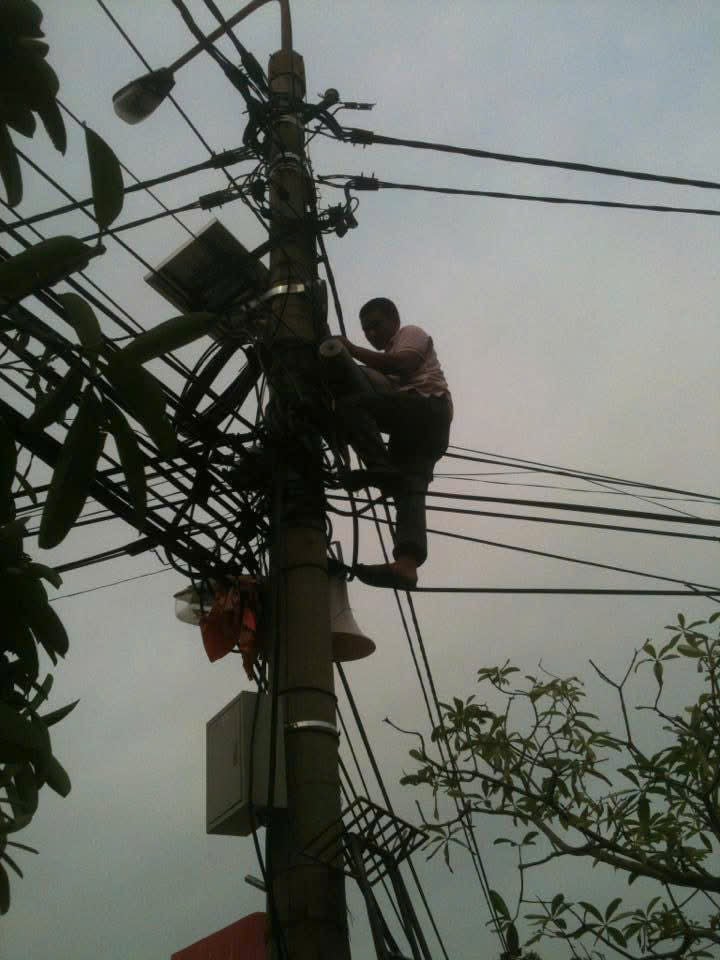
In August 2005 , when I was assigned to be the Head of the District Radio and Television Station, the organizational structure was very rudimentary, with only 4 staff members, none of whom had received professional training in journalism, radio, or television broadcasting. Infrastructure was lacking; there was no synchronized radio broadcasting system throughout the district, no recording or film editing equipment, only a single radio-television relay station consisting of 1 radio transmitter, 2 television receivers, 1 Chinese-made generator, 1 radio, and 1 M9000 camera; the radio broadcasting system, consisting of 4 speaker clusters in the town center, was dilapidated. The staff lacked professional training in journalism, radio, or television broadcasting.
Amidst countless difficulties, I realized that nothing could be accomplished without first reorganizing the structure and training and developing the team. Therefore, the first thing I did was establish working regulations , clearly assign tasks to each member, and gradually integrate professional training and development into a systematic process.
Unlike other units on the mainland, access to specialized materials and instructors in Co To at that time was extremely limited. We had to proactively seek out short-term training programs, take advantage of training courses organized by the province and the relevant departments, and also seek help from experienced journalists and technicians from Quang Ninh Newspaper, Quang Ninh Radio and Television Station, and primarily rely on self-study.
I chose Quang Ninh Newspaper as a place for my colleagues to learn from and to encourage them to write news articles and submit them to the newspaper. As you know, Co To was very difficult at that time; the office didn't have computers or photocopiers, so news articles submitted for publication were mostly handwritten, and a copy was made to compare with the published article. From there, we could compare our drafts to see how the newspaper edited our articles, and then learn from the experience. This method proved very effective. Every time reporters received complimentary copies of the newspaper or payment for their work, I could clearly see the joy and pride on their faces.
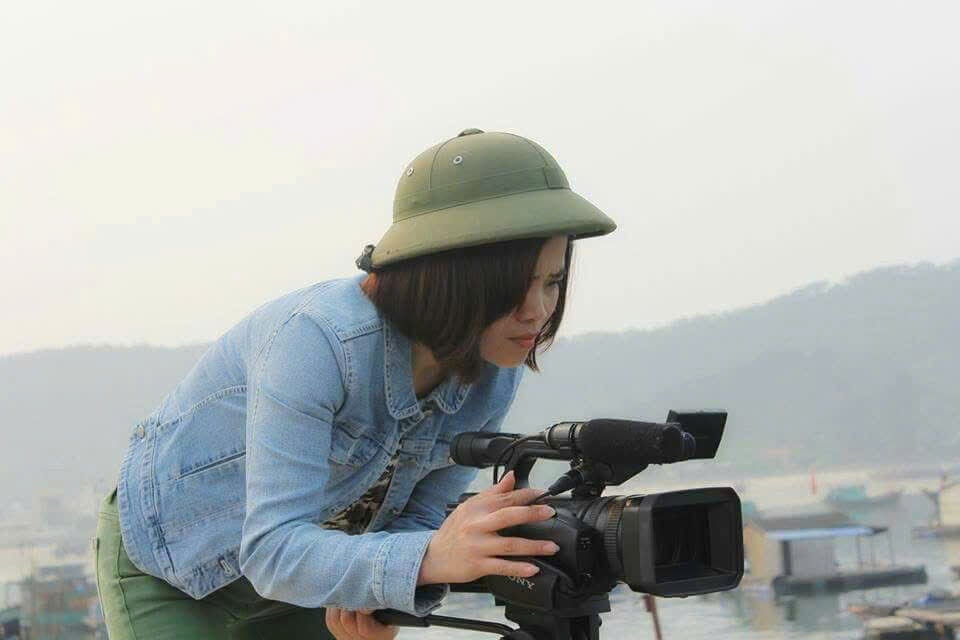
The memories I will never forget are of those evenings when the reporters, hungry, didn't go home but all sat at their computers, editing every word and every frame, hoping to produce the best possible product to serve the Party committee, the government, and the people.
I remember once, upon hearing that journalist Uong Ngoc Dau, Director of the VOV1 News Department, was on a trip to Co To Island , I approached them to invite them to the station and asked for their guidance on how to conduct live broadcasts. The delegation provided hands-on training and guidance, enabling our reporters, editors, and technicians to grasp the methods and skills for producing live radio programs. That same day, VOV produced a live radio program on "Vietnam's Seas and Islands," allowing our staff and reporters to participate directly.
With a "learn while you work" spirit, at the end of 2005, we started producing our first radio programs, imbued with the spirit of Co To. From two news bulletins per week, we increased to three, then to daily news bulletins lasting 20-25 minutes. Besides the station's small team of reporters, we invited capable officials and officers to participate as collaborators. The program content became increasingly diverse; in addition to news about the daily activities of district leaders and articles reflecting the lives of the people, we also developed sections such as "Party Building," "Good People - Good Deeds," and "Law and Life"...
In 2006, I proposed to the district leaders and took advantage of the targeted program from the Provincial Radio and Television Station to receive investment in equipment such as cameras, video editing computers, audio recorders, desks and chairs, office buildings, a solar power system, and to upgrade the FM radio transmitter to 300W and the UHF and VHF television transceivers to 500W to expand coverage. These equipment items were very modern compared to the district-level station at that time.
We officially produced our first television program on New Year's Eve of the Lunar New Year in 2006, and subsequently produced one television program per month, increasing to two programs per month in 2007. This was a significant milestone, affirming the maturity of the station's team of reporters, editors, and technicians. The district's television programs reached a wide audience both within and outside the district.
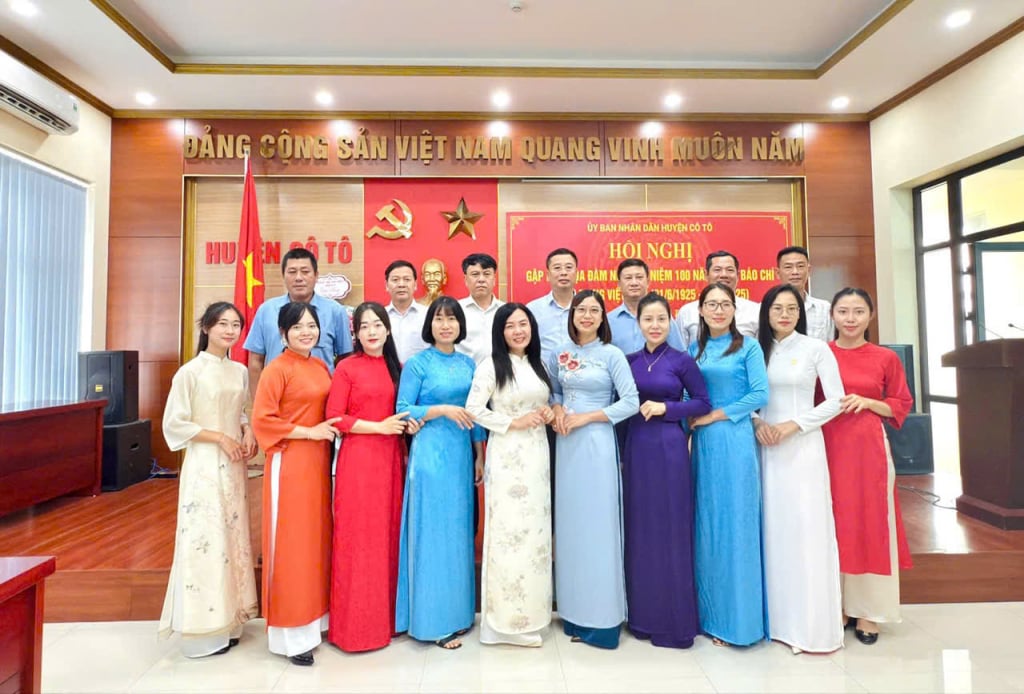
Not only did they produce their own content, but since 2006, the station's team of reporters and technicians has also actively collaborated with many newspapers, and many reporters have received commendations from these newspapers. Reporters from the station have also actively participated in provincial and national-level radio and television festivals in all genres of radio and television journalism, such as short and long reports, radio stories, and live broadcasts… winning many gold and silver awards. In one year, at the provincial radio and television festival, Co To Station won first prize overall, thereby gradually affirming the reporters' skills and the station's position and quality of propaganda within the Quang Ninh province's press and radio-television system. During that period, several names became well-known and admired by colleagues inside and outside the province, such as The Cuong, Cong Quy, Thu Hang, and now reporters Thu Bau, Hue Phuong, and several others.
In particular, during major local and national political events, the team of technicians overcame difficulties in equipment, terrain, and weather to organize live broadcasts of major political events in the district. A memorable experience was the first time the station live-streamed the 2007-2011 National Assembly election, despite the limited operational resources. The program was broadcast on the district's radio system, leaving a deep impression on voters and the people, and surprising the district leaders at the time.
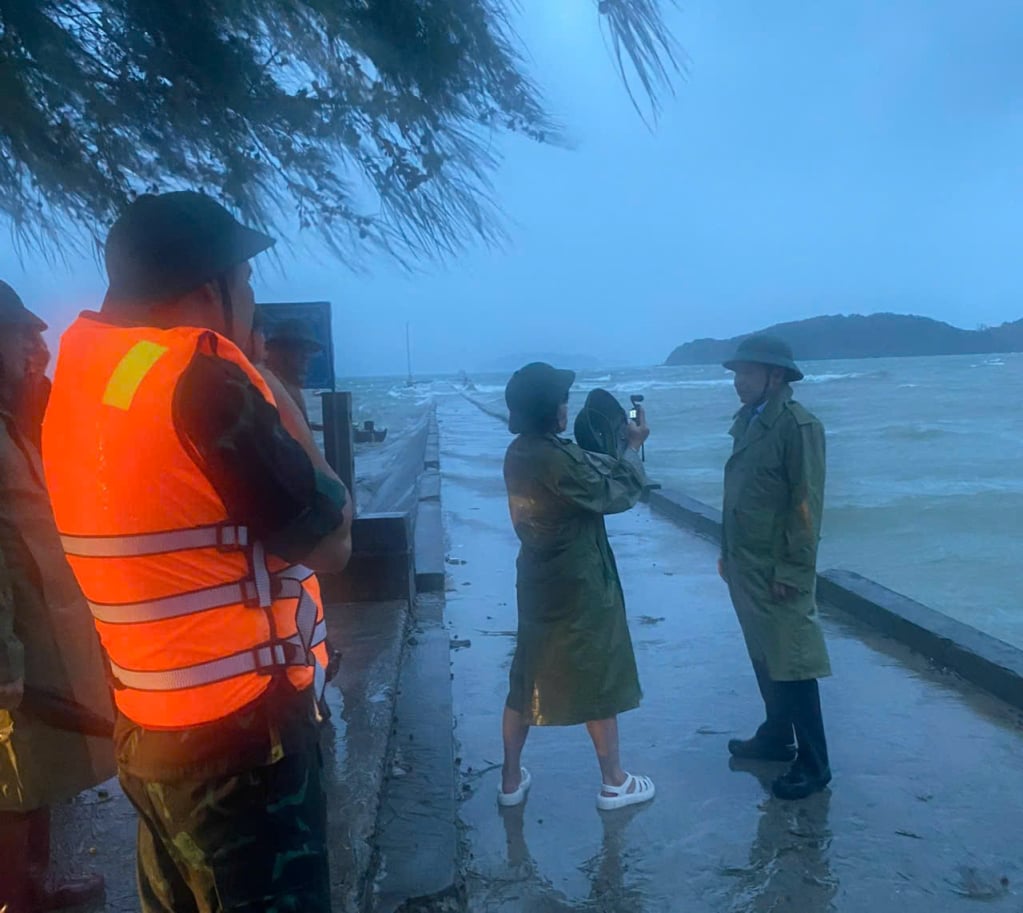
A particularly commendable aspect is that, despite 100% of the reporting staff being women, they are not afraid of difficulties and hardships. On the contrary, they are very "battle-hardened," venturing into events, search and rescue operations, defense and security exercises, and the development of coastal and island tourism... The image of female reporters carrying cameras, recording equipment, notebooks, and pens, staying in the field through storms to report the news, has become a beautiful symbol of journalists working in the face of adversity. Some volunteer to work even when sick, others bring their young children to the office and work until 11 or 12 midnight. With dedication and responsibility, they remain tirelessly at their posts to produce excellent articles and footage to serve political objectives and the people.
Looking back at the 29-year development of Co To Radio and Television Station, the period from 2005 to 2010 was a crucial foundational phase for the development of Co To District Radio and Television Station. (now the Co To Communication and Culture Center). Starting from scratch, we have built a team of professional staff, gradually modernized our facilities, established professional work processes, and produced high-quality programs. This is the foundation for succeeding generations to continue inheriting, innovating, and keeping pace with the development of journalism and media in the digital age.
Source: https://baoquangninh.vn/nho-mot-thoi-gian-kho-3363296.html

![[Photo] General Secretary To Lam attends the Inauguration Ceremony of the Ho Chi Minh Memorial House at the E2 Hill historical site.](/_next/image?url=https%3A%2F%2Fvphoto.vietnam.vn%2Fthumb%2F1200x675%2Fvietnam%2Fresource%2FIMAGE%2F2026%2F01%2F31%2F1769831648495_vna-potal-tong-bi-thu-to-lam-du-le-khanh-thanh-nha-tuong-niem-chu-tich-ho-chi-minh-tai-di-tich-doi-e2-8564287-1-2231-jpg.webp&w=3840&q=75)

![[Photo] Prime Minister Pham Minh Chinh presides over the fourth session on private economic development.](/_next/image?url=https%3A%2F%2Fvphoto.vietnam.vn%2Fthumb%2F1200x675%2Fvietnam%2Fresource%2FIMAGE%2F2026%2F01%2F31%2F1769835553414_ndo_br_dsc-7213-jpg.webp&w=3840&q=75)


![OCOP during Tet season: [Part 3] Ultra-thin rice paper takes off.](/_next/image?url=https%3A%2F%2Fvphoto.vietnam.vn%2Fthumb%2F402x226%2Fvietnam%2Fresource%2FIMAGE%2F2026%2F01%2F28%2F1769562783429_004-194121_651-081010.jpeg&w=3840&q=75)


![OCOP during Tet season: [Part 2] Hoa Thanh incense village glows red.](/_next/image?url=https%3A%2F%2Fvphoto.vietnam.vn%2Fthumb%2F402x226%2Fvietnam%2Fresource%2FIMAGE%2F2026%2F01%2F27%2F1769480573807_505139049_683408031333867_2820052735775418136_n-180643_808-092229.jpeg&w=3840&q=75)



Comment (0)