


The Tet market in this region with its harsh climate has its own unique character: urban markets nestled along familiar roads filled with the sounds of traffic; and rural markets tucked away by the riverbank, beside rice fields, and beneath rows of old bamboo. Just one morning at the end of the year, when the villages are busier than usual, vendors carrying their goods set out earlier, and calls echo from dawn, is enough to feel the spirit of Tet in this sun-drenched, windswept land, inhabited by people who patiently overcome hardship.
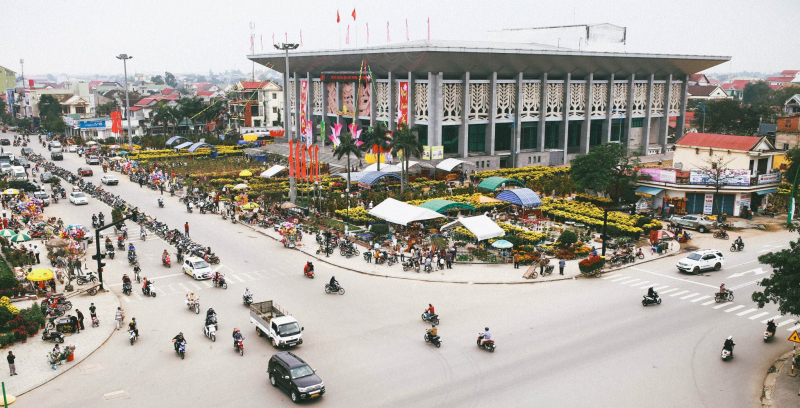
1. Dong Ha Market is busier than usual in the days leading up to Tet (Lunar New Year). Sellers jostle shoulder to shoulder, buyers walk slowly, step by step, as if to maintain the rhythm of the year-end atmosphere. Tet seems compressed within this crowded space, as if everyone is afraid of moving too fast and letting Tet slip away, afraid of missing those familiar moments that only come once a year. Laughter, chatter, and calls to each other create a rhythm that is both hurried and heartwarming.
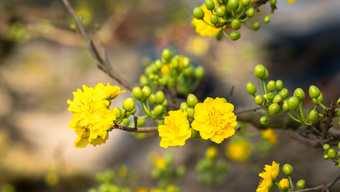
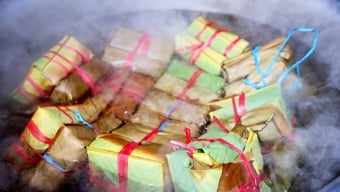
The Tet (Lunar New Year) goods at this market are much more abundant than at other markets in the province. Besides meat, fish, vegetables, and fruits, typical Tet items like banh chung and banh tet (traditional rice cakes) are piled high, along with all kinds of candies and preserves, and chrysanthemums and lilies in vibrant colors. But strangely, despite being an urban market, people don't buy much. Each person only carries a small bag, walks around briefly, and then leaves. An elderly woman carefully selects a pair of banh chung. Not necessarily the most beautiful ones, but those that fit comfortably in her hand and are tightly wrapped. "Just enough for the offering, sir," she says, as if speaking to the seller, but also as if reminding herself of the customs and simple traditions that remain intact within her family.
Around them, the soft cries of vendors echoed, the aroma of grilled meat, the scent of young banana leaves, and the fragrance of Tet flowers mingled, creating a unique flavor found only in the sun-drenched central region of Vietnam. Children peeked from behind stalls, curious, their eyes sparkling, but still maintaining their composure, avoiding pushing and shoving. The elderly strolled leisurely, observing familiar things from previous years, as if verifying a continuous chain of memories.
2. Crossing the Ben Hai River, the wind becomes salty, and the market is quite different from the markets in the more distant riverside villages. The Cua Tung fish market is located right next to the bridge spanning the river mouth – where the river water meets the sea – and only begins operating around 3 PM daily, when the sun has set, the waves offshore have calmed, and the boats are returning to shore. The pace of market life slows down accordingly, much like how coastal people are accustomed to observing the tides and waiting for the sea breeze rather than following a fixed schedule.
Cua Tung fish market isn't large, but it embodies many characteristics of a coastal countryside. During Tet (Vietnamese New Year), in addition to fresh seafood, the market also sells unique specialties. There's Con Co sea grape, with its large, round, plump, and vibrant green seeds, superior to those from other coastal areas; and sea cucumber, harvested from rocky outcrops near the shore, available in two types: one for direct consumption and another that has been cooked and thickened, known as agar jelly. Both sellers and buyers are unhurried. Some buy for Tet, others as gifts for relatives far away; each package is carefully preserved, encapsulating the rhythm of life, the aroma, and the salty taste of the coastal region.
3. In the southern part of Quang Tri province, the markets in the Cang region appear quieter. The meaning of the word "Cang" is explained by the locals as stemming from the fact that hundreds of years ago, their ancestors cleared the land on both banks of the lower O Giang River, establishing settlements and farming communities, resembling the claws that marked the boundaries of the villages, hence the name Cang. This area is prone to flooding every year, so the Tet markets have a reserved atmosphere. Goods are not abundant, mainly rice, sticky rice, beans, and vegetables; there are few flowers and sweets. But buyers are more meticulous than anyone else, asking questions at length and examining each item carefully, as if each item must be completely usable. In these markets, it's easy to see people buying a little extra for their neighbors. "His family is struggling this year," a woman murmurs as she buys some extra vegetables. Tet in the Cang region isn't about abundance, but about mutual support and care. Those markets remind people that, in Quang Tri, there are Tet celebrations that are not noisy, but warm with human kindness, not with lavish feasts.
Early one morning before Tet (Lunar New Year), I went to Hai Hoa Market – one of the seven markets in the old Hai Lang district, now part of Nam Hai Lang commune. This market, both on ordinary days and during Tet, is known for a unique specialty: field rat meat, carefully cleaned and marinated, and packaged in plastic jars. Ms. Nguyen Thi Thuy, a vendor, explained that during the winter-spring season, when the rice plants are about to flower, farmers hunt rats together, both to protect their crops and to create a delicious dish. “After butchering and cleaning, the rats are chopped into small pieces, mixed thoroughly with fish sauce, salt, pepper, galangal, ginger, and lemongrass, then carefully packaged,” Ms. Thuy shared. Buyers favor field rat meat from the market not only for its rich flavor but also because it's a traditional delicacy, evoking memories of a warm, simple Tet filled with community spirit.
4. Besides city markets, rural markets, markets along river and sea estuaries, or markets in flood-prone areas, Quang Tri also has a very special market that only convenes once a year on the night of the 2nd and the morning of the 3rd day of Tet: Bich La communal market, Bich La Dong village, now part of Trieu Phong commune. The names of the land and villages have changed many times, the footprints of history overlapping through wars, separations, and the silent shifts of time. But amidst all these changes, the people of Bich La have retained only one symbol: the clay rooster - the lucky mascot of the traditional market.
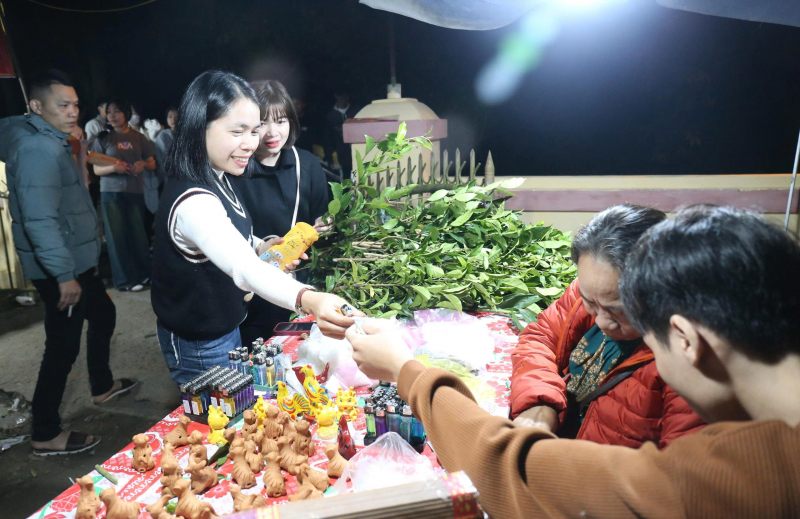
In the villagers' minds, chickens are not just livestock but also a rhythm of time. Their crowing at dawn, their call to the morning, or the rustling of the bamboo groves behind the village become a lifeline, a sign of waking and sleeping, of beginnings and continuations. Therefore, the village market cannot be without free-range chickens – small, rustic, yet warm, reminding people of their origins. People go to the market to buy chickens not only to seek good fortune, but also to touch upon layers of memory and culture accumulated over hundreds of years.
From three or four in the morning, Bich La communal house was illuminated in the spring mist, candlelight and the scent of incense mingling with the light drizzle. Hundreds, even thousands, of clay roosters filled the courtyard, as if waiting for a collective crow. In that moment, people forgot whether they were guests or hosts, forgot that spring had just arrived, and were left with only the feeling of slowly drifting through distant memories, of childhood and the old village.
Mr. Dang Sy Dung, Chairman of the People's Committee of Trieu Phong commune, confided that the communal market exists not because of the festive colors but because of community memories, passed down through generations. Under the open roof of the communal house, culture lives, breathes, and is preserved through daily life. Every spring, the rooster still crows – not only announcing a new day, but also awakening the deepest feelings in people's hearts…
In Quang Tri, Tet (Vietnamese New Year) isn't measured by the calendar, but by the markets. Anyone far away, just remembering a Tet market, feels a longing to return home.
Source: https://cand.com.vn/doi-song/non-nao-cho-tet-i796728/

![[Photo] Prime Minister Pham Minh Chinh visits and extends New Year greetings to former Party and State leaders and offers incense to the esteemed predecessors.](https://vphoto.vietnam.vn/thumb/1200x675/vietnam/resource/IMAGE/2026/02/14/1771078465521_dsc-2411-jpg.webp)













































![[Photo] Coc Ly market bustling on the eve of Tet](https://vphoto.vietnam.vn/thumb/402x226/vietnam/resource/IMAGE/2026/02/14/1771062261424_baolaocai-br_img-6457-jpg.webp)








Comment (0)