

Outstanding green credit reached approximately 750,000 billion VND.
According to the Ministry of Finance , the financial resources needed to achieve national green growth targets and net zero emissions by 2050 are substantial. It is projected that by 2050, the total long-term investment needed for green and sustainable economic development will be approximately US$600-700 billion, of which the capital needed for climate change adaptation will be around US$368 billion (equivalent to 6.8% of GDP per year). To achieve this, in addition to funding from the state budget, it is necessary to develop green bonds, green credit, carbon markets, and international funding sources.
As of November 30, 2025, outstanding green credit reached approximately VND 750 trillion, increasing by an average of over 21% per year during the period from 2017 to September 2025, higher than the overall credit growth rate of the economy . However, capital from banks alone is insufficient. “We need to diversify financial resources, requiring the participation of domestic and foreign capital channels, especially from the private sector and capital markets (in this case, the stock market), working together with the banking system to meet the requirements of green transformation and sustainable development of the country,” said Deputy Governor of the State Bank of Vietnam (SBV) Nguyen Ngoc Canh at the recent seminar “Diversifying Capital for Sustainable Development” organized by the Finance and Investment Newspaper.
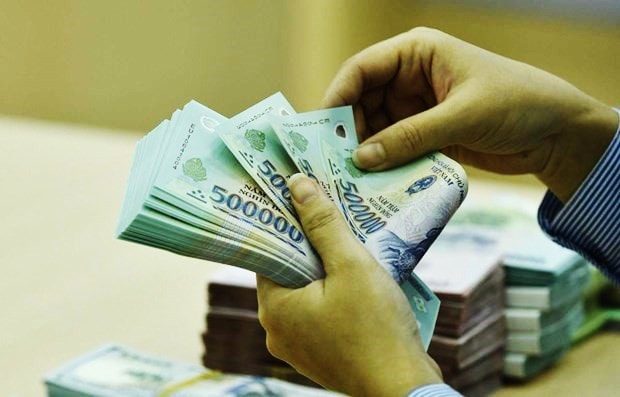
It is projected that by 2050, 600-700 billion USD will be needed for the development of a green and sustainable economy. Photo: Vietnam+
Also at this event, Nguyen Ba Hung, Chief Economist of the Asian Development Bank (ADB) in Vietnam, stated that according to the draft document submitted to the 14th Party Congress, the target for public investment in the 2026-2030 period is approximately 8% of GDP, meaning an additional 50-70 billion USD needs to be mobilized; total social investment is projected to increase to 40% of GDP, equivalent to an additional 250-350 billion USD over the next five years compared to the previous period. To achieve the target of 10% GDP growth next year, Vietnam also needs significant capital for development investment.
Developing financial markets in a coordinated manner.
Mr. Hung analyzed that, in order to mobilize this capital, along with the credit channel of the banking system, Vietnam can mobilize capital through government bonds. Vietnam's government bond debt/GDP ratio is approximately 20%, a very low level compared to other countries in the region. This indicates a relatively high level of safety and room for further growth. Similarly, with regard to government public debt, domestic debt is relatively stable, while foreign debt has decreased relatively rapidly over the past five years, showing that public finance remains at a safe level and there is still much room to mobilize capital from abroad.
On the other hand, when looking at the bond market, Vietnam is among the countries in the region with a relatively low proportion of corporate bonds compared to the total outstanding bond debt of the entire market. Notably, regarding the secondary bond market, Vietnam currently has almost no transactions of corporate bonds, meaning liquidity is virtually nonexistent. Furthermore, foreign investors own almost zero government bonds in Vietnam, while in other countries this can reach up to 20%. Foreign investors purchasing government bonds with local currency has been adopted in many countries, but not yet in Vietnam, even though "this is a very important channel that Vietnam needs to develop," Mr. Hung emphasized.
Currently, Vietnam's credit-to-GDP ratio is 130%, while in other emerging countries it ranges from 10% to 90%. To reduce this ratio, Mr. Hung believes it is necessary to rely on the capital market, particularly the bond market; in the short term, we can convert bank debt into bonds when the bond market develops well.
Regarding capital mobilization through the stock market, while globally market capitalization is approximately 130% of GDP, and developing economies around 50% of GDP, Vietnam remains stable at around 40% of GDP, meaning it has greater potential to mobilize capital from this market.
Analyzing the situation, Mr. Hung stated that Vietnam has limitations but also a lot of room for mobilizing capital, and exploiting that room "is not too difficult."
Citing forecasts from the International Monetary Fund, the ADB's chief economist stated that if Vietnam implements reforms effectively, its GDP growth could increase by more than 2% by 2030. More importantly, successful reforms to the long-term capital market would be the biggest contributor to growth.
Mr. Hung suggested that, for the public sector, the government bond market should be reformed, particularly focusing on upgrading credit ratings (currently at BB+, a high-risk rating; upgrading to Investment Grade would both reduce capital costs and improve access to capital markets). Along with this, it is necessary to improve the efficiency of public investment selection and implementation; and develop new financial instruments based on a hybrid model combining public and private finance. Furthermore, increased access to international capital markets is also crucial for diversifying resources for development.
For the private sector, it is necessary to develop domestic financial markets in a coordinated manner, including the money market, debt market, and securities market; and to fully develop the ecosystem of financial services, including banking, investment, brokerage, and consulting. In reality, according to Mr. Hung, Vietnam still relies primarily on the commercial banking system for deposit and lending activities, while lacking investment banks, and the role of institutions responsible for managing long-term capital flows and connecting with quality projects remains quite unclear.
Simultaneously, it is necessary to connect with international financial markets to mobilize large-scale capital and improve service efficiency. Establishing an international financial center is a crucial tool for achieving this connection, Mr. Hung observed.
Pham Thi Thanh Tam, Deputy Director of the Department of Financial Institutions, Ministry of Finance, added that the demand and potential for the development of Vietnam's bond market are very large in the period 2026-2030. However, the lack of institutional investors with strong financial capabilities and long-term capital to participate in investment affects the ability to raise capital. Looking back, the government bond market has only reached over 60% of the 2025 plan, partly due to this reason.
On the other hand, foreign investors account for only a very small proportion of the government bond market, due to the lack of suitable risk hedging tools for exchange rates and interest rates, and the relatively low interest rates on Vietnamese government bonds compared to the region.
“To promote the development of the bond market in general and green bonds in particular, the first and crucial requirement is to develop the investor base. The Ministry of Finance is closely coordinating with other ministries and agencies to implement this. However, this is a vital task that requires the synchronization of relevant ministries and agencies, and is not solely the responsibility of the Ministry of Finance,” Ms. Tam shared.
Source: https://daibieunhandan.vn/phat-develop-investors-is-my-important-task-10400781.html
![[Image] Leaked images ahead of the 2025 Community Action Awards gala.](/_next/image?url=https%3A%2F%2Fvphoto.vietnam.vn%2Fthumb%2F1200x675%2Fvietnam%2Fresource%2FIMAGE%2F2025%2F12%2F16%2F1765882828720_ndo_br_thiet-ke-chua-co-ten-45-png.webp&w=3840&q=75)
![[Image] The tenacious fighting spirit of Vietnamese women's football](/_next/image?url=https%3A%2F%2Fvphoto.vietnam.vn%2Fthumb%2F1200x675%2Fvietnam%2Fresource%2FIMAGE%2F2025%2F12%2F17%2F1765990260956_ndo_br_4224760955870434771-copy-jpg.webp&w=3840&q=75)
![[Photo] Prime Minister Pham Minh Chinh receives the Governor of Tochigi Province (Japan)](/_next/image?url=https%3A%2F%2Fvphoto.vietnam.vn%2Fthumb%2F1200x675%2Fvietnam%2Fresource%2FIMAGE%2F2025%2F12%2F16%2F1765892133176_dsc-8082-6425-jpg.webp&w=3840&q=75)
![[Live] 2025 Community Action Awards Gala](/_next/image?url=https%3A%2F%2Fvphoto.vietnam.vn%2Fthumb%2F1200x675%2Fvietnam%2Fresource%2FIMAGE%2F2025%2F12%2F16%2F1765899631650_ndo_tr_z7334013144784-9f9fe10a6d63584c85aff40f2957c250-jpg.webp&w=3840&q=75)

![[Photo] Prime Minister Pham Minh Chinh receives Lao Minister of Education and Sports Thongsalith Mangnormek](/_next/image?url=https%3A%2F%2Fvphoto.vietnam.vn%2Fthumb%2F1200x675%2Fvietnam%2Fresource%2FIMAGE%2F2025%2F12%2F16%2F1765876834721_dsc-7519-jpg.webp&w=3840&q=75)
































































![[Live] Closing Ceremony and Award Presentation for the "Impressive Vietnam Tourism" Video/Clip Creation Contest 2025](https://vphoto.vietnam.vn/thumb/402x226/vietnam/resource/IMAGE/2025/12/17/1765974650260_z7273498850699-00d2fd6b0972cb39494cfa2559bf85ac-1765959338756946072104-627-0-1338-1138-crop-1765959347256801551121.jpeg)





















Comment (0)