

Three new pillars for the capital market.
Upgrading the stock market, establishing a legal framework for digital assets, and creating an institutional framework for an international financial center are three fundamental milestones for Vietnam's capital market in 2025, opening up opportunities for the capital market to assert its role as a pillar leading medium and long-term capital flows for the economy .
Speaking at the forum "Vietnam Capital Market Outlook 2026: Breakthrough on a New Foundation," organized by the Vietnam Financial Advisory Association (VFCA) in collaboration with VietnamFinance magazine on the afternoon of December 12th, Dr. Le Minh Nghia, Chairman of the VFCA, stated that with three fundamental milestones for the capital market, the question is no longer "can we do it?", but rather how to transform those foundations into real driving forces.
This is a prerequisite for Vietnam to effectively mobilize medium and long-term capital from domestic and international sources, thereby realizing the goal of double-digit growth, escaping the middle-income trap in the 2026-2030 period, and moving towards the 2045 vision.
"We definitely need three tools: New thinking - New solutions - New ways of doing things," Mr. Nghia suggested.

This new mindset involves learning from the successes and failures of international financial centers, utilizing superior mechanisms, and daring to accept that the Vietnamese capital market must compete not only within ASEAN but also with leading global financial centers.
According to Mr. Nghia, the new solution is not about "copy-pasting" the old model, but about creating "Made in Vietnam" financial tools such as: green bonds with carbon credits, digitized assets, tokenized securities, or blockchain-based products. These tools aim to strongly attract capital flows from private equity funds, venture capital funds, pension funds, hedge funds, ESG funds, green funds, etc.
According to Mr. Nghia, the new approach is to decentralize power, adhere to international standards, and implement it immediately.
At the forum, Mr. Nguyen Son, Chairman of the Board of Directors of Vietnam Securities Depository and Clearing Corporation (VSDC), commented that in 2026, the capital market will face great opportunities as reforms in market structure, risk management, technology upgrading, and standardization of business processes are implemented synchronously.
This context facilitates Vietnam's move closer to developed market standards, while also enhancing the role of the financial market in supporting economic growth, business development, and attracting long-term capital flows.
For the Vietnamese stock market, 2026 is a significant year as it marks the first time Vietnamese stocks will be officially upgraded to FTSE standards, aiming for higher FTSE standards, and further still, MSCI standards.
A breakthrough mechanism is needed.
From the perspective of an investment fund, Ms. Luong Thi My Hanh, Director of Domestic Asset Management at Dragon Capital, believes that the experience of developed countries shows that the success of capital market transformation stems from decisive government policies, focusing on creating incentive mechanisms to motivate the private sector to fulfill its role.
According to Ms. Hanh, 2026 is a favorable time for the fund management industry to play its role in mobilizing idle capital from the population, helping people access a safe and sustainable capital market, and directly benefiting from economic growth.
"Long-term capital flows from these funds will reduce the burden on bank credit and become a stable resource to support development. Through this, Vietnam moves closer to a multi-pillar, modern financial system that is approaching regional standards," she said.
According to financial expert Dr. Can Van Luc, in order to create investment and business opportunities and increase investor confidence, appropriate fundraising methods are essential.
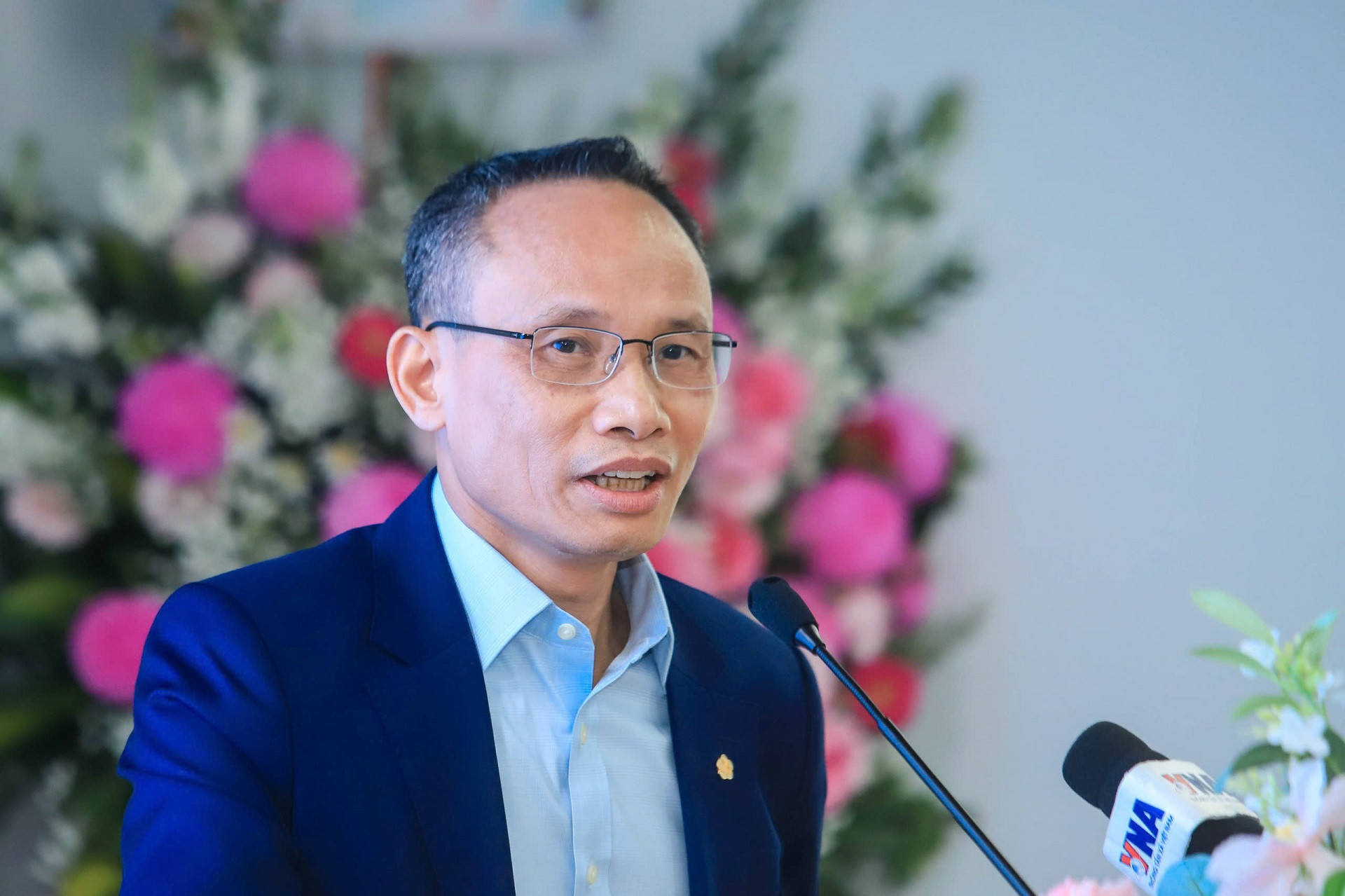
Besides traditional resources such as bank credit, capital markets, public investment, FDI, and private investment, Mr. Luc noted that Vietnam also has other potential financial resources such as green finance, sustainable finance; trade surplus, remittances, tourism ; upgrading the stock market; becoming an international financial center; the digital asset market; the carbon credit market, etc.
Speaking about the digital asset market, according to Mr. Phan Duc Trung, Chairman of the Vietnam Blockchain & Digital Asset Association, Vietnam is among the top 7 countries with the most cryptocurrency owners, with over 17 million people owning cryptocurrency (data from 2023).
Capital inflows from the blockchain market into Vietnam between July 2024 and June 2025 reached over $220 billion, ranking third in the Asia-Pacific region. Vietnam also ranks highest in the world for the percentage of freelancers owning cryptocurrency assets (over 85%, according to 2023 data).
According to him, piloting digital assets requires the convergence of three key elements: people, technology, and legal framework.
In particular, Mr. Trung emphasized that the lack of engineers capable of designing and operating the exchange, understanding market mechanisms, and meeting risk control requirements; and the shortage of personnel who understand both blockchain/cryptocurrency and have expertise in finance and exchange operations are major challenges in piloting the cryptocurrency exchange.
Source: https://vietnamnet.vn/thi-truong-von-viet-nam-truoc-thoi-co-lon-ba-tru-cot-moi-tao-da-but-pha-2471934.html










































































Comment (0)