

At the Vietnam Corporate Governance Forum 2025 (VCG Forum 2025) themed "Unlocking the Potential of Digital Assets," held on the afternoon of December 10th in Hanoi, Mr. Tran Anh Tuan, Director of the Hanoi Department of Science and Technology, announced that the city will officially launch its Technology Exchange Platform on December 22nd. Notably, it will integrate a Digital Asset Exchange function into this system, leveraging the specific mechanisms of the amended Capital City Law.
This is seen as a bold step to move digital assets out of the "grey area" and make them a legitimate channel for capital flow based on transparent technology . To realize this, Hanoi is preparing to issue six important resolutions, including a controlled testing mechanism (Sandbox) for four priority areas: digital assets, financial technology, smart cities, and data applications.
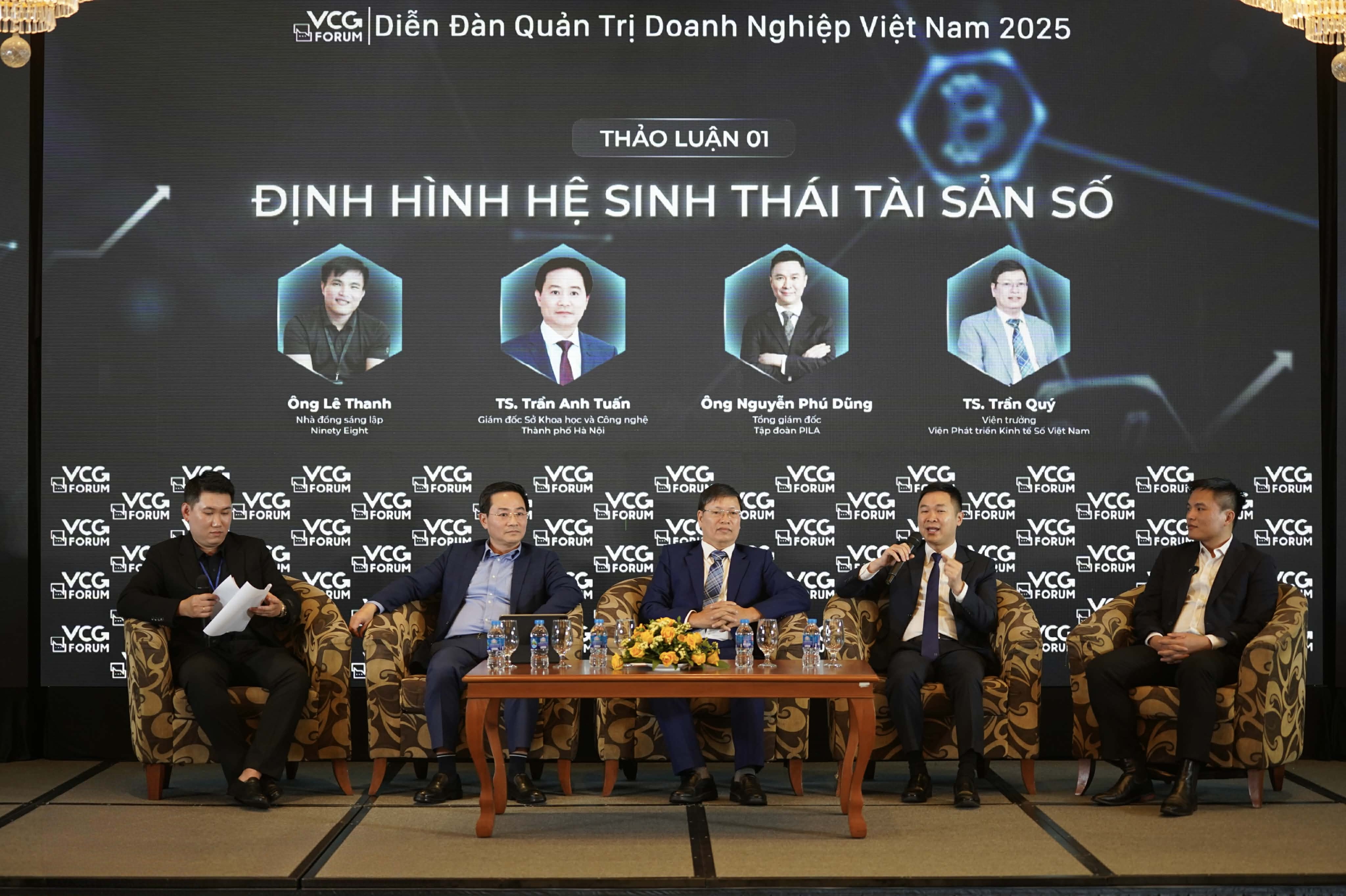
Experts believe that Vietnam needs new growth drivers and new markets, and one of them is digital assets and cryptocurrencies.
Photo: Anh Quân
Assessing Vietnam's technological potential in this field, Mr. Nguyen Phu Dung, co-founder of PILA Group and member of the Solaris Impact Fund Investment Board under Pacific Bridge Capital, stated that the biggest opportunity lies not in purely digital assets but in tokenized physical assets (RWA).
"Vietnam's strength lies in RWA, through the tokenization and 'liquefaction' of real assets that Vietnam uniquely possesses, such as Ha Long Bay, Phu Quoc Island, or its culinary culture. Blockchain technology is considered a national strategic infrastructure for mastering and deploying this type of technology. A national blockchain platform will create a layer of trusted data, thereby giving rise to layers of digital finance and digital economy," Mr. Nguyen Phu Dung emphasized.
According to Mr. Dung, the shift from spontaneous activities to a regulated market requires the creation of a "trust-based economy." Experts at the forum argued that digital assets only truly have sustainable value when built on "digital trust," reinforced by two pillars: firstly, a legal framework (such as Resolution 05 on piloting the cryptocurrency market) and secondly, the synchronization of technological infrastructure (blockchain, digital identity, security).
Technology makes the appraisal, custody, and monitoring processes transparent and immutable. Only then will digital assets truly meet the fundamental conditions for secure transactions, similar to real estate or securities.
With the goal of having the digital economy account for at least 40% of GRDP by 2026-2030, Hanoi is actively seeking chief architects for data, hardware, and semiconductors. The city is committed to not looking back but moving towards international standards, preparing for an innovation ecosystem where technology and legal frameworks go hand in hand.
Anh Quân




























































































Comment (0)