

This milestone opens a new growth cycle based on supply chain innovation, improving product value and expanding the market sustainably.
Sustainable growth momentum and transformation of key industries
According to recently released figures from the General Statistics Office of the Ministry of Finance , the projected import and export turnover in 2025 could reach approximately 900-920 billion USD. This not only reflects the rebound of the economy but also shows that Vietnam's trade openness has reached a new level. This growth comes amidst ongoing uncertainties in the global market, ranging from geopolitical fluctuations to significant changes in green standards in Europe, the United States, and many major economies. Nevertheless, Vietnamese goods have maintained their growth momentum, demonstrating a clearly strengthened resilience and adaptability.
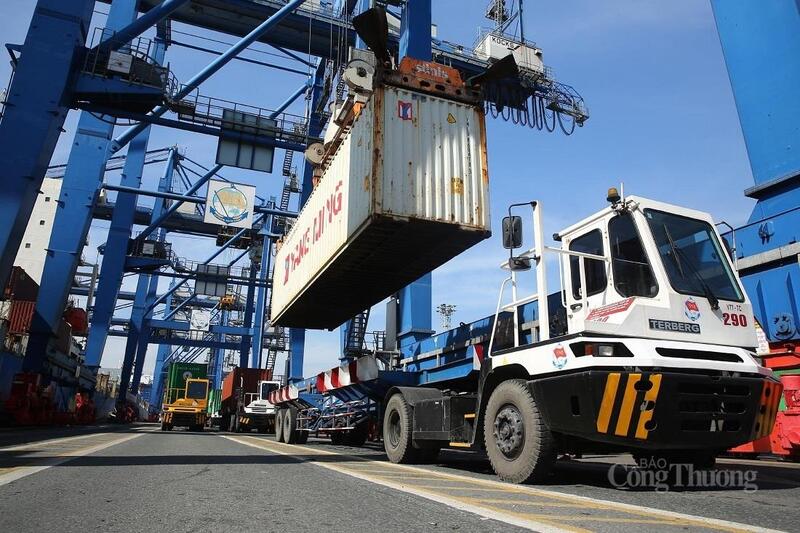
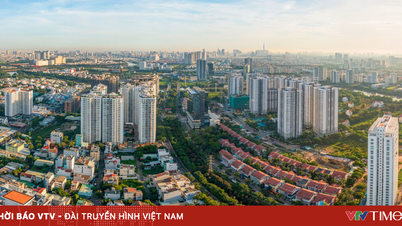
Import and export are the bright spot of the country's economy (Photo: Can Dung)
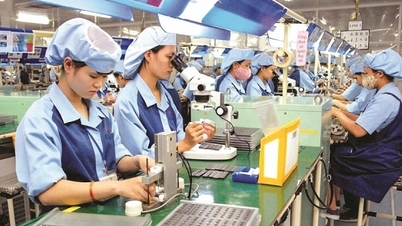
Looking at the export structure, it's easy to see that key industries are entering a "repositioning" phase. The electronics and components group continues to lead growth thanks to the expansion of large investors and the global demand for digitalization. This year, export turnover for this group could reach $100 billion. The textile and footwear industry, although experiencing a period of declining orders, is recovering positively thanks to a strategy of shifting towards green products, clear traceability, and reduced emissions in production. Machinery, equipment, and transportation vehicles also made a strong contribution as the global supply chain gradually shifted to the Asian region, with Vietnam being an important link. These items all maintained export turnover of several tens of billions of USD.
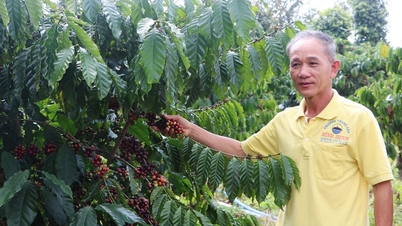
In the agricultural sector , the increasing presence of deeply processed products is helping Vietnam enhance its image and increase export value. Rice, coffee, processed fruits, rubber, and cashews... all demonstrate a shift from "selling raw" to "selling quality." This is a crucial boost that helps Vietnamese agricultural products avoid the vicious cycle of price competition and move closer to high-end markets.
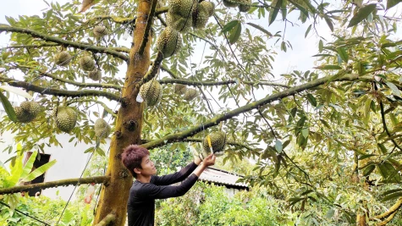
According to Mr. Dang Phuc Nguyen, Secretary General of the Vietnam Fruit and Vegetable Association, Vietnamese durian continues to grow thanks to improved quality and competitive pricing. On average, each ton of exported durian fetches $3,696, 15% lower than Thai durian, while also benefiting from shorter shipping times, helping Vietnam maintain its position as the second largest durian exporter to China. With this steady growth, Mr. Nguyen predicts that durian export revenue could reach $4 billion in 2025, with an estimated $3.7 billion in the first 11 months.
On the import side, increased purchases of raw materials and machinery for production demonstrate businesses' confidence in the prospect of a recovery in international orders. According to the General Statistics Office, in terms of the structure of import groups in the first eleven months of 2025, the group of production materials reached US$383.96 billion, accounting for 93.7%. This creates a dynamic cycle: businesses increase inputs to ensure output, while the economy gains further impetus to maintain growth thanks to stable trade flows.
The shift of foreign investment into high-tech industries also lays the foundation for a breakthrough in exports. As large corporations expand production and domestic supply networks are activated, Vietnamese businesses have more opportunities to participate more deeply in the value chain, thereby reducing dependence on imports and increasing the localization rate.
The push from integration, logistics and new green standards
Vietnam's participation in new-generation Free Trade Agreements (FTAs) such as the EVFTA, CPTPP, and RCEP is gradually yielding positive results. The utilization rate of tariff preferences by businesses is increasing, especially in the agricultural, textile, and processing industries. This is an advantage that not every country possesses, particularly in the context of major economies tightening trade standards and implementing new protectionist measures.
However, for the $900 billion in import and export turnover to become a sustainable stepping stone, experts believe Vietnam must face a series of new challenges. Most notably, the requirements for green transition, circular production, and carbon emission control. EU regulations on CBAM (Circular and Integrated Manufacturing Amounts) and US emission standards force businesses to change their production methods, increase transparency, and invest heavily in clean technology. If they lag behind, many industries could lose advantages that would take years to regain.
The logistics system is also under immense pressure as trade accelerates. International transportation costs are volatile, and while port, warehouse, and multimodal transport infrastructure has improved rapidly, it has not kept pace with demand. Promoting the digitalization of logistics, and applying big data and AI in supply chain management, is becoming an inevitable trend. Only when warehousing, transportation, and customs clearance costs are significantly reduced will Vietnamese goods become more competitive in the global arena.
Another noteworthy issue is national branding. Vietnam has many popular products, but not many brands are competitive enough in the mid-to-high-end segment. The $900 billion in trade turnover presents an opportunity for businesses to restructure their international marketing strategies, focusing on quality, packaging, traceability, and brand storytelling. The further Vietnamese products go, the more they need a clear identity to stand firm in the hearts of international consumers.
The synergy between business support policies, domestic market development, trade promotion, and institutional improvement is acting as an "invisible hand" to expand growth potential. As the government accelerates procedural reforms, digitalizes management, develops logistics, and enhances national brands , businesses will have a stronger foundation for breakthroughs.
The $900 billion in import and export turnover is not only a trade milestone but also an affirmation of the new position of Vietnamese goods on the world economic map. In the context of increasingly fierce global competition, maintaining high export growth rates requires businesses to move faster in technological transformation, emission reduction, supply chain upgrading, and the development of high-quality products.
It can be said that the $900 billion milestone is just the beginning of a long journey. As international standards become increasingly stringent, Vietnamese businesses must be more proactive, more adventurous, and more innovative. It is precisely in this challenge that the opportunity for Vietnamese goods to thrive is clearer than ever, not only in participating in the market but also in positioning their brands and competing fairly on the global stage.
Phuong Lan































![[Video] The craft of making Dong Ho folk paintings has been inscribed by UNESCO on the List of Crafts in Need of Urgent Safeguarding.](https://vphoto.vietnam.vn/thumb/402x226/vietnam/resource/IMAGE/2025/12/10/1765350246533_tranh-dong-ho-734-jpg.webp)




























































Comment (0)