

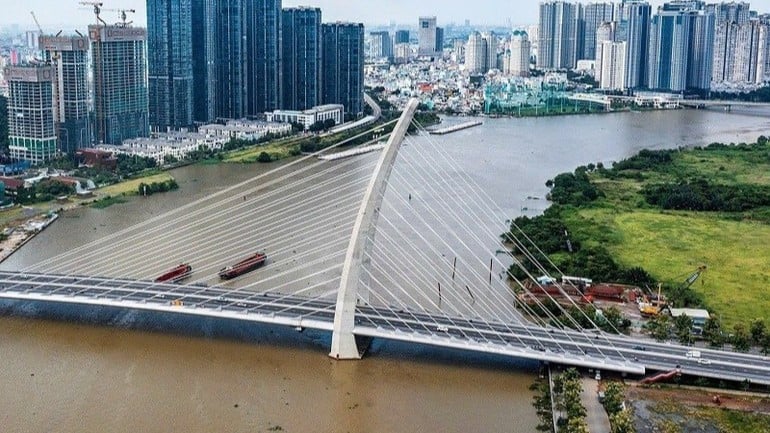
In this context, the operation and implementation of a transparent and open land mechanism will determine the speed and quality of development in many localities in the future. However, in reality, numerous businesses are still struggling with legal and investment procedure obstacles, with many projects delayed due to the complex and overlapping nature of laws, decrees, and circulars related to land, investment, and construction.
Furthermore, many Build-Transfer (BT) projects, even though investors have completed the work and received the land, cannot be implemented due to delays in waiting for notices regarding land use fee payments. In addition, numerous projects and apartment buildings are also facing obstacles related to the lengthy process of issuing ownership certificates ("pink books") for commercial housing, delaying the handover of homes to residents. These are the biggest bottlenecks directly causing losses to businesses and the circulating capital of the economy .
During a recent working session of government leaders in Ho Chi Minh City, the city proposed several pressing issues facing businesses, presenting solutions and policies that have been implemented and proven effective. These include Government Decree No. 91/2025/ND-CP dated April 24, 2025, on resolving obstacles related to the timing of land valuation for BT (Build-Transfer) projects in the Thu Thiem new urban area; and National Assembly Resolution No. 170/2024/QH15 dated November 30, 2024, on specific mechanisms and policies to address difficulties and obstacles related to projects and land in inspection, audit, and court rulings in Ho Chi Minh City, Da Nang, and Khanh Hoa province.
Recently, during discussions on proposals to amend and supplement Resolution No. 98 of the National Assembly , many delegates also proposed adding provisions to the resolution to create a more solid legal basis and framework for the city to address the shortcomings and difficulties of long-standing stalled projects. The latest report from the People's Committee of Ho Chi Minh City shows that, after the merger, the city has 838 stalled and unresolved projects and works.
To date, thanks to efforts and support from the central government, 670 projects have been resolved or have had solutions found. This has helped to allow the continued development of over 85,500 hectares of project land and has brought over 569,000 billion VND, previously frozen, back into the economy for continued circulation.
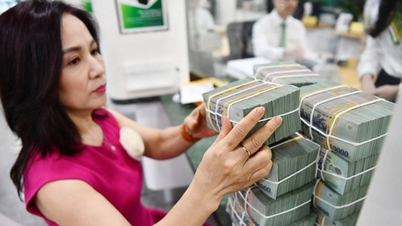
The stagnation of project capital flow is not just a problem for businesses, but for the entire economy. The released capital would create hundreds of thousands of jobs and stimulate production chains for the market. Therefore, for policies to truly create a favorable legal framework for businesses to operate, the central government needs both short-term and long-term solutions to create a transparent and efficient environment for enterprises.
For the time being, projects that are still partially stalled due to legal issues need a specific transitional mechanism, such as allowing the determination of provisional land prices and the payment of financial obligations in stages, to avoid "freezing" the entire project.
In the long term, in addition to amending and supplementing legal regulations to avoid overlapping laws as is currently the case, land management and the real estate market need to be digitized synchronously; the progress of each project should be publicly disclosed on the national data platform so that businesses, citizens, and supervisory agencies can monitor it, avoiding delays in processing applications.
The government needs to build a transparent and market-updated land price database; establish a national land price database; and streamline and make administrative procedures more transparent.
Source: https://baosonla.vn/phap-luat/tao-hanh-lang-phap-ly-thong-thoang-cho-doanh-nghiep-2W2E0xMvR.html

![[Photo] Prime Minister Pham Minh Chinh receives the Governor of Tochigi Province (Japan)](/_next/image?url=https%3A%2F%2Fvphoto.vietnam.vn%2Fthumb%2F1200x675%2Fvietnam%2Fresource%2FIMAGE%2F2025%2F12%2F16%2F1765892133176_dsc-8082-6425-jpg.webp&w=3840&q=75)
![[Live] 2025 Community Action Awards Gala](/_next/image?url=https%3A%2F%2Fvphoto.vietnam.vn%2Fthumb%2F1200x675%2Fvietnam%2Fresource%2FIMAGE%2F2025%2F12%2F16%2F1765899631650_ndo_tr_z7334013144784-9f9fe10a6d63584c85aff40f2957c250-jpg.webp&w=3840&q=75)

![[Image] Leaked images ahead of the 2025 Community Action Awards gala.](/_next/image?url=https%3A%2F%2Fvphoto.vietnam.vn%2Fthumb%2F1200x675%2Fvietnam%2Fresource%2FIMAGE%2F2025%2F12%2F16%2F1765882828720_ndo_br_thiet-ke-chua-co-ten-45-png.webp&w=3840&q=75)
![[Photo] Prime Minister Pham Minh Chinh receives Lao Minister of Education and Sports Thongsalith Mangnormek](/_next/image?url=https%3A%2F%2Fvphoto.vietnam.vn%2Fthumb%2F1200x675%2Fvietnam%2Fresource%2FIMAGE%2F2025%2F12%2F16%2F1765876834721_dsc-7519-jpg.webp&w=3840&q=75)








































![[Photo] Prime Minister Pham Minh Chinh attends the Vietnam Economic Forum 2025](https://vphoto.vietnam.vn/thumb/402x226/vietnam/resource/IMAGE/2025/12/16/1765893035503_ndo_br_dsc-8043-jpg.webp)

























Comment (0)