


He explained that the fertilizer was plentiful and heavy, so it had been transported by pickup truck to the trees since last week. These new cups replace the old, broken ones, and pieces of rubber will be inserted above the tapping lines to prevent rainwater from getting into the latex... For about half a month now, the Binh Thuan region has experienced heavy rain, so rubber farmers are taking advantage of the opportunity to weed and fertilize. Once the rubber trees absorb the fertilizer, they will be vigorous enough to be tapped. Mr. Thanh's family owns 5 hectares of rubber trees, which isn't much compared to other households in the area, as some people own 10-30 hectares. Each year, his rubber plantation brings him several hundred million dong in income, and if prices are good, it can generate billions of dong in revenue.
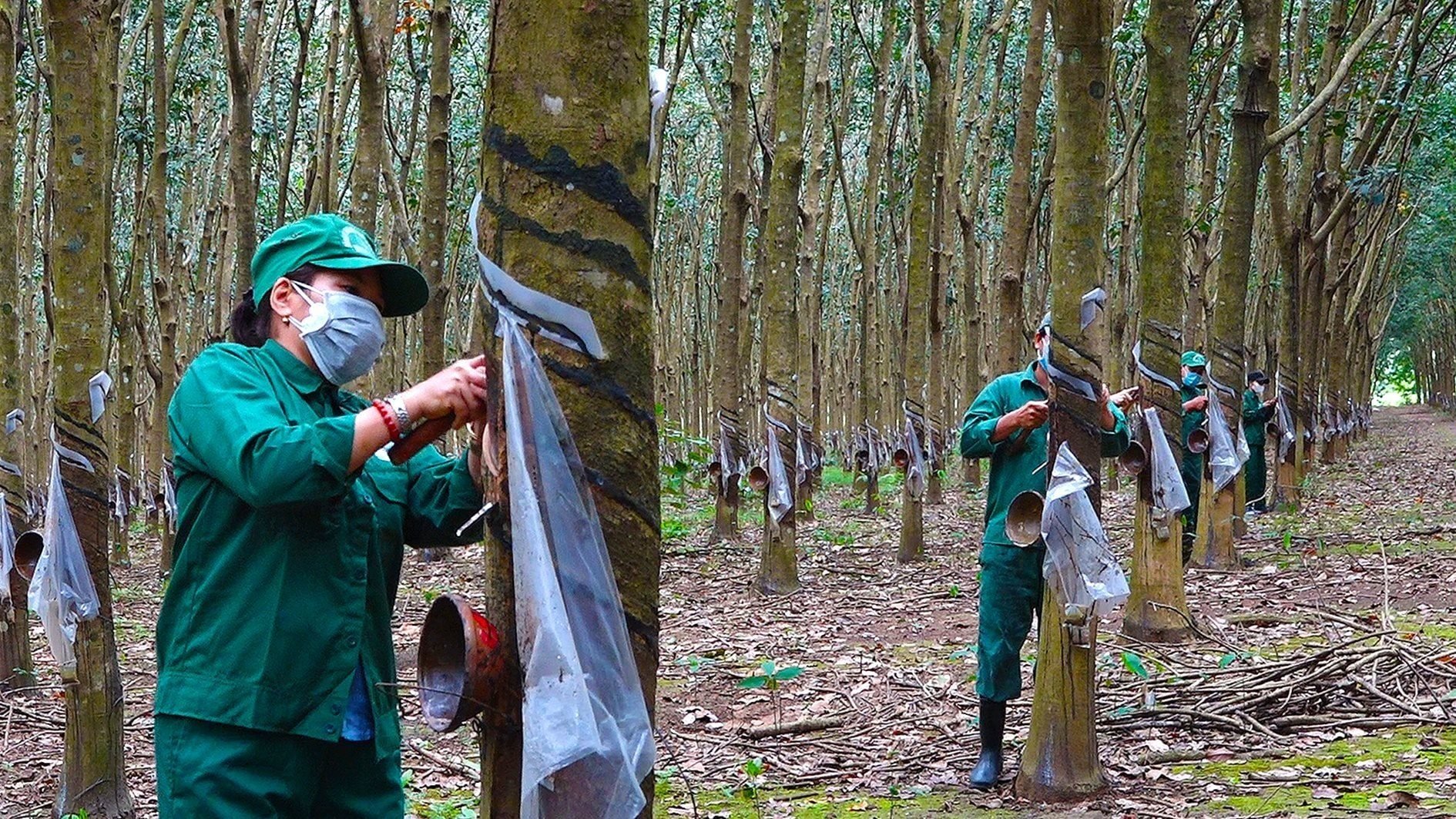
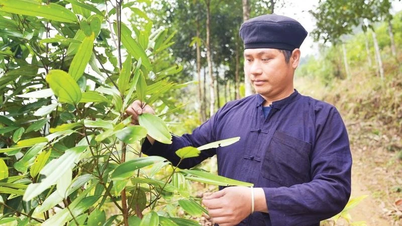
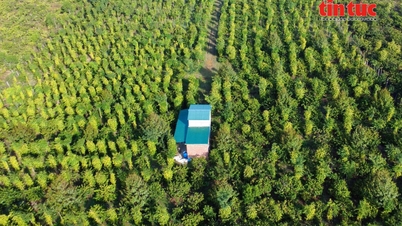
Unlike previous years, when rubber farmers paid little attention to their plantations at this time of year due to low latex prices of only 2.3-2.5 million VND/ton, the low prices meant that large-scale rubber growers only fertilized sparingly to nourish the trees instead of tapping latex because the revenue wouldn't cover the costs. Only small-scale growers of 3 hectares or less harvested latex, barely making a profit. However, in the last two years, the situation has changed drastically. Latex prices have increased significantly from the beginning of the season, prompting farmers to meticulously care for their plantations to ensure the best possible latex yield. Due to abundant rainfall, the soil is deeply waterlogged, and farmers have cleared weeds and fertilized their plantations thoroughly, resulting in lush, green foliage in most rubber forests, indicating that the trees have received sufficient nutrients and are ready for latex production.
Mr. Kiet, who owns a 7-hectare rubber plantation near Mr. Thanh's, said: "My plantation has 4 hectares that have been tapped for 5 years, while the remaining 3 hectares are only being tapped this year, so it's much harder... From 5 to 7 in the morning, hundreds of people ride motorbikes carrying tools for tapping rubber in the key rubber-tapping area of Gia Huynh - Suoi Kiet in the province, making the rural road bustling. Greetings and inquiries about whether the trees have started tapping yet add to the lively atmosphere. According to Mr. Kiet, the Tanh Linh - Duc Linh rubber-growing area experienced early rains this year, so the tapping season started early. Many people started tapping rubber trees by the end of May, and tapping began in early June. The current price of rubber latex purchased by traders at the plantation is fluctuating between 39 and 41 million VND/ton (depending on the latex quality). This is a much higher price at the beginning of the season than in previous years and higher than the price at the beginning of the 2024 season (38-39 million VND/ton). Compared to the middle and end of the season..." In the 2024 harvest season, prices were in the range of 44-48 million VND/ton, so with the high prices at the start of the season, rubber growers are expecting rubber latex prices to surge in the near future.
The province currently has approximately 45,000 hectares of rubber trees, of which nearly three-quarters are ready for harvesting. The average yield of latex is 15-17 quintals/hectare, with some areas with good soil and proper care achieving 18-20 quintals/hectare. Within the province, there are about 10 large and small facilities that purchase and process rubber latex, mostly concentrated in Tánh Linh and Đức Linh districts. These processing facilities have improved the quality of latex for export, creating a higher-value rubber latex product. Due to the high price of rubber latex, plantations are investing heavily in its exploitation. This means farmers have more job opportunities, especially rural laborers who can tap and collect latex for hire for local people. The current rate for tapping latex is 450-500 VND per tree. If they work hard from 10 PM to 7 AM, they can tap 2,000-3,000 trees, earning 400,000-600,000 VND. This is a high income in rural areas, especially in areas inhabited by ethnic minorities such as La Dạ, Đông Giang, Đông Tiến, etc.
With the new rubber latex harvesting season underway, high latex prices are good news for farmers harvesting their "white gold"...
Source: https://baobinhthuan.com.vn/tat-bat-cho-vu-thu-vang-trang-130810.html






























































Comment (0)