

The Prime Minister emphasized the need to raise awareness of the position, role, and importance of logistics in the country's development process, especially for Vietnam as a center of the Asia -Pacific region.
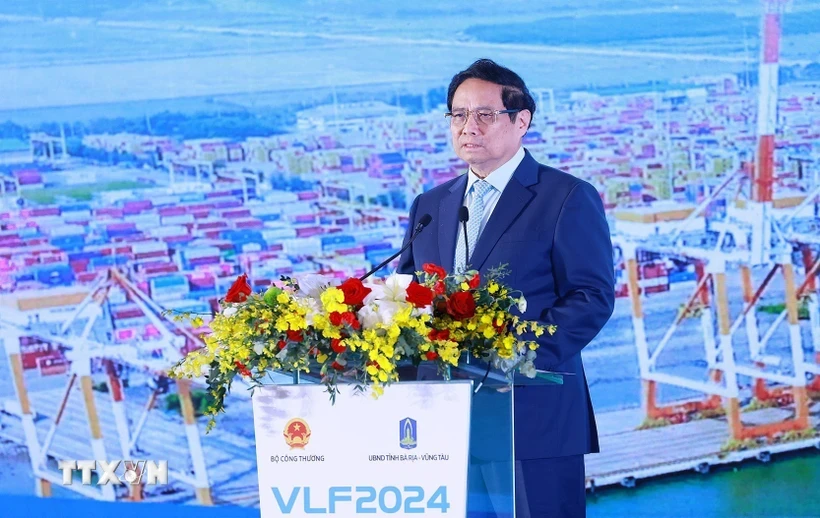
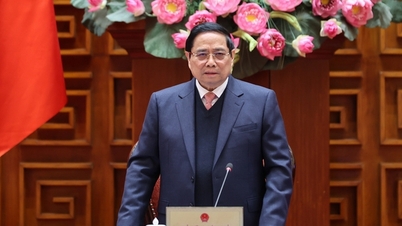
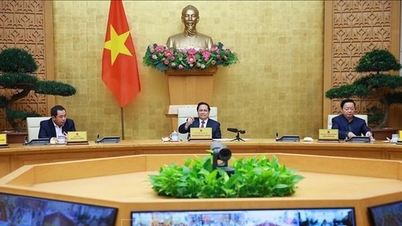
On the morning of December 2nd, Prime Minister Pham Minh Chinh attended the plenary session of the Vietnam Logistics Forum 2024, themed "Free Trade Zones: Breakthrough Solutions to Promote Logistics Growth," organized by the Ministry of Industry and Trade in coordination with the People's Committee of Ba Ria-Vung Tau province.
Attending the event were: Minister of Industry and Trade Nguyen Hong Dien; Minister of Planning and Investment Nguyen Chi Dung; Minister of Transport Tran Hong Minh; Secretary of the Ba Ria-Vung Tau Provincial Party Committee Pham Viet Thanh; leaders of ministries, sectors, localities, organizations, and domestic and foreign businesses, with a total of more than 2,000 delegates attending in person and online.
The initial foundation for the development of Vietnamese logistics.
Logistics is a vital service industry that supports, connects, and promotes socio-economic development, contributing to enhancing the competitiveness of the economy.
Developing logistics services in conjunction with the development of goods production, import and export and trade, transportation infrastructure development, information technology, etc., brings high added value.
Vietnam is considered to have many opportunities to promote the development of the logistics service industry with its road transport infrastructure, airports, seaports, warehouses, commercial infrastructure, and logistics centers constantly expanding on a large scale and throughout the country. The accompanying services have been and are promptly meeting the extremely diverse demands of the market.
The logistics industry in Vietnam has grown at a rate of approximately 14-16% in recent years, with a scale of around 40-42 billion USD per year. According to the World Bank's ranking, Vietnam currently ranks 43rd out of 155 countries in logistics efficiency and is among the top 5 countries in the ASEAN region.
In 2023, 7,919 new logistics businesses were established nationwide; to date, the entire market has more than 5,000 logistics businesses. Some businesses have demonstrated regional and international competitiveness. Vietnam leads ASEAN in the number of businesses licensed to transport goods by sea to and from the United States.
In the first nine months of 2024, nearly 6,500 new logistics businesses were registered nationwide, with a total registered capital of VND 36.55 trillion and a total registered workforce of nearly 28,900 employees. This represents a 13.5% increase in the number of businesses and an 18.3% increase in the number of employees, but a decrease of 11.3% in registered capital compared to the same period in 2023.
Overall, while some logistics companies have experienced stable and impressive growth, small and medium-sized logistics businesses have recorded a decline in business results, losses, and even withdrawal from the market.
In recent years, Vietnam has been actively researching free trade zones around the world. This type of economic zone could bring many benefits to Vietnam, contributing to the promotion of logistics services. Currently, Vietnam does not have any free trade zones.
The Vietnam Logistics Forum, organized annually by the Ministry of Industry and Trade since 2013, aims to promote the application of advanced and modern technologies in supply chain operations by logistics businesses; find solutions to enhance the competitiveness of Ba Ria-Vung Tau province and the Southeast region; and especially create an environment for linkages between businesses, investors, and management agencies to develop Vietnamese logistics.
With the theme "Free Trade Zones: Breakthrough Solutions to Boost Logistics Growth," the Forum aims to send a message that Vietnam encourages and attracts the development of free trade zones, with the goal of making Vietnam a strong logistics nation, contributing to the industrialization and modernization of the country, especially in the era of national development.
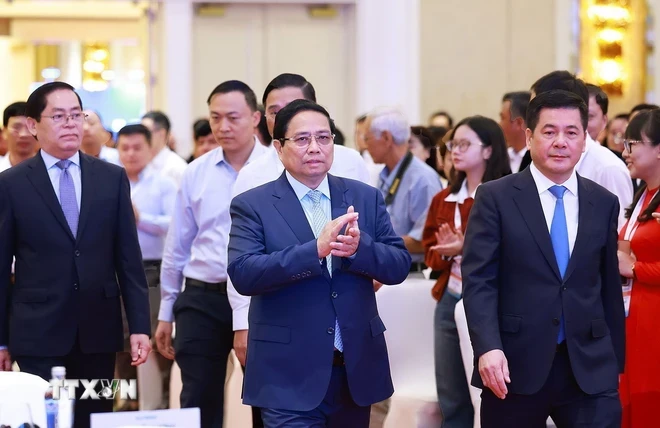
At the plenary session, delegates engaged in lively discussions about the development of logistics; its potential and strengths; and the mechanisms, policies, and development orientations for Vietnam's logistics sector.
In particular, delegates presented numerous papers proposing directions for the development of Vietnamese logistics to enter a new era; Vietnamese logistics businesses at a turning point in the times; experiences and trends in logistics development and free trade zones - opportunities and recommendations for the Vietnamese logistics industry…
Delegates proposed solutions to promote the formation of free trade zones, international transshipment ports, and the development of container ship fleets and dedicated cargo aircraft.
Simultaneously, we must strengthen international cooperation, build strong Vietnamese logistics enterprises, vigorously develop transportation and warehousing infrastructure, innovate technology, train and improve human resources in the logistics industry, and develop public-private partnership models in the logistics sector.
This also includes perfecting the legal framework and implementing policies to encourage foreigners to develop logistics in Vietnam, such as tax and visa policies.
Speaking at the Forum, assessing the role and development potential of logistics, the Prime Minister emphasized that in recent years, awareness of logistics development in Vietnam has been raised; the legal framework, mechanisms, and policies have continued to be improved.
Logistics infrastructure is developing rapidly with many large, modern projects, promoting a rational structure and harmonious connection of transportation modes, including transportation systems, airports, seaports, electricity infrastructure, and internet coverage; it is also promoting the exploitation and development of maritime space, outer space, and underground space…
Acknowledging that institutional constraints still limit certain areas such as infrastructure and public-private partnership models, the Prime Minister stated that the number of logistics businesses continues to increase. Logistics development is trending more positively, promoting diverse transportation methods and gradually reducing dependence on road transport; human resource development is being boosted, and many of Vietnam's international logistics rankings have improved...
While acknowledging, appreciating, and congratulating the efforts and significant results in the remarkable development of the logistics system, which has made an important contribution to the overall achievements of the country, the Prime Minister frankly pointed out limitations and shortcomings in development, such as the limited understanding of the role of logistics in building Vietnam into a global goods transit hub; and the high cost of logistics in Vietnam.
The scale of the logistics industry is still low compared to the size of the economy, the market, and the world; there is a shortage and weakness in the state management workforce for logistics. Logistics businesses are not yet strongly developed, lacking mechanisms; the linkages between different modes of transport and warehousing are still lacking; digital transformation and the application of technology in handling the entire logistics chain are not yet widespread…
3 objectives, 7 tasks for the development of Vietnam's logistics.
Analyzing the global situation, with the perspective of "creativity to soar high, innovation to reach far, integration to develop," and identifying logistics development as an objective requirement, a strategic choice, and a priority for national development, the Prime Minister clearly outlined 3 goals and 7 tasks for logistics development.
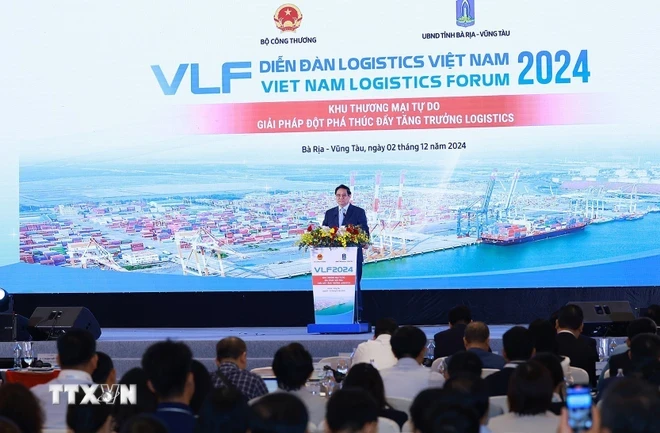
To contribute to double-digit GDP growth in the country next year, logistics costs must be reduced from 18% to 15% by 2025; the size of logistics in GDP must be increased from 10% to 15%, striving to reach 20%; the size of Vietnam's logistics in the global logistics market must be increased from 0.4% to 0.5%, striving to reach 0.6%; and the growth rate of the logistics industry must be raised from 14-15% to 20%.
The Prime Minister emphasized the need to raise awareness of the position, role, and importance of logistics in the country's development process, especially for Vietnam as a center of the Asia-Pacific region, in order to maximize the unique potential, outstanding opportunities, and competitive advantages of the country.
Institutional breakthroughs and improvements are needed to ensure the logistics industry develops in line with three objectives, contributing to double-digit national growth and ushering the country into a new era of national progress, a prosperous and thriving nation.
Developing a modern and efficient logistics infrastructure will reduce input costs and increase product competitiveness, with a focus on promoting and developing air, maritime, and high-speed rail services.
Building smart governance and a high-quality workforce; promoting logistics diplomacy; and simultaneously boosting and modernizing domestic logistics are essential.
Building and developing a free trade nation; closely connecting air, sea, rail, inland waterway, and highway transportation to link free trade zones around the world and the international transportation system.
Based on that, Prime Minister Pham Minh Chinh requested ministries, sectors, and localities, according to their functions and responsibilities, to urgently focus on building a free trade nation; finalizing the Strategy for the Development of Vietnam's Logistics Services; and establishing international free trade zones.
Emphasizing the government's role as a facilitator, focusing on building institutions, strategies, plans, and mechanisms for mobilizing resources, creating a development environment, and designing monitoring and inspection tools, the Prime Minister requested localities to increase their proactiveness, self-reliance, and autonomy in logistics development, with the spirit of "local authorities decide, local authorities act, and local authorities take responsibility."
Businesses are enhancing their autonomy, participating in proposals, and contributing to institution building, with the motto of "harmonizing the interests of the State, the people, and businesses; effectively resolving the relationship between the market, the State, and society," and "harmonizing interests and sharing risks."
Clearly stating Vietnam's foreign policy as independent, self-reliant, diversified, multilateral, a friend, a reliable partner, and a responsible member of the international community for peace, stability, cooperation, and development in the world; and highlighting that the country is promoting three strategic breakthroughs and creating the best conditions for businesses to develop sustainably, the Prime Minister called on foreign organizations and businesses to cooperate and invest in Vietnam in the spirit of "listening and understanding together; sharing vision and action together; working together, enjoying together, winning together, and developing together."
Prime Minister Pham Minh Chinh expressed his confidence that, with these important initial steps and foundations, Vietnam's logistics industry will join the nationwide momentum, entering a new period of development, an era of national progress, with Ba Ria-Vung Tau being one of the leading localities in the development of logistics and energy in the country.
Source
![[Image] Leaked images ahead of the 2025 Community Action Awards gala.](/_next/image?url=https%3A%2F%2Fvphoto.vietnam.vn%2Fthumb%2F1200x675%2Fvietnam%2Fresource%2FIMAGE%2F2025%2F12%2F16%2F1765882828720_ndo_br_thiet-ke-chua-co-ten-45-png.webp&w=3840&q=75)
![[Photo] Prime Minister Pham Minh Chinh receives Lao Minister of Education and Sports Thongsalith Mangnormek](/_next/image?url=https%3A%2F%2Fvphoto.vietnam.vn%2Fthumb%2F1200x675%2Fvietnam%2Fresource%2FIMAGE%2F2025%2F12%2F16%2F1765876834721_dsc-7519-jpg.webp&w=3840&q=75)

![[Photo] Prime Minister Pham Minh Chinh receives the Governor of Tochigi Province (Japan)](/_next/image?url=https%3A%2F%2Fvphoto.vietnam.vn%2Fthumb%2F1200x675%2Fvietnam%2Fresource%2FIMAGE%2F2025%2F12%2F16%2F1765892133176_dsc-8082-6425-jpg.webp&w=3840&q=75)
![[Live] 2025 Community Action Awards Gala](/_next/image?url=https%3A%2F%2Fvphoto.vietnam.vn%2Fthumb%2F1200x675%2Fvietnam%2Fresource%2FIMAGE%2F2025%2F12%2F16%2F1765899631650_ndo_tr_z7334013144784-9f9fe10a6d63584c85aff40f2957c250-jpg.webp&w=3840&q=75)


































![[Video] Independence and self-reliance linked with international integration through 40 years of reform](https://vphoto.vietnam.vn/thumb/402x226/vietnam/resource/IMAGE/2025/12/16/1765899635777_1-1-8054-png.webp)




















Comment (0)