

Folk melodies from our ancestral homeland have been passed down through generations, through songs, dances, poems, or simply through stories told by grandmothers and mothers. From the plains to the high mountains, folk songs and dances with unique characteristics of each locality, region, and ethnic group are preserved. There was a time when these folk melodies seemed on the verge of fading away and being lost; however, with love, responsibility, and dedication, the artisans and folk music lovers in the province continue to inspire and ensure that the stream of national culture is passed on to future generations.
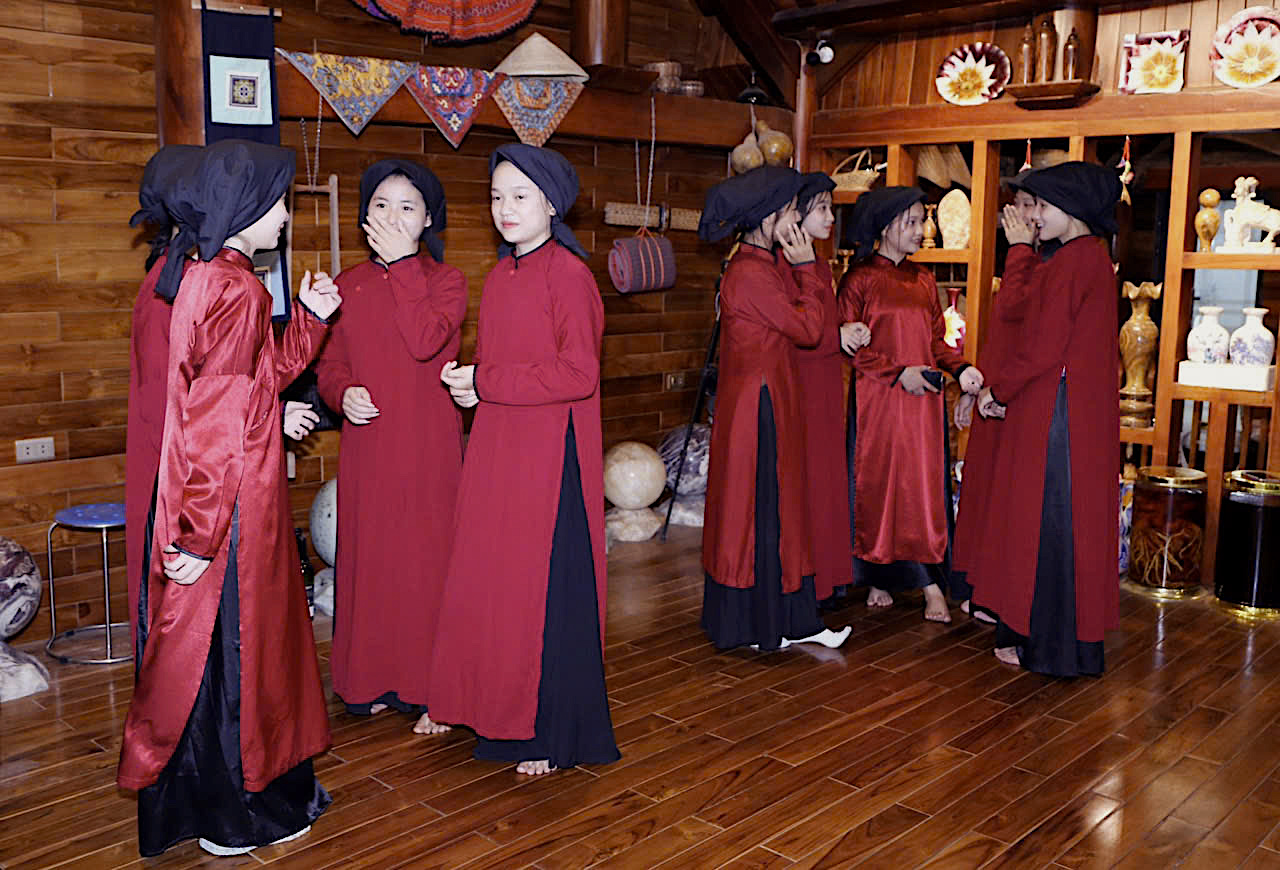
Members of the Phu Tho Xoan Singing and Folk Song Club in Phuong Vi commune practice before the performance.
Before Xoan singing was introduced into the curriculum of Phuong Vi Parish, Cam Khe District, few people in the commune knew about this ancestral folk song. In 2015, Father Nguyen Van Hanh decided to open a class to teach Xoan singing to the parishioners and invited artisan Nguyen Thi Lich to directly teach. For the parishioners of Phuong Vi commune, the melodies: Nhap Tich Moi Vua, Ha Thoi Cach, Xoan Thoi Cach, Do Hue... were initially quite unfamiliar, but after a short time of teaching, they became proficient in both the lyrics and the dances.
Nearly 10 years have passed, yet the ancient Xoan melodies are still regularly practiced and performed by a large number of young people and children in the Phu Tho Xoan and Folk Song Club of Phuong Vi commune. Taking advantage of the summer holidays or weekends, the 45 members of the club gather at the church or community cultural center to practice the ancient Xoan melodies. Each time the drums and clappers resound, along with the singing of the performers, it creates a lively and enthusiastic atmosphere for practice.
Despite being the youngest member of the club, in the past two years since joining, Du Thao Ly, a 4th-grade student at Phuong Vi Primary School, has become a standout vocalist whenever she performs on stage.
Ms. Nguyen Thi Huong, the club's chairperson, shared: "As the first provincial-level Xoan singing and folk song club for Catholics in the province, we have a special love for Xoan. The club's members are mainly students; they practice with passion for Xoan and feel a sense of responsibility to protect this unique cultural heritage of our ancestral homeland. Along with singing hymns in church, the parishioners of Phuong Vi have come to the village temple to watch performances of ancient Xoan melodies. This love for heritage has created an increasingly strong bond between Catholics and non-Catholics."
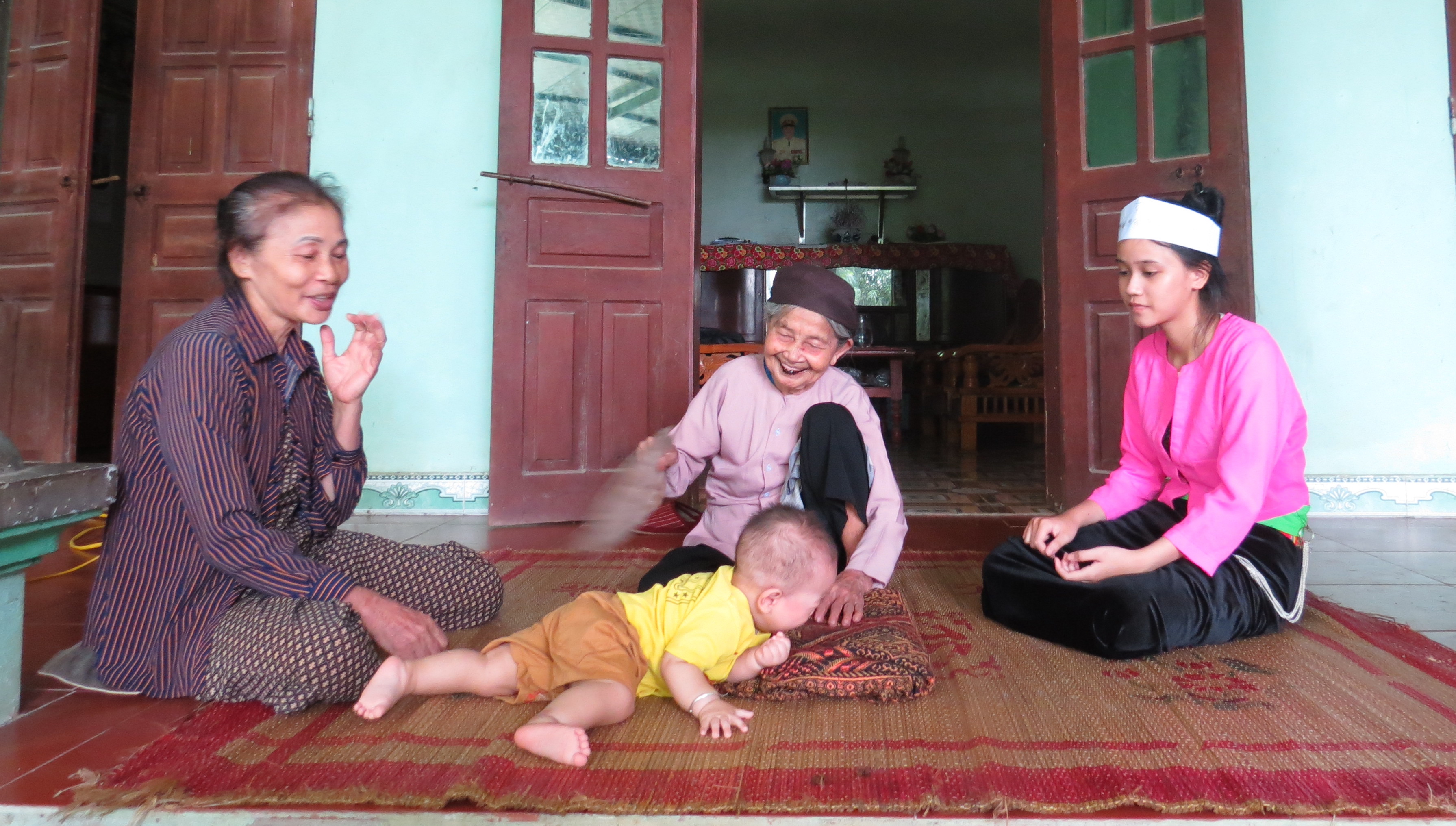
Mrs. Dinh Thi Lan, residing in Zone 18, Tu Vu Commune, Thanh Thuy District, still sings lullabies daily and teaches them to her grandchildren and great-grandchildren.
“Ah, ah, ah, my dear/ Sleep, my child/ Sleep, my child/ Sleep so Grandma can go plant rice in the paddy fields/ Sleep so Grandma can go harvest rice in the fields/ Sleep so Grandma can go to the forest to gather fruit for you to eat…” These are the melodious lullabies in the U Hay (Lullaby) style that have for generations been a spiritual nourishment for the souls of every child of the Muong land from the moment they are born until they grow up. Even at the age of 92, with failing eyesight, slow steps, and trembling hands, Mrs. Dinh Thi Lan in Zone 18, Tu Vu commune, Thanh Thuy district, still sings lullabies to her great-grandchildren every day.
She said, "In the old days, life was difficult. There were no radios, televisions, or music; we only used Muong folk melodies to lull babies to sleep. My family has maintained this tradition of singing lullabies to children for generations. From my children's generation to my grandchildren and great-grandchildren, I still sing lullabies every day. I also teach these songs to my children, grandchildren, and great-grandchildren in the Muong language, hoping to preserve our ethnic lullabies for future generations."
To preserve the lullabies of the Muong ethnic group, for many years, 40 members of the Muong Cultural Heritage Preservation Club in Tu Vu commune have been organizing teaching and practice sessions. Each lullaby not only helps children fall asleep easily but also serves as a source of affection, nurturing and warming their souls and shaping their character.
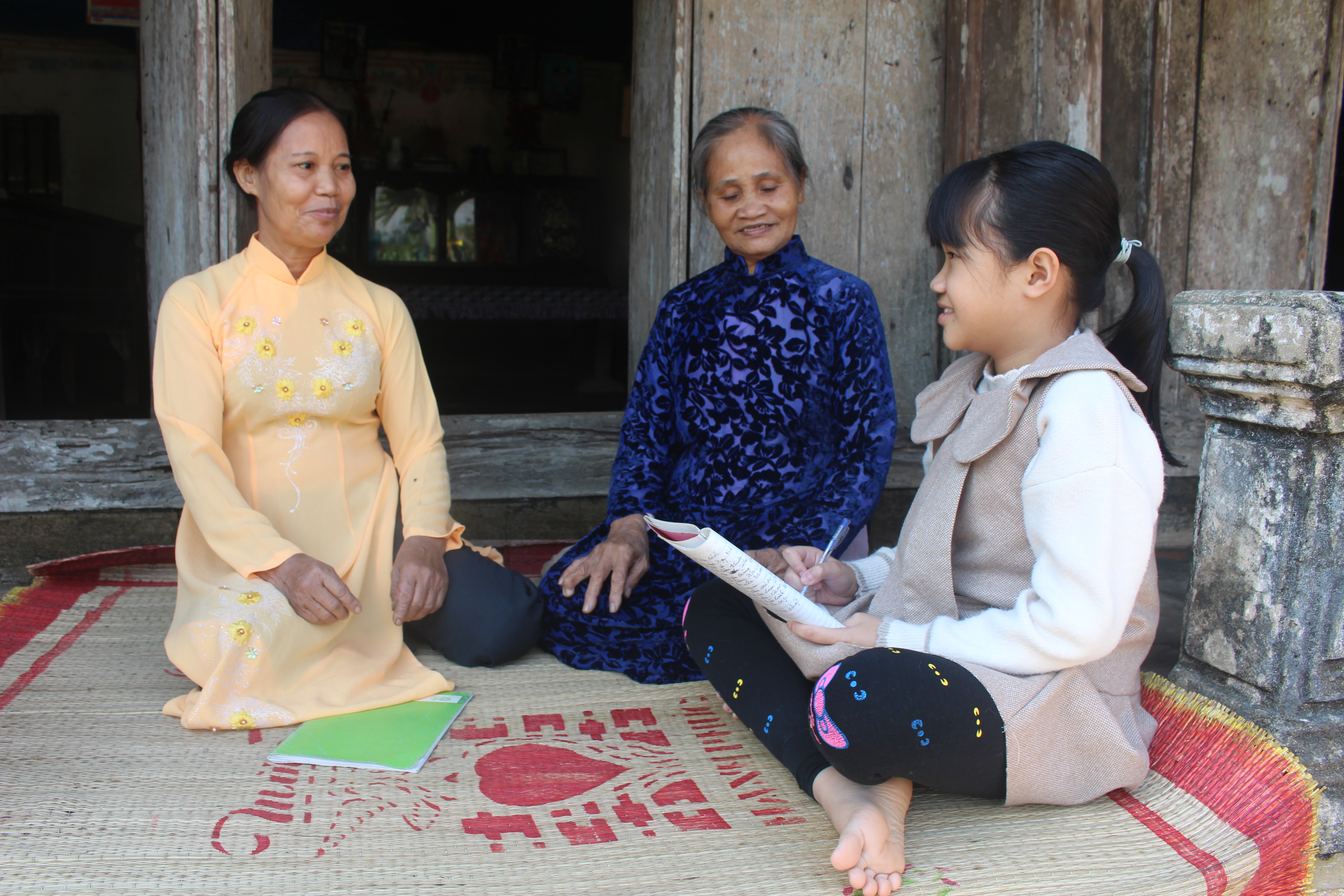
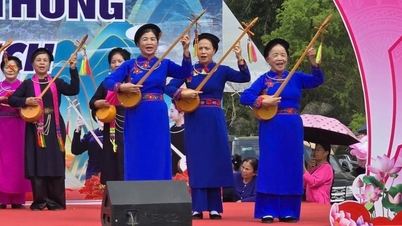
Ca trù is a folk art form preserved and practiced by the people of Binh Phu commune, Phu Ninh district.
Phu Tho – the land of origin, home to many unique cultural heritages associated with the spiritual and cultural life of the Vietnamese people, possesses folk songs with distinct regional characteristics. Notable examples include Xoan singing – a representative intangible cultural heritage of humanity, alongside Gheo singing, Trong Quan singing, etc. The ethnic groups in the province also have very distinctive folk songs such as: Rang singing, Vi singing, lullabies, Trong Du dance, Ho Du... of the Muong people, Sinh Ca singing of the Cao Lan people, Sinh Tien dance of the Dao people...
Each musical genre is associated with its own rituals and customs, reflecting the cultural beauty and community spirit of different ethnic groups. At the same time, Phu Tho is one of the provinces in the region where the intangible cultural heritage in need of urgent protection – Ca Tru, a representative intangible cultural heritage of humanity – and the practice of worshipping the Mother Goddess of the Three Realms – are being disseminated. Among these, the melodious, lyrical, and deeply moving Xoan singing has become a characteristic feature of the midland region of the Hung Kings' ancestral land. The province currently has 37 Xoan singing and Phu Tho folk song clubs attracting over 1,600 members, thus helping Xoan singing and folk songs to spread widely in contemporary life.
To ensure that folk melodies from the palm forest and tea hill region continue to spread and thrive in the community, it is not only the responsibility of cultural workers and artisans, but also requires the collective responsibility of every citizen to contribute to their dissemination, nurture their essence, and cultivate love for their homeland and national pride.
Hong Nhung
Source: https://baophutho.vn/tiep-noi-mach-nguon-dan-ca-dat-to-225405.htm

![[Photo] Standing Committee member of the Party Central Committee Tran Cam Tu working with the Central Inspection Committee](https://vphoto.vietnam.vn/thumb/1200x675/vietnam/resource/IMAGE/2026/05/28/1779969579668_ndo_br_bnd-2495-jpg.webp)


































































Comment (0)