

Return to its proper academic function
At a workshop in Ho Chi Minh City to gather feedback on the draft amendments to the Law on Higher Education , many experts focused on the organizational structure of universities. Specifically, it was proposed that departments be defined as professional and academic units, not administrative units. Redefining this role is considered a significant step forward, contributing to restoring the proper academic function of training units within universities.
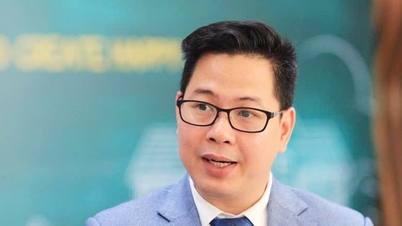
Dr. Vu Huyen Trang, Head of the Fashion Design Department at Nguyen Tat Thanh University, believes this is a positive adjustment, in line with the development trends of modern higher education. According to her, the department was established to undertake core tasks such as curriculum development, course content development, and ensuring the quality of teaching and scientific research. However, in reality, many department heads still have to shoulder a significant amount of unnecessary administrative work.
Redefining the functions of these departments helps them return to their true academic nature. This is also a step demonstrating a long-term vision, aiming to free lecturers and specialized units from administrative burdens, thereby allowing them to focus more on professional quality. Ms. Trang pointed out that although some schools have implemented digital management systems, the volume of administrative procedures has hardly decreased; even if they only shift from paper-based to electronic processing, the workload remains substantial.
Another difficulty raised is that many departments are small in scale, have limited human resources, and are easily overloaded if they have to simultaneously handle both academic and administrative tasks. Therefore, according to Ms. Trang, separating functions needs to be accompanied by specific and consistent guidance in the management of higher education institutions. When departments are restored to their proper academic role, positive changes in teaching and research are predictable.
From the perspective of the fashion design industry, Ms. Trang analyzed that this is a highly applied and creative field, requiring lecturers to have deep professional competence, from scientific research, experimentation, collection development, trend updating to connecting with businesses and participating in professional exhibitions. These requirements all demand significant time and focus.
“When a department focuses on its academic role, faculty members will have more time to invest in teaching quality; enhance research, creativity, and innovation; and participate in professional projects instead of dealing with excessive bureaucracy. This not only improves the capacity of the faculty but also creates a favorable environment for students to learn within a truly academic ecosystem.”
"For specialized fields like fashion design, this is a crucial factor in ensuring that the training program is always closely aligned with practical requirements and trends in the creative industry," Ms. Trang stated.

Lecturers have more time for teaching.
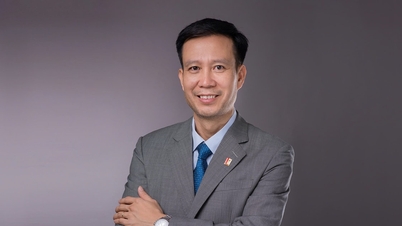
Sharing the same viewpoint, Mr. Nguyen Van Minh, Director of the Center for Biotechnology Research and Application at Ho Chi Minh City Open University, believes that defining departments as specialized, academic units instead of administrative ones is an adjustment that aligns with current university management trends and meets the practical needs of educational institutions. Essentially, departments are centers for professional development, curriculum development, academic exchange, and the promotion of scientific research.
However, for many years, in numerous higher education institutions, departments have had to undertake many administrative tasks, leading to a dispersion of faculty members' time and resources. Restoring the departments to their proper academic role will help reduce administrative pressure, allowing faculty to focus on teaching and research, thereby improving the quality of education.
When the department functions properly in its academic capacity, positive impacts will be evident in the professional activities of the lecturers. According to Mr. Minh, lecturers will have more time and space to invest in lectures, update content, and innovate teaching methods.
The department can also become a true academic space, where research groups are formed, regular professional activities are organized, academic exchanges are promoted, and in-depth research capabilities are developed. At the same time, the career development path of faculty members will be more closely linked to academic competence, rather than relying heavily on administrative workloads as before.
Based on the experience at Ho Chi Minh City Open University, Mr. Minh stated that the university has issued relatively clear regulations for departmental operations and has formed large research groups to develop research capabilities and in-depth expertise for lecturers. This is considered an important foundation for building a substantive and sustainable academic environment.
Synchronization is needed in implementation.
Based on her experience managing Nguyen Tat Thanh University, Dr. Vu Huyen Trang suggested that the functions of faculties, departments, and offices/divisions should be clearly defined from the outset to avoid overlap, especially in processes related to training and administration.
Furthermore, digital transformation needs to be implemented in a truly automated manner, meaning the technology system must help reduce the workload for lecturers, rather than simply changing the format from paper to electronic. When technology operates efficiently, the department will be freed from repetitive data entry tasks and have more time for professional development.
According to Ms. Trang, building a professional administrative team, separate from the department's academic evaluation responsibilities, is also an important solution to allow lecturers to focus on their proper functions. The key to all change remains internal consensus, working together towards the goal of improving the quality of education.
MSc. Nguyen Van Minh suggested that the functions and responsibilities of each level should be clearly defined: Departments should focus on specialization and academics; faculties should play a strategic coordination role; and administrative offices and departments should handle services and procedures. At the same time, a specific coordination process between departments and administrative units should be established to avoid overlapping and shirking of responsibilities; professional authority should be assigned along with appropriate resources and a clear accountability mechanism.
Adjusting the criteria for evaluating staff to prioritize academic quality, as well as piloting this approach in a few faculties and departments before expanding it, are considered necessary solutions.
According to Mr. Minh, affirming the department's academic standing is a necessary step with the potential to create significant changes in training and scientific research. However, the actual effectiveness will depend on a clear assignment of tasks, appropriate resources, and close coordination among units within the university.
Source: https://giaoducthoidai.vn/tra-lai-vai-role-cho-bo-mon-post762322.html



![[Image] Close-up view of the interchange connecting the two expressways and Long Thanh Airport.](https://vphoto.vietnam.vn/thumb/1200x675/vietnam/resource/IMAGE/2026/05/25/1779703378210_ndo_br_z7863716673926-224453a31600126cce10622af6290afd-4549-jpg.webp)

![[Image] Hanoi's urban life under the challenge of a "scorching hot" environment](https://vphoto.vietnam.vn/thumb/1200x675/vietnam/resource/IMAGE/2026/05/25/1779706979265_nang-nong-t5-2026-minh-duy-7-4636-jpg.webp)
















































































Comment (0)