"My father is getting old, and our family has two farming methods: cultivating melaleuca and acacia trees. The conflicting methods would affect the Nam Quoc melaleuca forest honey, so we have to return," Tra My said, locating her family's destination to solve this difficult problem.
This is agricultural land belonging to Nguyen Phich commune, formerly Khanh Thuan commune, about 4 kilometers from U Minh town. 100 hectares of forest land were leased to the people, including Tra My's family.

“In U Minh, hearing about the honey from the Melaleuca forest of Nam Quoc is a testament to my father's hard work,” Tra My inadvertently recalled “neo-localism”—a term James R. Shortridge, Professor of Cultural Geography at the University of Kansas (USA), used to describe localized resources linked to a sense of “belonging.”
Năm Quốc Melaleuca Forest Honey – the very name suggests a close connection between brand identity and the harmonious coexistence of the Melaleuca forest. To quote JR Shortridge, it's not the past, but the emotion that makes the brand unique in a world of homogenization.
Ancient legends say that the water in the U Minh Melaleuca forest is tea-colored, brackish fish live under the pristine forest canopy, stingless bees build nests on the treetops, the habitat is biodiverse, snakes, turtles, birds and animals coexist; the waterlogged ground transforms the undergrowth into layers of peat containing stagnant alum… During the war years, the Melaleuca forest also suffered from bombs and bullets, and was poisoned by Agent Orange – sometimes forest fires occurred during the dry season, but the fires were a story of rebirth in the wild life of the Melaleuca trees. Only when the fire burns the peat in the ground will the Melaleuca trees succumb. Water is a source of “security”; with water, even when cut down for stakes buried deep, the Melaleuca trees still perform their function of supporting and protecting the structures.
Nature has tasked forests with acting as a shield against storms and as an integral part of coastal ecosystems. Mangrove forests absorb carbon 56 times faster than tropical forests. Blue carbon refers to the ability of mangroves, tidal swamps, and seagrass beds to absorb and store carbon dioxide as biomass and sediment. Despite being neglected for nearly half a century, mangrove forests, including those of the Melaleuca, Rhizophora, Avicennia, and Nypa fruticans species, patiently preserve this young land.
***
Merchants often drop a single drop of honey onto parchment paper to determine the true value of melaleuca forest honey. However, Năm Quốc's melaleuca forest honey doesn't need testing. Trà My has grown from this belief – a belief that many entrepreneurs and tourists use to connect with the locality through its products, as a way of affirming its cultural identity in a globalized world.
Six months of rain, six months of drought; Melaleuca, a characteristic tree of the wetland forest, is resistant to acidic soil and is part of a UNESCO-recognized biosphere reserve. During this season, the canal water becomes acidic whenever barges carrying acacia wood stir up the waterway.
The alum layer, dormant for thousands of years, is awakening, threatening Tra My's "filial piety garden"—where she grows avocados, papayas, and other fruits for her family to eat, absolutely without using any pesticides.
She thought the long rainy season would keep the avocado trees lush and green, but instead, the leaves began to turn yellow and wither. Tra My felt heartbroken seeing the yellowing leaves. Saving them and fighting for their lives was not easy, especially with the acidic road turning a deep red.
Someone called again - the phone rang for a while then went silent - Late at night, Tra My finally connected the story of the melaleuca trees, the acacia hybrids, and the livelihood shock of having to choose the acacia hybrids, which meant losing the Năm Quốc melaleuca forest honey.
Every day, Tra My witnessed her father's anguish at the conflict between the deep mangrove forest and the triumphant acacia trees swaying in the wind. In reality, the life of the victor only lasted four years. After that, their bodies were ground up to make paper.
The problem with melaleuca trees is that nowadays people use concrete piles, and few people use melaleuca wood for piling anymore. The price of melaleuca wood has been driven down; instead of revenue of hundreds of millions of dong per hectare, it has dropped to 50-60 million dong. Sometimes, nobody wants to buy it. Planting melaleuca trees, harvesting them, and sharing the profits with the State—that's not sustainable anymore! For these reasons, Mr. Nam switched to planting hybrid acacia trees—which required digging ditches and building raised beds. The initial land area was 30 hectares, with hybrid acacia trees occupying 20 hectares, and the rest being water surface contaminated with alum.
In the mangrove forest, the stingless bees are wild and cannot be domesticated, but Mr. Nam still managed to harvest a good source of honey, creating the brand "Nam Quoc Mangrove Forest Honey" that has been known for generations.
Age was not kind enough to allow him to wait for the seasons when the melaleuca trees bloomed and the bees collected honey. Tra My understood her father's wounded sense of "belonging."


Ultimately, Mr. Nam decided to preserve a patch of melaleuca forest on the wetland as a remnant of a pristine memory, regardless of the fact that hybrid acacia trees were being exploited and encroaching on nature.
***
The Department of Science and Technology of Ca Mau province completed a research report on honey, with Associate Professor Nguyen Huu Hiep assisting with scientific analysis; the Ca Mau Department of Industry and Trade supported 50% of the cost of purchasing machinery to help him reduce the water content so that Nam Quoc's melaleuca forest honey could demonstrate its advantage of "long shelf life and long reach" when participating in the national OCOP program. Tra My considered this a consolation prize for her father.
She was right to send honey samples to Eurofins for testing. There are two criteria that this international testing agency requires samples to be sent to France for testing, helping her father protect the identity of the mangrove forest honey in a sustainable model, linking community tourism and cultural and economic development from a more open and localized perspective.
"I have absolutely no fondness for hybrid acacia trees when they overwhelm the native trees," says Tra My, a straightforward girl from U Minh.
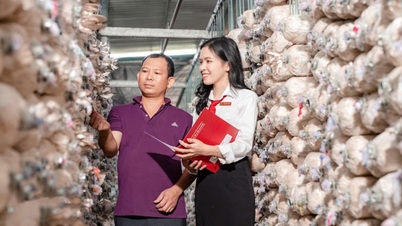
In any case, the land for planting hybrid acacia trees has already been planned. As a biologist from Tra My, I researched the model of growing red reishi mushrooms under the canopy of hybrid acacia forests, a way to increase the product structure from planted forests, as demonstrated by Dr. Le Hoang The, which proved successful for VOS Holdings Ecosystem Company Limited.
At the Ca Mau Crab Festival - a potentially billion-dollar industry - meeting with experts from the Agricultural and Cultural Club - An Sinh Nong Company (People's Teacher and Doctor Phan Hieu Hien, Doctor Vo Mau, microbiology expert; Mr. Bui Phong Luu, elder brother of the famous Bui Van Ngo family of rice processing equipment manufacturers; and Mr. Vu Hoang Long, IT assistant) - Tra My recounted the story of the struggling mangrove forest honey industry, facing the challenges of saline and acidic soil that left shrimp and rice crops beyond saving… These challenges motivated these three experts, all over 210 years old, to visit the Nam Quoc Agricultural Cooperative.
“The discussions – evenings spent over pots of snakehead fish porridge and boiled crab; mornings over coffee,” said Dr. Phan Hieu Hien. “Three non-stop discussion sessions with cooperative members to find solutions to the most challenging problems: acidic and saline soil, rice and shrimp farming contaminated with acidity, and the excessive spread of acacia hybrids…”
Walking out into the fields, we saw excavators building raised beds for planting hybrid acacia trees, while locals took advantage of the situation to plant rice in the middle, which withered due to severe acidity. The Forestry Department stipulates that hybrid acacia trees can only be harvested after 8 years, and only after 15 years can it be considered a true forest. But in reality, after 4 years, the trees are all cut down for pulp. The original melaleuca forest ecosystem has been drastically altered. From describing the livelihood issues to dissecting the "labor for profit" problem, we managed to briefly report to Dr. Huong (Department of Science and Technology of Ca Mau province) in 30 minutes. Dr. Vo Mau volunteered to propose a soil improvement plan: a) Apply 10 tons of dolomite lime per hectare;
b) Increase organic matter with locally processed organic fertilizers made from readily available materials such as reeds, etc.; c) Prepare a microbial solution to control Fusarium fungi that cause rice root rot, etc. Mr. Bui Phong Luu suggested developing banana cultivation - which is already famous throughout the six provinces of Southern Vietnam…
“I realize that the focus here is still on rice. Aquaculture, fruit trees, and forestry – despite their great potential – haven't received the attention they deserve. For 50 years, I've traveled from place to place reminding people that agriculture isn't just about rice; it's a complex system where money, technology, and machinery coexist,” Dr. Phan Hieu Hien said with a touch of sadness.


Tra My and a team of experts from the Agricultural and Forestry Club are seeking solutions to redesign the agricultural and forestry conversion zone. Photo: VHL
“Farmers know how to calculate economically, that’s right,” Mr. Bui Phong Luu warned: “If you’re hypnotized by hearing that your neighbor invested 2 billion dong while you only have 200 million, your spirits will plummet without knowing how much your neighbor spent, whether your calculations were accurate and complete, and whether your expenses exceeded your income… You should understand everything clearly, be careful with the kind of people who use revenue to impress others who are still vague about establishing a livelihood model; then suddenly the State has to rescue them, provide a little extra support, and they console themselves with ‘working for profit’… That way, you’ll remain poor forever, how can you achieve sustainable business? A model of income diversification and product optimization requires excellent management. The forest is a space that inspires, and the cooperative model transforming towards environmental safety cannot be rushed. Farmers must share how to manage the entire farm system tightly, including economics, technology, opportunities, and risks…” Mr. Luu said.
***
"Nature inspires," wasn't that the lesson Maria Montessori (1870-1952) emphasized? Tra My, who studies the Montessori method, recounts a story about a couple from Ca Mau who moved to Saigon to start a business – sending their autistic child back home. The child needed better care to integrate, but the parents were successful, while the child was withdrawn, quiet, and lacked social interaction, experiencing a childhood without memories… Back in the countryside, the child became familiar with the sun, plants, and walked barefoot on a gravel path. Despite the difficulties, day after day, the child's feet began to feel the pebbles and soft grass, their eyes followed butterflies fluttering among the flowers, their skin warmed by the sun, and their breath became invigorating… One day, the child smiled when they touched a dragonfly's wing, and extended their hand for a butterfly to land on – connecting with nature turned out to be a healing remedy.

The baby's parents wept as they watched the "cocoon emerge," returning a tiny angel to this saline, acidic land.
During the day, she teaches children, and in the evening, she helps her father run the cooperative. A livelihood that constantly clashes with nature is not good. The Nam Quoc Cooperative has decided to discuss this issue at least once every two weeks via Zoom with experts from the Agricultural Culture Club - An Sinh Agricultural Company.
“The weather is getting chilly, sitting at a coffee table talking about a peaceful future for people, for the land, for the water, for the plants and all living things?” – Dr. Phan Hieu Hien, Dr. Vo Mau, and Mr. Bui Phong Luu said without hesitation: “The Can Tho-Ca Mau expressway is now open for technical traffic, just drive all the way to U Minh.”
Vu Hoang Long diligently continues to provide live data from the Nam Quoc Cooperative in Nguyen Phich commune and poses questions to ChatGPT to see how they react in identifying key issues and interpreting them. “This is the podcast story. The AI summarizes the core issue, warns about the rapid expansion of the hybrid acacia, and offers insights quite similar to Professor Hien's group. Specifically, it highlights the need to protect biodiversity and solutions to avoid further harm to native resources, and to restore the ability to absorb blue carbon in a broader area,” Long said.
- Oh, so who was it that asked about Tra My in the first place?
- Yes, it's AI, of course - Long said honestly.
CHAU LAN
Source: https://baocantho.com.vn/tra-my-ai-a198823.html