

Gender debate
From track and field and swimming to boxing, the issue of gender definition in women's sports has once again become a focal point of international debate.
Beyond just scientific factors, recent incidents highlight the conflict between individual rights, fair competition, and the authority of governing bodies.

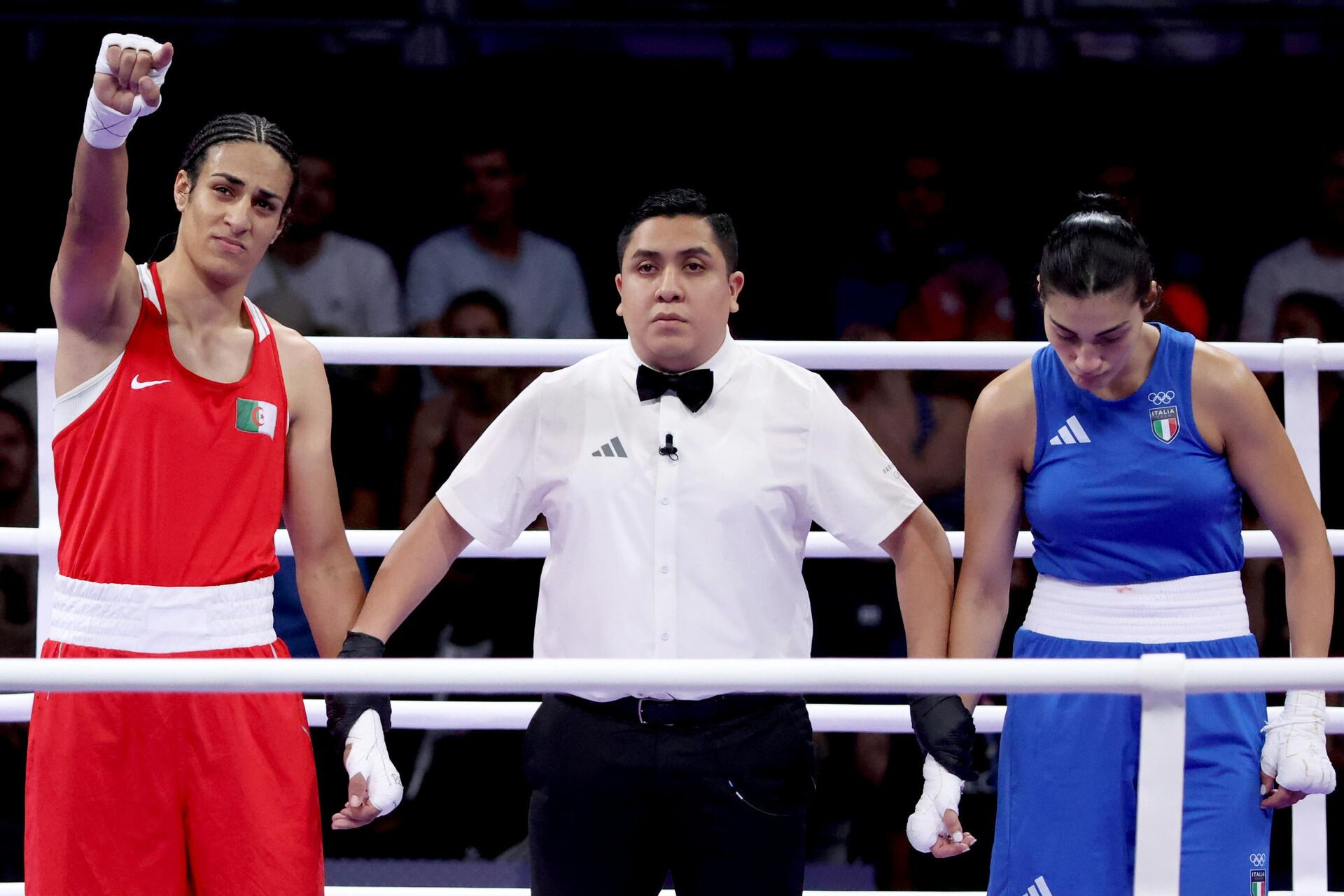
The most talked-about case of 2025 belongs to Imane Khelif, the Algerian Olympic champion in the junior middleweight category.
After winning the gold medal in Paris 2024 under the protection of the International Olympic Committee (IOC), Khelif was again required by World Boxing (WB) – a newly recognized federation by the IOC – to undergo mandatory PCR sex determination testing to find the SRY gene (a gene that determines a person's maleness).
This rule applies to all athletes over 18 years of age, with the aim of determining biological sex before competing in women's or men's categories.
More than two months ago, Khelif was denied entry to the Eindhoven Box Cup because she hadn't been tested. Public pressure forced the World Bank to apologize for naming her in the press release, but the new rule remains in place.
Boxing isn't the only sport tightening its requirements. World Athletics (WA) – the governing body of athletics – has banned transgender women who have experienced male puberty since 2023 and tightened requirements for athletes with DSD (Disordered Gender Development), requiring testosterone levels below 2.5 nmol/L for six months.
In July 2025, WA further approved a regulation requiring a “once-in-a-lifetime” SRY gene test for all athletes wishing to compete in the women's category, effective from September.
This directly affects figures like Caster Semenya, who is pursuing a case at the European Court of Human Rights (ECHR) to challenge the legality of hormone restrictions.
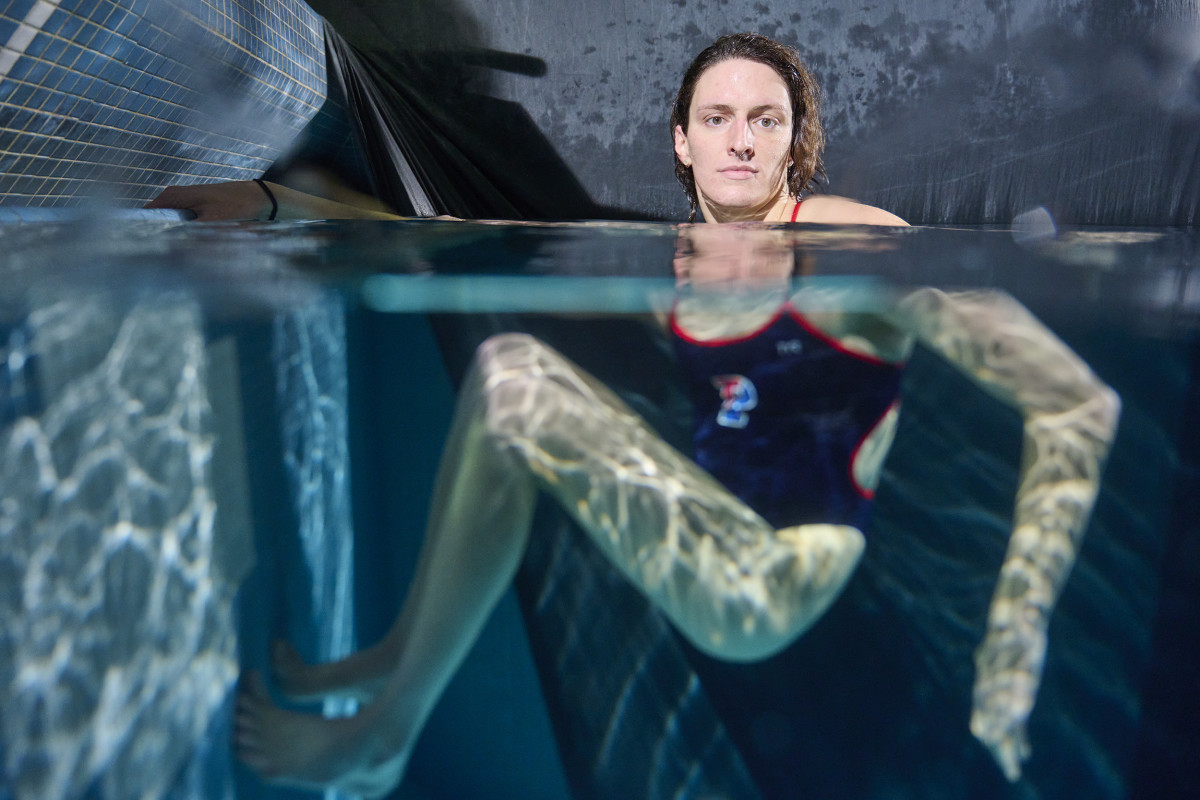
In swimming, the case of Lia Thomas – an American transgender athlete – ended in legal defeat.
The Court of Arbitration for Sport (CAS) rejected her appeal in June 2024, upholding the World Aquatics (the governing body of aquatic sports) policy: transgender women who have gone through male puberty are not allowed to compete in international women's competitions. This is one of the precedent-setting rulings for other sports.
Beyond the realm of sports
Women's football has also seen controversy. Barbra Banda, the Zambian striker, was once excluded from the 2022 Africa Cup of Nations for not meeting CAF's testosterone criteria, before returning for the 2023 World Cup.
The African Football Confederation has yet to clearly announce its testing procedures, raising doubts about consistency and transparency.
These cases raise questions about justice and human rights. In Europe, Semenya won an ECHR ruling that her case needed to be reviewed, demonstrating that sporting regulations can indeed be challenged on the basis of individual rights.
Meanwhile, in the US, some states have enacted laws banning or restricting transgender women from competing in school sports, opening up another legal front alongside elite sports.
The line between protecting fairness and respecting privacy is becoming increasingly blurred.
International federations consistently cite safety and integrity concerns in competition, particularly in combat sports, to justify sex testing or hormone restriction.
Conversely, many athletes and human rights organizations consider this to be physical assault and discrimination.
The debate is far from over and will likely continue to be shaped by both union council chambers and courtrooms.
As biomedical science advances, the big question remains: how will women's sports define gender in a way that is both fair and humane?
Source: https://vietnamnet.vn/tranh-cai-gioi-tinh-the-thao-nu-tu-dang-thi-hong-den-the-gioi-2431729.html
![[Live] 2025 Community Action Awards Gala](/_next/image?url=https%3A%2F%2Fvphoto.vietnam.vn%2Fthumb%2F1200x675%2Fvietnam%2Fresource%2FIMAGE%2F2025%2F12%2F16%2F1765899631650_ndo_tr_z7334013144784-9f9fe10a6d63584c85aff40f2957c250-jpg.webp&w=3840&q=75)

![[Photo] Prime Minister Pham Minh Chinh receives Lao Minister of Education and Sports Thongsalith Mangnormek](/_next/image?url=https%3A%2F%2Fvphoto.vietnam.vn%2Fthumb%2F1200x675%2Fvietnam%2Fresource%2FIMAGE%2F2025%2F12%2F16%2F1765876834721_dsc-7519-jpg.webp&w=3840&q=75)

![[Photo] Prime Minister Pham Minh Chinh receives the Governor of Tochigi Province (Japan)](/_next/image?url=https%3A%2F%2Fvphoto.vietnam.vn%2Fthumb%2F1200x675%2Fvietnam%2Fresource%2FIMAGE%2F2025%2F12%2F16%2F1765892133176_dsc-8082-6425-jpg.webp&w=3840&q=75)
![[Image] Leaked images ahead of the 2025 Community Action Awards gala.](/_next/image?url=https%3A%2F%2Fvphoto.vietnam.vn%2Fthumb%2F1200x675%2Fvietnam%2Fresource%2FIMAGE%2F2025%2F12%2F16%2F1765882828720_ndo_br_thiet-ke-chua-co-ten-45-png.webp&w=3840&q=75)





























![[Photo] Prime Minister Pham Minh Chinh attends the Vietnam Economic Forum 2025](https://vphoto.vietnam.vn/thumb/402x226/vietnam/resource/IMAGE/2025/12/16/1765893035503_ndo_br_dsc-8043-jpg.webp)





















Comment (0)