


As Russian gold was shunned by Europe, several companies stepped in to help the product find new buyers in the UAE, Hong Kong, and Türkiye.
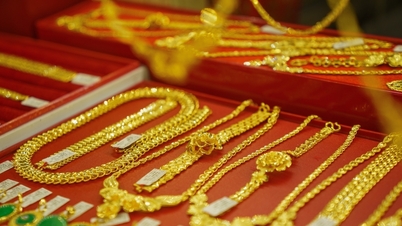
Following the outbreak of hostilities in Ukraine, Russian gold bullion became a taboo commodity. The G7 and the European Union (EU) banned imports of the product last summer. This has caused headaches for the Russian gold industry, as the domestic market cannot absorb the $20 billion worth of precious metal mined annually.
This prompted the Russian Central Bank and foreign buyers to intervene. Dozens of logistics companies and traders – who were previously small players in the gold market – have entered the Russian gold trade, according to data from the trade tracking company ImportGenius. This data was obtained from Russian Customs for the six months ending August 2022.
Previously, large quantities of Russian gold were transported to London, stored in the vaults of prominent banks such as JPMorgan Chase and HSBC. However, Russian gold is now being diverted to destinations like the UAE, Hong Kong (China), and Turkey – economies that have not imposed sanctions on Russia.

Workers are removing gold from molds at a factory in Krasnoyarsk, Russia. Photo: Bloomberg .
This once again illustrates how the international trade map has been redrawn following the Ukraine conflict. The G7 and the EU banned imports of Russian gold and prohibited domestic companies from trading in it. However, companies in other countries are still allowed to trade in Russian precious metals due to the lack of secondary sanctions (sanctions against third parties).
Leading global security companies, such as Brink's Co. and Loomis, dominate the global gold transport market. However, they have now ceased providing this service for Russian gold. The void is being filled by companies like VPower Finance Security (Hong Kong) – which transports gold and cash for China's largest banks. ImportGenius data shows that this company transported over $300 million worth of Russian gold through Hong Kong between March and August 2022.
This figure is only a fraction of the $1.2 billion in Russian gold transferred to JPMorgan in the first two months of last year. This highlights the challenge of selling large quantities of gold immediately after the outbreak of hostilities. However, new sales channels are gradually emerging. Mining companies Polymetal International and Polyus have also begun selling off their stockpiles from the first half of last year.
The UAE is now a leading new destination for Russian gold. Over $500 million worth of gold was exported there between March and August 2022. The majority of buyers were in Dubai – a major hub for trading precious metals between East and West. Figures show that Paloma Precious, a gold trading company with offices in Dubai, imported $109 million worth of gold.
Some Dubai traders appear to have little experience in the precious metals sector. Actava Trading – the company that imported $25 million worth of Russian gold in August – is primarily involved in the Black Sea grain trade.
Türkiye is also a popular destination, with approximately $305 million worth of Russian gold passing through Istanbul airport between March and August 2022.
In Russia, sanctions have led large banks like VTB Bank and Sberbank to reduce their involvement in gold exports. Instead, smaller banks are increasingly gaining more control. Gold mining and refining companies are also playing a larger role in transportation.
The Russian central bank is also buying, with around 1 million ounces purchased over the past year. US sanctions targeting foreign exchange reserves have forced Russia to seek alternative assets to the USD.
Ha Thu (according to Bloomberg)
Source link


![[Photo] Prime Minister Pham Minh Chinh visits and extends New Year greetings to former Party and State leaders and offers incense to the esteemed predecessors.](https://vphoto.vietnam.vn/thumb/1200x675/vietnam/resource/IMAGE/2026/02/14/1771078465521_dsc-2411-jpg.webp)


































































![[Photo] Coc Ly market bustling on the eve of Tet](https://vphoto.vietnam.vn/thumb/402x226/vietnam/resource/IMAGE/2026/02/14/1771062261424_baolaocai-br_img-6457-jpg.webp)








Comment (0)