

"Buy an iPhone for your mother."
This is Apple CEO Tim Cook's famous response at Vox 's Code 2022 conference when a reporter complained that her mother couldn't watch videos she sent to her Android phone.
It was also cited and strongly criticized by Attorney General Merrick Garland at a press conference announcing the U.S. Department of Justice's lawsuit against Apple. The administration of U.S. President Joe Biden and 16 states accuse Apple of illegally abusing its iPhone monopoly power in the smartphone market.
"Consumers should not have to pay higher prices because companies violate antitrust laws," Attorney General Merrick Garland said in a statement. "If left unchallenged, Apple will only continue to solidify its smartphone monopoly."
The lawsuit against one of the world's largest companies alleges that Apple is violating the law by cleverly designing its app store and customer experience to exclude competitors. Apple has stated it will strongly retaliate.
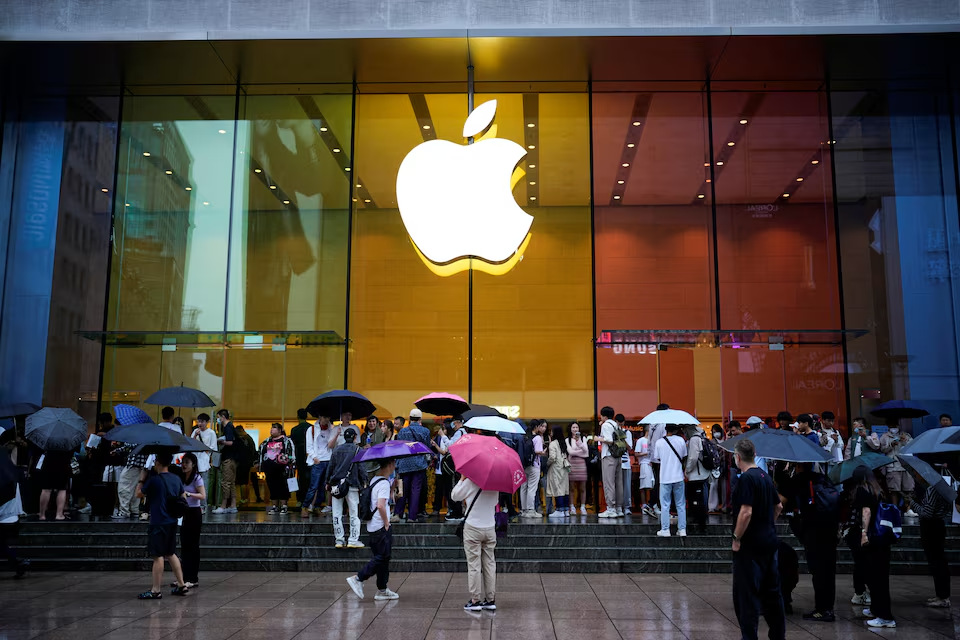
"This lawsuit threatens our identity and the principles that have made Apple products unique in fiercely competitive markets," the company announced.
If successful, the US could force Apple to loosen some restrictions in its "closed garden" of hardware and software. Apple would have to open iPhones to alternative app marketplaces and technologies similar to iMessage with Android.
In the lawsuit, the U.S. Department of Justice highlighted five ways in which Apple has disadvantaged Americans.
Green balloon
With iMessage, Apple created an enhanced messaging experience, allowing people to seamlessly interact with others, sending high-quality video and audio messages quickly, as long as both the sender and recipient use iPhones.

When these messages are sent to Android users, they load slowly and lack essential elements such as emojis, editing functions, and end-to-end encryption. The "green bubble" that distinguishes Android users within iMessage and the low quality of messages sent between Android and iPhone are illegal, according to the Department of Justice.
Attorney General Garland argues that Apple made messaging between iPhones and Android devices more difficult, resulting in iPhone users perceiving competing smartphones as inferior products. He believes Apple did this intentionally.
In 2023, the iPhone manufacturer announced it would adopt a new communication technology standard with Android, but without unlocking all features. The green bubble still hasn't disappeared.
Apple Pay exclusive
Apple has helped revolutionize the way we pay, linking credit cards to the technology inside the iPhone for more secure and seamless payments. Apple also receives a portion of the fees generated from these transactions.
However, citing security reasons, Apple does not allow third-party apps access to the chip that enables iPhone mobile payments. It could also tie customers to their iPhones, according to the lawsuit.
“Apple is taking away the benefits and innovations that third-party wallets offer users,” the lawsuit states. “Cross-platform digital wallets would provide a more convenient, seamless, and perhaps more secure way for users to switch from an iPhone to another smartphone.”
Making other smartwatches less useful than the Apple Watch.
The Apple Watch, one of Apple's most successful products, is intentionally incompatible with Android phones, according to the U.S. Department of Justice.
While other smartwatches are generally compatible with any smartphone, the Apple Watch requires an iPhone to function. This locks Apple within its own hardware and software ecosystem, forcing Apple Watch users to purchase an iPhone.
“Apple is using smartwatches, an expensive accessory, to discourage iPhone users from choosing other phones,” the lawsuit states. “By copying the smartwatch concept from third-party developers, Apple is now blocking those developers from innovating and restricting the Apple Watch to the iPhone to prevent negative impacts on iPhone sales.”
Banning third-party app marketplaces.

The only way to download iPhone apps is through the proprietary App Store. Apple has long maintained that this approach keeps users safer, preventing access to malicious and junk apps.
According to the U.S. Department of Justice, this practice forces apps to endure Apple's heavy restrictions and expensive 30% commissions, as well as restricting competition. For example, Apple illegally bans its cloud-based game app store on iPhones. Companies wanting to stream games to customers must upload each game individually to the App Store, preventing them from marketing and selling the technology to customers.
Restrict super apps.
Apple forces app developers to program specifically for its operating system, prohibiting them from using a common programming language to provide a unique experience across all devices. This prevents apps from becoming "super apps," running identically on iOS or Android. Apple also restricts "mini-apps." According to the U.S. Department of Justice, this "arbitrary imposition of proprietary requirements" hinders innovation.
(According to CNN)
Source


























































![[Video] Sunset at Lap An Lagoon – Where the sun sets over the fishing nets](https://vphoto.vietnam.vn/thumb/1200x675/vietnam/resource/IMAGE/2026/05/31/1780192137701_beach-landscape-sea-water-nature-grass-745871-pxhere-com.jpeg)










































Comment (0)