U Minh Thuong National Park records the recovery of the Javanese stork.
The Java stork population in U Minh Thuong has increased again, reflecting efforts to conserve this rare bird in its natural environment.
Báo Khoa học và Đời sống•16/12/2025
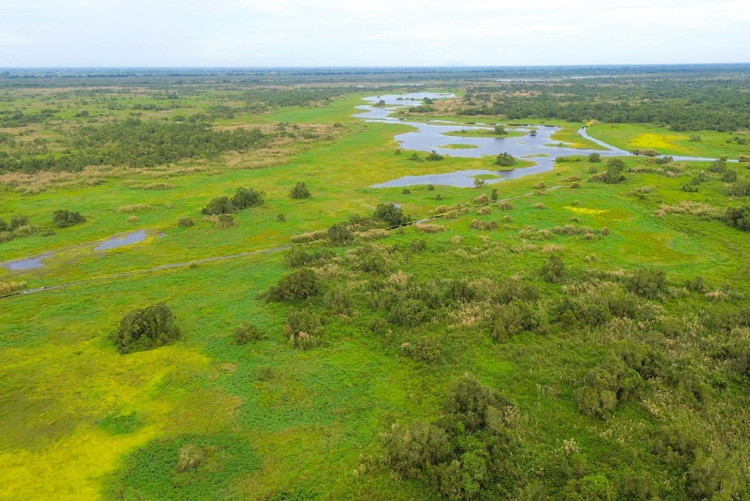
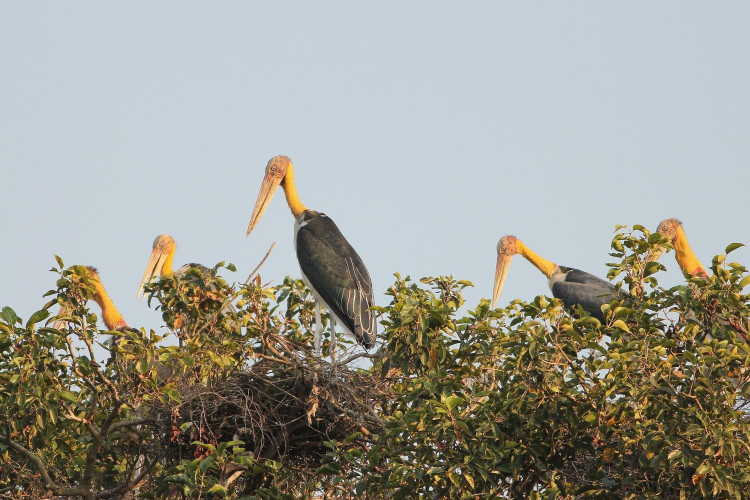
According to An Giang Newspaper, Tran Van Thang, Deputy Director of U Minh Thuong National Park, said that Javan storks settle and breed in the park. In 2002, in the melaleuca forest on peatland (an area not affected by fire), the unit discovered 7 nests. Of these, 4 nests contained chicks (each nest with 2-4 chicks). Photo: An Giang Newspaper. U Minh Thuong National Park continued its survey and discovered 42 individuals of the Javanese stork living there. By June 2003, the park had recorded 114 individuals, the highest number ever. Photo: An Giang Newspaper.
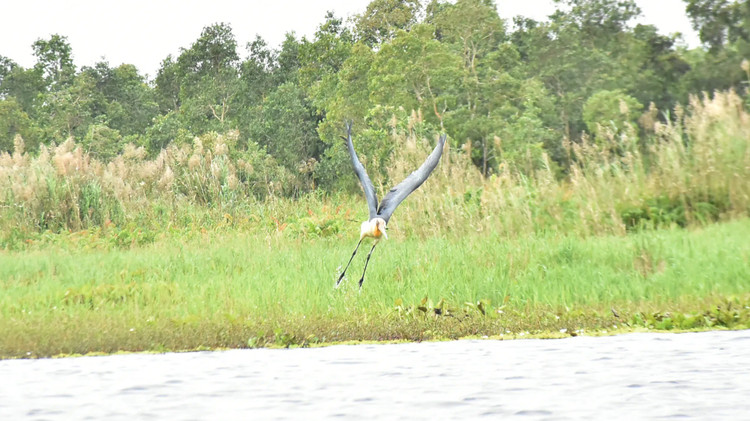
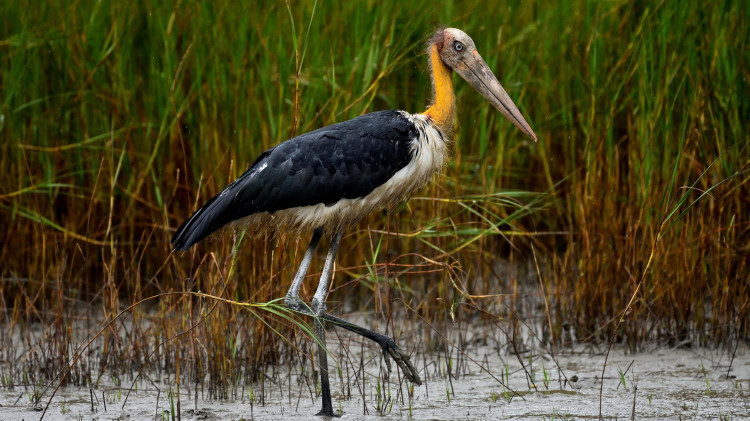
Over time, fewer and fewer Javanese storks have been recorded, and the unit has spotted them less frequently. This is due to shrinking nesting and foraging grounds, or possibly due to forest fires in mangrove forests, which have gradually destroyed the habitat of this rare bird species. Photo: SGGP. “Recently, U Minh Thuong National Park recorded a Javanese stork foraging in the waterlogged area for quite a long time, then flying deep into the vast melaleuca forest. This is a positive sign, and the unit is striving to continue preserving the diverse ecosystem so that Javanese storks, as well as all other species, can live and reproduce in greater numbers,” said Deputy Director Tran Van Thang. Photo: SGGP. The Java stork, scientifically known as Leptoptilos Javanicus, is also called the wolf stork or wolf stork. This species is most widely distributed in India, Nepal, Sri Lanka, Bangladesh, Myanmar, Thailand, and Vietnam. Currently, there are only about 10,000 Java storks in the world. Photo: baodaklak.vn.
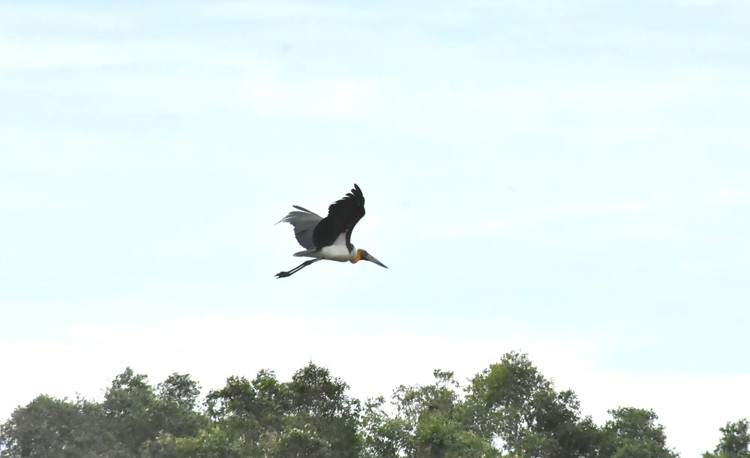
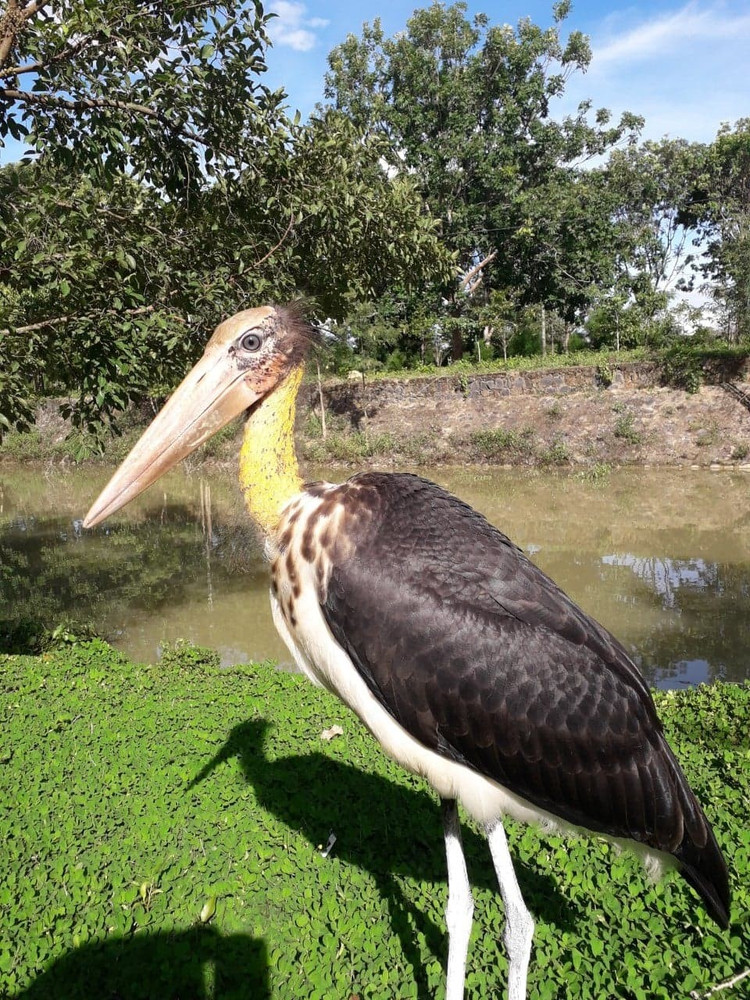
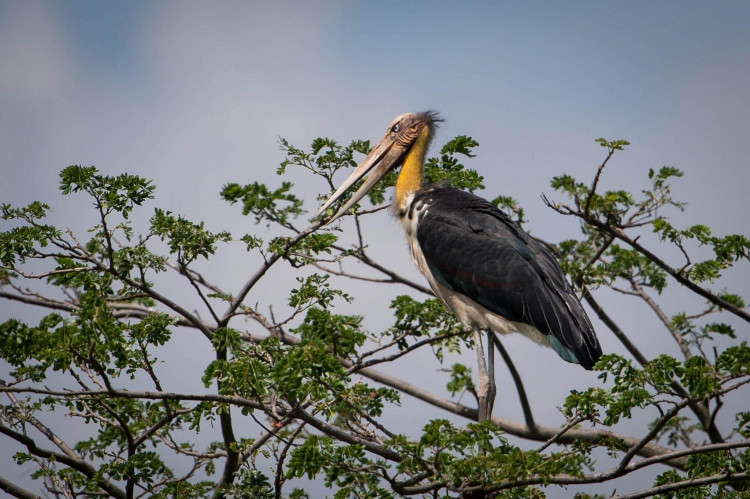
The rare Java stork is listed in the Vietnam Red Book and the IUCN Red Book. Photo: Rana.choudhuri. The Javan stork is distinguished by its bare head and neck, sometimes with a few brown feathers. Its back, wings, and tail are black with a greenish sheen. While the underwings are black, the underside of the Javan stork is white. Its legs are pale green or pale black. Photo: Jason Thompson. When fully grown, each Javanese stork averages about 1.2 meters in height and weighs 6-7 kg. Photo: Jason Thompson.
The Javan stork typically lives in wetlands, swamps, flooded grasslands, forest edges, and coastal areas. Their main food sources are fish, frogs, and small snakes. (Photo: Vaibhavcho) Readers are invited to watch the video : More new species discovered in the Mekong River region. Source: THĐT1.



 Báo Khoa học và Đời sống•16/12/2025









![[Image] Leaked images ahead of the 2025 Community Action Awards gala.](/_next/image?url=https%3A%2F%2Fvphoto.vietnam.vn%2Fthumb%2F1200x675%2Fvietnam%2Fresource%2FIMAGE%2F2025%2F12%2F16%2F1765882828720_ndo_br_thiet-ke-chua-co-ten-45-png.webp&w=3840&q=75)
![[Photo] Prime Minister Pham Minh Chinh receives Lao Minister of Education and Sports Thongsalith Mangnormek](/_next/image?url=https%3A%2F%2Fvphoto.vietnam.vn%2Fthumb%2F1200x675%2Fvietnam%2Fresource%2FIMAGE%2F2025%2F12%2F16%2F1765876834721_dsc-7519-jpg.webp&w=3840&q=75)











































































Comment (0)