

According to industry reports, the global sanitary ware market value reached approximately US$47.22 billion in 2024, projected to surpass US$50 billion in 2025 and target around US$90 billion by 2032. Notably, the smart sanitary ware segment is playing a key role in growth, recording an increase of over 20.5% in the second quarter of 2025 compared to the same period the previous year.
This trend shows that consumers are increasingly prioritizing automated cleaning solutions that integrate high technology to save time, reduce effort, and improve the quality of their living spaces. Instead of traditional cleaning tools, the market is shifting towards robotic vacuum cleaners and smart floor cleaning robots with the ability to operate, clean themselves, and adapt flexibly to actual household conditions.
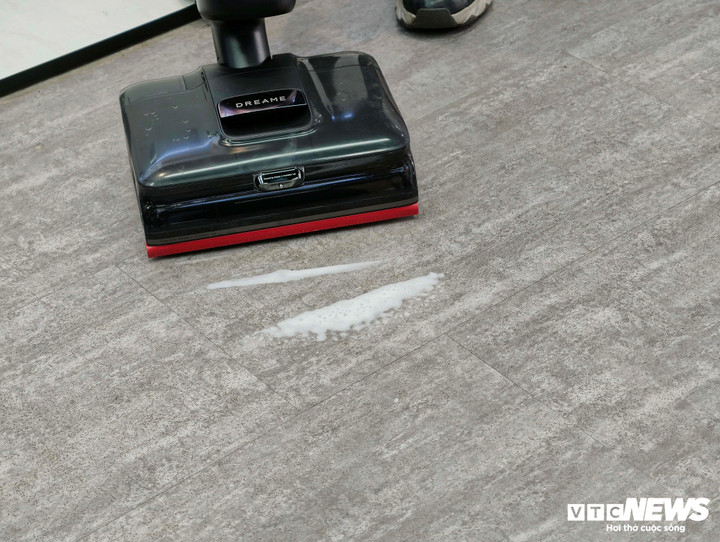
The floor cleaning machine with added foam pump function cleans stubborn stains and eliminates pet odors.
In Vietnam, market trends show two prominent development directions. Firstly, devices are being optimized for specific environments such as pet homes, where odor, bacteria, and pet hair need to be addressed more thoroughly. Secondly, there is an improvement in cleaning efficiency in hard-to-reach areas such as wall edges, corners, and crevices – inherent weaknesses of older devices.
In 2025, companies like Roborock, Ecovacs, Xiaomi, and Samsung are all striving to expand their product lines of robotic vacuum cleaners and floor cleaning robots, focusing on automation, AI integration, and minimizing manual operation for users. Some manufacturers concentrate on precise navigation and detailed spatial mapping, while others emphasize strong suction power, durability, or connectivity with smart home devices. This multifaceted competition shows that the market has entered a more advanced stage, where companies not only compete on price but also must demonstrate technological capabilities and real-world experience to win over consumers.
Most recently, Dreame introduced the H15 Pro FoamWash vacuum cleaner in Vietnam, focusing on deep cleaning in pet-friendly environments. The device utilizes foam spraying technology combined with strong suction power, allowing it to simultaneously tackle dirt, odors, and bacteria, instead of just vacuuming dry dust as before. Integrated sensors enable the machine to detect the level of dirt and adjust the amount of cleaning solution accordingly, optimizing cleaning efficiency and minimizing waste.
In the robotic vacuum cleaner segment, the Dreame L50 Ultra CE demonstrates a trend towards both hardware power and automation. The robot is equipped with high suction power to handle fine dust and carpets, and features an improved rotating arm and mop mechanism for cleaning close to wall edges. It also comes with a versatile charging station capable of washing and drying the mop, vacuuming up debris, and refilling the water tank, aiming for maximum hands-free use for the user.
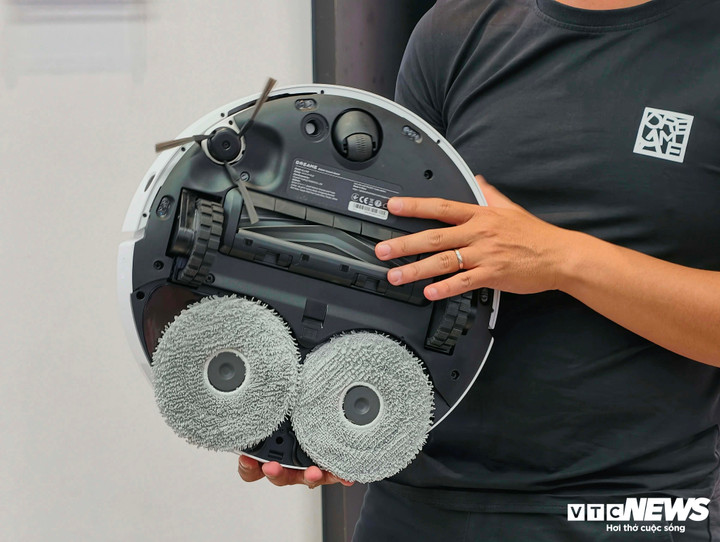
Robot vacuum cleaners in the 10 to 20 million VND price range are increasingly boasting advanced features and are also a best-selling segment in the Vietnamese market.
The increasing presence of smart cleaning devices like the H15 Pro FoamWash or L50 Ultra CE indicates that the market is entering a phase of competition based on experience and technology, rather than just basic functionality. This opens up more choices for consumers while placing higher demands on manufacturers to balance cleaning efficiency, automation levels, and suitability for practical use.
While there is still much room for growth, the market is not entirely rosy for all participating brands. On December 14th, iRobot – a pioneer in the robotic vacuum cleaner field – filed for Chapter 11 bankruptcy protection in the US after years of pressure from fierce competition and rapidly changing market conditions. Having sold over 50 million Roomba robots since its founding in 1990, iRobot gradually weakened from 2021 due to supply chain disruptions, declining sales, and the rise of cheaper competitors.
Source: https://vtcnews.vn/robot-ve-sinh-tu-dong-dang-thay-doi-thoi-quen-nguoi-dung-ar993375.html

![[Image] Leaked images ahead of the 2025 Community Action Awards gala.](/_next/image?url=https%3A%2F%2Fvphoto.vietnam.vn%2Fthumb%2F1200x675%2Fvietnam%2Fresource%2FIMAGE%2F2025%2F12%2F16%2F1765882828720_ndo_br_thiet-ke-chua-co-ten-45-png.webp&w=3840&q=75)
![[Photo] Prime Minister Pham Minh Chinh receives Lao Minister of Education and Sports Thongsalith Mangnormek](/_next/image?url=https%3A%2F%2Fvphoto.vietnam.vn%2Fthumb%2F1200x675%2Fvietnam%2Fresource%2FIMAGE%2F2025%2F12%2F16%2F1765876834721_dsc-7519-jpg.webp&w=3840&q=75)
![[Photo] Prime Minister Pham Minh Chinh receives the Governor of Tochigi Province (Japan)](/_next/image?url=https%3A%2F%2Fvphoto.vietnam.vn%2Fthumb%2F1200x675%2Fvietnam%2Fresource%2FIMAGE%2F2025%2F12%2F16%2F1765892133176_dsc-8082-6425-jpg.webp&w=3840&q=75)
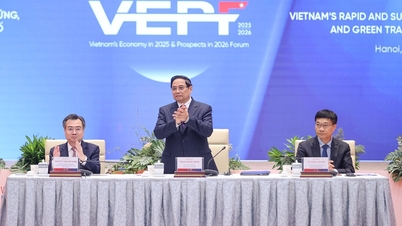
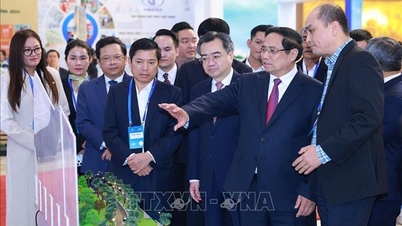
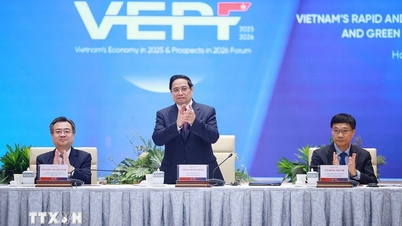
![[Photo] Prime Minister Pham Minh Chinh attends the Vietnam Economic Forum 2025](/_next/image?url=https%3A%2F%2Fvphoto.vietnam.vn%2Fthumb%2F1200x675%2Fvietnam%2Fresource%2FIMAGE%2F2025%2F12%2F16%2F1765893035503_ndo_br_dsc-8043-jpg.webp&w=3840&q=75)




































































Comment (0)