

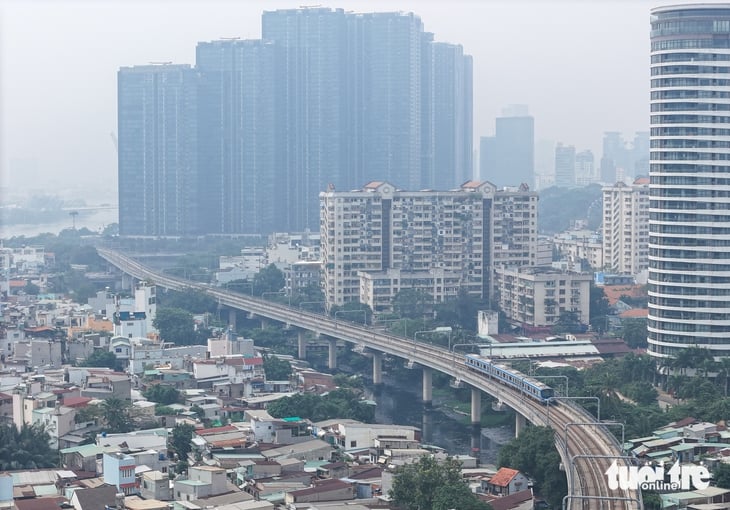
According to the Ho Chi Minh City Department of Agriculture and Environment, the air quality monitoring network is expected to have 157 monitoring points - Photo: CHAU TUAN
According to the Ho Chi Minh City Department of Agriculture and Environment, after the merger, Ho Chi Minh City entered a new phase of development with a population of approximately 14 million people and nearly 12.7 million vehicles. Along with the rapid pace of urbanization and industrialization, environmental pressure, especially air pollution, is increasing.
Monitoring results from 2021-2025 show that air pollution in Ho Chi Minh City remains complex. Parameters such as fine particulate matter (PM10), PM2.5, NO2, and noise levels frequently exceed standards in the central urban area, major traffic intersections, and areas with concentrated industrial and construction activities.
The main sources of emissions come from traffic, industrial production, construction, residential activities, and are also affected by neighboring localities such as Dong Nai and the former Long An .
Water quality in the Saigon River, Dong Nai River, and other major rivers remains affected, with organic, nutrient, and microbial pollution present in many sections. The inner-city canal system continues to face pressure from untreated domestic wastewater.
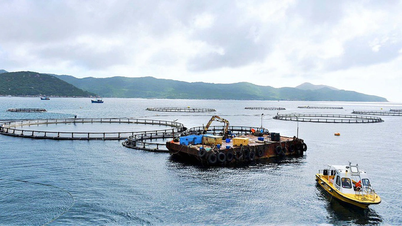
The coastal marine environment, especially in the Can Gio and former Vung Tau areas, is affected by maritime transport, port development, tourism, and aquaculture.
In addition, the city faces problems of land degradation, sediment pollution, declining groundwater levels, and land subsidence.
The Ho Chi Minh City resource and environmental monitoring program for 2026 is built on the basis of inheriting and integrating the monitoring networks of the three localities before the merger, in compliance with current legal regulations.
This program provides reliable, scientific data for monitoring and warning about pollution, and serves as a basis for managing and planning sustainable development policies for the city.
Based on legal regulations, the Ho Chi Minh City Department of Agriculture and Environment is submitting to the Ho Chi Minh City People's Committee for approval the report on the results of the 2025 monitoring program and for consideration the issuance of the Ho Chi Minh City resource and environment monitoring program for 2026. Specifically, air quality monitoring needs to be conducted at 157 locations.
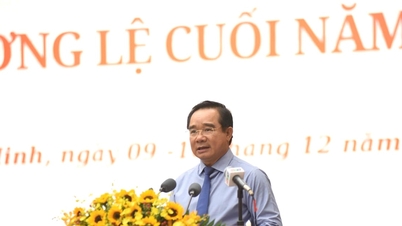
Earlier, on the afternoon of December 15th, at the second (expanded) meeting of the Ho Chi Minh City Party Committee Executive Board for the 2025-2030 term, after hearing reports from various units on environmental and air pollution issues, the Chairman of the Ho Chi Minh City People's Committee, Nguyen Van Duoc, stated that Ho Chi Minh City will review and reassess the entire monitoring system.
This is to ensure that we have complete and accurate data and can provide timely recommendations, aiming towards a synchronized and modern environmental management system.
12 resource and environmental monitoring programs for Ho Chi Minh City in 2026
Air quality was monitored at 157 locations.
Surface water quality was monitored at 254 points.
Sediment monitoring at 41 points;
Soil quality was monitored at 54 locations.
Seawater quality is monitored at 31 points.
Groundwater resource monitoring includes periodic monitoring, automated monitoring, and exploitation monitoring at 79 points/stations;
Aquatic monitoring of rivers and canals at 18 points;
Ground subsidence monitoring at 2 stations;
Managing and operating 9 automated surface water monitoring stations;
Manage and operate three automated air quality monitoring stations.
Managing and operating automatic emission monitoring stations;
Manage and operate the online video surveillance system.
Source: https://tuoitre.vn/tp-hcm-de-xuat-lap-157-diem-quan-trac-chat-luong-khong-khi-2025121619065853.htm

![[Photo] Prime Minister Pham Minh Chinh receives the Governor of Tochigi Province (Japan)](/_next/image?url=https%3A%2F%2Fvphoto.vietnam.vn%2Fthumb%2F1200x675%2Fvietnam%2Fresource%2FIMAGE%2F2025%2F12%2F16%2F1765892133176_dsc-8082-6425-jpg.webp&w=3840&q=75)
![[Live] 2025 Community Action Awards Gala](/_next/image?url=https%3A%2F%2Fvphoto.vietnam.vn%2Fthumb%2F1200x675%2Fvietnam%2Fresource%2FIMAGE%2F2025%2F12%2F16%2F1765899631650_ndo_tr_z7334013144784-9f9fe10a6d63584c85aff40f2957c250-jpg.webp&w=3840&q=75)
![[Image] Leaked images ahead of the 2025 Community Action Awards gala.](/_next/image?url=https%3A%2F%2Fvphoto.vietnam.vn%2Fthumb%2F1200x675%2Fvietnam%2Fresource%2FIMAGE%2F2025%2F12%2F16%2F1765882828720_ndo_br_thiet-ke-chua-co-ten-45-png.webp&w=3840&q=75)
![[Photo] Prime Minister Pham Minh Chinh receives Lao Minister of Education and Sports Thongsalith Mangnormek](/_next/image?url=https%3A%2F%2Fvphoto.vietnam.vn%2Fthumb%2F1200x675%2Fvietnam%2Fresource%2FIMAGE%2F2025%2F12%2F16%2F1765876834721_dsc-7519-jpg.webp&w=3840&q=75)


































![[Photo] Prime Minister Pham Minh Chinh attends the Vietnam Economic Forum 2025](https://vphoto.vietnam.vn/thumb/402x226/vietnam/resource/IMAGE/2025/12/16/1765893035503_ndo_br_dsc-8043-jpg.webp)


















Comment (0)