

As reported by Thanh Nien Newspaper, on June 15th, the Ministry of Education and Training issued Circular 11/2023/TT-BGDĐT abolishing Circular 23/2014/TT-BGDĐT (issued in 2014) regulating high-quality university-level training.
Many universities have stated that with the introduction of the amended and supplemented Higher Education Law in 2018, the development of high-quality programs and other types of programs falls under the autonomy of universities. Universities can use the concept of "high quality" to name their programs, no longer bound by the conditions stipulated in Circular 23. The important thing is that universities must demonstrate the quality of their programs, explain to stakeholders and society as a whole what they have committed to regarding learning outcomes and quality assurance conditions to live up to the name.
MANY SCHOOLS ARE NOT AFFECTED
According to Associate Professor Vu Thi Hien, Head of the Training Management Department at the Foreign Trade University, the repeal of Circular 23 will not affect the training and enrollment of high-quality programs at the university in 2023 and the following years.
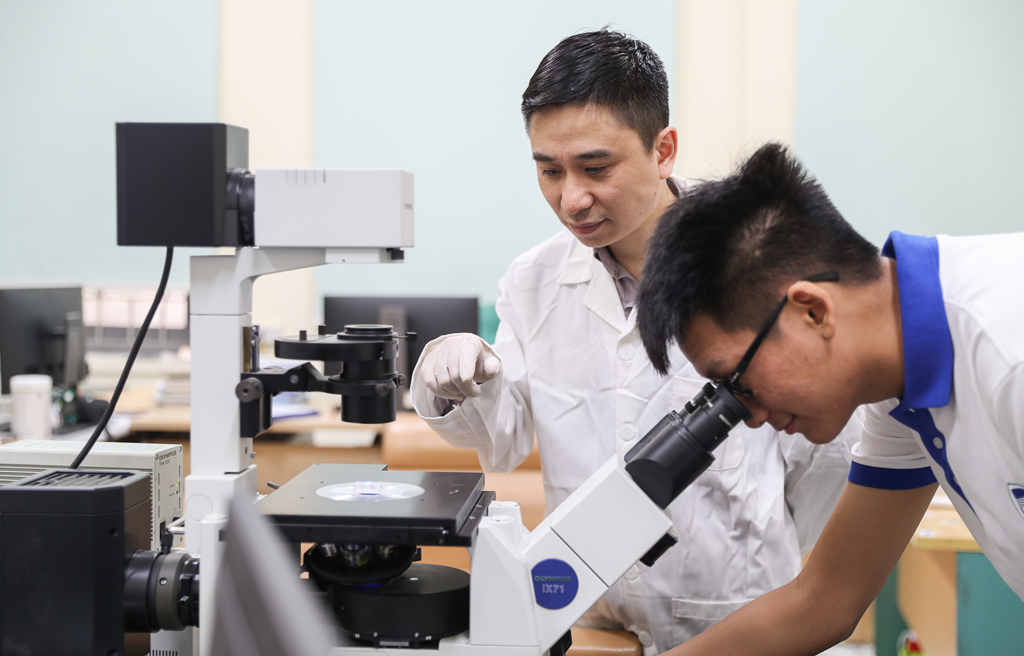
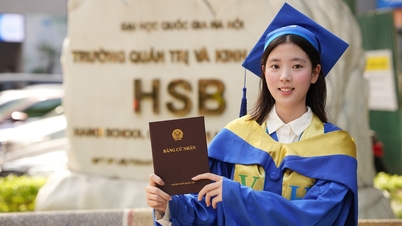
Students of Hanoi National University. This is one of the training institutions with high-quality programs.
The university's high-quality programs are built with higher output standards and quality assurance conditions than standard programs, and meet the standards stipulated in Circular 23 at an exceptionally high level. The university will continuously improve and update its high-quality training programs by integrating international standards into the professional pillars of the programs, increasing flexibility, and incorporating models that foster creativity and practical work skills in an international environment for students. The university has also clearly defined its high-quality programs and will promote mutual recognition with reputable universities/organizations worldwide .
Associate Professor Pham Thu Huong, Vice Rector of the Foreign Trade University, stated that the university's high-quality programs, which have already produced graduates, have all undergone international accreditation and meet the requirements of a training program as stipulated. Therefore, in the future, the university will continue to implement high-quality training programs and carry out continuous improvement, with regular international accreditation as required.
According to Associate Professor Nguyen Phong Dien, Deputy Director of Hanoi University of Science and Technology, before the 2018 amendment to the Higher Education Law, the university also had a high-quality program called ELITECH (an abbreviation of Elite Technology Program). This training program aimed to cultivate high-quality human resources in priority science and technology fields for socio-economic development, while also becoming a model within the university's training system in terms of content, advanced training methods, and the application of modern educational technology. ELITECH included programs with a long history such as the talent program, the Vietnamese-French program, and the advanced program.
The tuition fees for the ELITECH program are primarily based on the advanced program project (implemented from 2006 to 2016). The university is allowed to determine its own training costs and then announce the tuition fee (based on a socially acceptable level) before applicants register for admission. Subsequently, the university implemented a pilot autonomy project according to Resolution 77/NQ-CP (issued by the Government on October 24, 2014, on piloting the reform of the operational mechanism for public higher education institutions in the period 2014-2017).
When implementing the law, Hanoi University of Science and Technology continues to implement the ELITECH program. "Nationwide, Circular 23 defines what constitutes high quality, which allows for higher tuition fees. Hanoi University of Science and Technology also relies on some core content to establish regulations for the ELITECH program. Hanoi University of Science and Technology is an autonomous institution, therefore it has autonomy in developing its training programs and setting appropriate tuition fees for each program. Therefore, the Ministry's repeal of Circular 23 does not affect the enrollment and training activities of Hanoi University of Science and Technology," Associate Professor Dien shared.
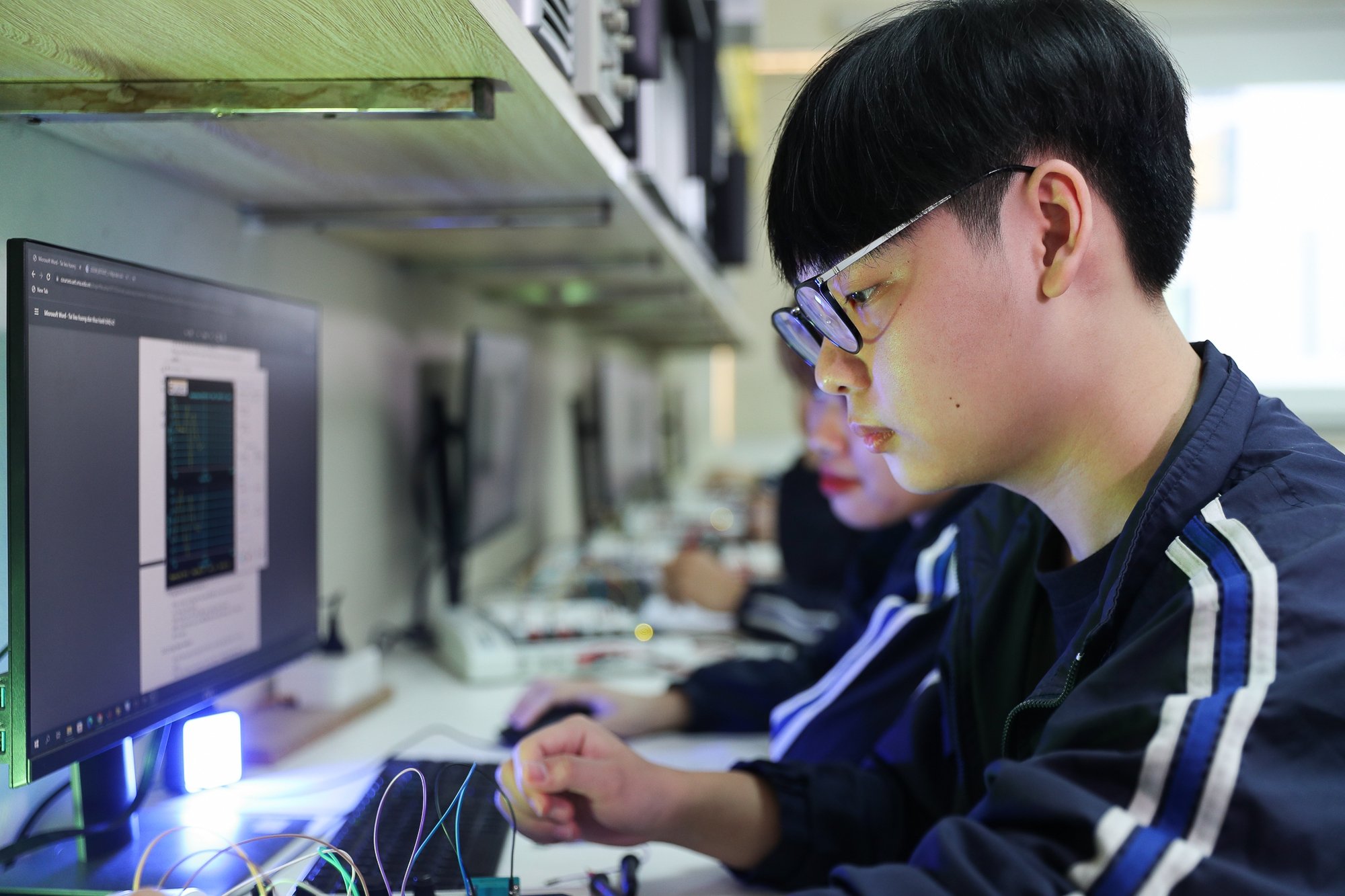
For public universities that are not yet autonomous or are only partially autonomous, the Ministry of Education and Training's repeal of Circular 23 will create issues regarding the determination of tuition fees.
X. HOW ARE TUITION FEES DETERMINED?
According to Decree 81, universities with autonomy in recurrent expenditures are allowed to charge tuition fees up to twice the maximum tuition fee ceiling compared to non-autonomous universities; while universities with autonomy in both recurrent and investment expenditures can charge up to 2.5 times that amount. This regulation facilitates autonomous universities in setting tuition fees for high-quality programs, as many universities apply tuition fees for mass programs significantly below the ceiling stipulated in Decree 81. Thus, an autonomous university can set different tuition fees, suitable for mass programs and high-quality programs, while still remaining fully compliant with Decree 81.
However, for public universities that are not yet autonomous or are only partially autonomous, the Ministry of Education and Training's repeal of Circular 23 will create problems regarding tuition fee determination. Circular 23 allowed universities to independently determine tuition fees for high-quality programs based on the principle of "accurately and fully calculating training costs for the entire course"; universities were also allowed to develop a roadmap for adjusting tuition fees for subsequent courses (if necessary)... Now that Circular 23 has been repealed, universities must collect tuition fees according to Decree 81. Accordingly, universities that are not yet autonomous will have to collect tuition fees according to the government's framework regulations. Only if a training program has achieved accreditation can the university independently determine the tuition fee for that program based on the economic and technical standards issued by the university itself.
Dr. Pham Thanh Ha, Head of the Training Department at the University of Transport, said that the university currently has 10 high-quality programs, but only half of them have been accredited. The other half of the high-quality programs have only been open for 2-3 years. Meanwhile, according to regulations, newly opened training programs are only eligible for accreditation after students graduate.
"According to the roadmap, the University of Transport will be granted autonomy by December, while the repeal of Circular 23 will only take effect in December. If everything goes according to plan, the University of Transport will be able to maintain all its current high-quality programs. Otherwise, it will have to suspend enrollment until it is granted autonomy, because these are high-investment programs that the university cannot maintain without funding," Dr. Thanh Ha shared.
Removing obstacles for units still facing regulations.
Associate Professor Nguyen Hoang Hai, Vice Director of Hanoi National University, believes that although the repeal of Circular 23 is lawful, some higher education institutions will face difficulties due to the lack of appropriate regulations. This is especially true for national universities, which are responsible for piloting new training programs. Therefore, these programs can only be accredited after a certain period of time.
"There are many ways to determine the quality of a training institution's program, and from there, to show whether they are allowed to set their own tuition fees according to Decree 81. Achieving accreditation is one way. But in my opinion, there are many other ways, even more difficult ones, such as university rankings. Secondly, for newly launched programs, allowing the school to participate in program accreditation with high-quality foreign accreditation bodies does not require students to graduate before accreditation. They accredit the program based on the overall performance of other programs at the training institution, and they have methods to determine whether the newly launched program is good or not," Associate Professor Hoang Hai suggested.
Source link
![[Photo] Capturing the moment the tide recedes at Yen Binh Son rapids - a million-year-old scenic spot in Quang Ngai.](https://vphoto.vietnam.vn/thumb/1200x675/vietnam/resource/IMAGE/2026/05/19/1779175463885_yen9-1199-jpg.webp)
![[Photo] National Assembly Chairman Tran Thanh Man attends the groundbreaking ceremony for the National Highway 1A spatial axis project.](https://vphoto.vietnam.vn/thumb/1200x675/vietnam/resource/IMAGE/2026/05/19/1779161360398_ndo_br_bnd-1412-jpg.webp)
























































![[Photo] General Secretary and President To Lam receives Indian Defense Minister Rajnath Singh](https://vphoto.vietnam.vn/thumb/402x226/vietnam/resource/IMAGE/2026/05/19/1779184046302_anh-man-hinh-2026-05-19-luc-16-46-58.png)























Comment (0)