

The main objective of the mission is to accurately classify plant taxa belonging to the Magnolia phylum in Vietnam, manage and analyze information on usage value and provide a scientific basis for proposing solutions for conservation and sustainable development.
Specifically, the task is to build a database of more than 10,000 plant species, including morphological characteristics, distribution, images and information on plant specimens, compatible with the international GBIF database. At the same time, a database of the use value of more than 5,000 species is deployed, classified into groups of medicinal plants, timber plants, ornamental plants, fruit trees, essential oil plants, vegetables, dyes, fibers and animal feed.
In addition, the mission also proposes solutions for conservation and sustainable development of Vietnam's plant diversity, publishes 2 international articles in the SCIE category and 2 domestic articles, and supports the training of graduate students and resource management staff.
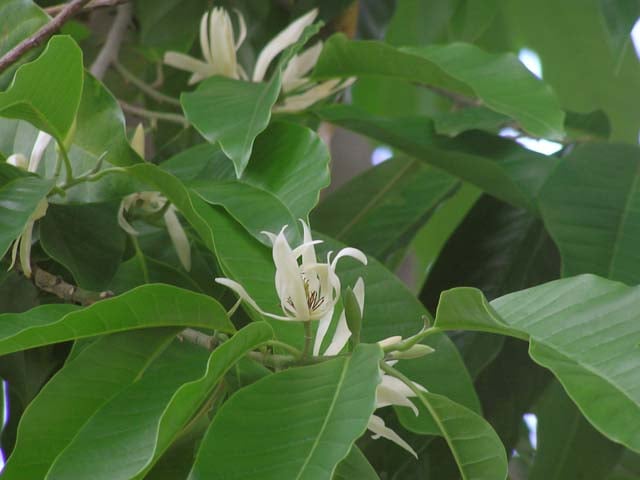
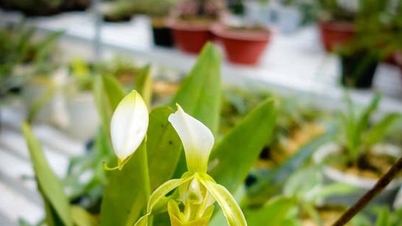
Vietnamese magnolia.
The research results have made many new scientific contributions. The taxonomic database includes 10,267 species, belonging to two main classes: Magnoliopsida (7,709 species) and Liliopsida (2,558 species). Of these, three new species for science have been published in SCIE journals, confirming the scientific value and reliability of the data. The database on usage values contains 5,682 species, including 4,543 medicinal plants, 643 timber species, 799 landscape species, 372 edible species, 75 essential oil species, 529 vegetable species, 184 dye species, 64 fiber species, 292 animal feed species and many other values. These data are managed using Microsoft Access software and integrated with GBIF, allowing for effective information retrieval, analysis and sharing.
In terms of economic efficiency, the database is an effective tool to help researchers and businesses grasp valuable plant genetic resources, use the right type of resources, optimize exploitation and reduce waste.
For the pharmaceutical industry, data on medicinal plant species provides the basis for developing high-quality products, enhancing value and competitiveness. Endemic species found only in Vietnam with high medicinal and economic value become potential raw materials for pharmaceutical products, functional foods and essential oils, contributing to enhancing the national economic value.
The data system also supports the development of edible food and forest vegetables, ensuring food and health security, and providing important information for resource management in situations of natural disasters, epidemics or special tasks of the State.
In terms of social effectiveness, the mission contributes to training highly qualified staff in the fields of botany, ecology, bioinformatics and resource management.
The database on the medicinal uses and uses of plants helps staff at National Parks, Nature Reserves and resource management agencies make appropriate conservation decisions. The dissemination of plant genetic resource management and utilization procedures contributes to raising public awareness, while facilitating technology transfer and the development of high-quality scientific human resources.
In particular, detailed data on the morphology, distribution and use value of Magnolia plants are the foundation for building conservation solutions towards sustainable development, ensuring ecological balance and rational exploitation of natural resources. This is also the basis for Vietnam to effectively participate in international research networks on biodiversity, enhancing its role in global scientific research.
Thus, the DTĐL.CN-72/22 mission not only brings outstanding scientific value but also makes practical contributions to socio-economic development and environmental protection.
The Magnolia Industry Database is an important tool for the management and rational use of plant resources, creating a foundation for research, training, technology transfer and development of medicinal herbs and rare agricultural and forestry products of Vietnam. This is a clear demonstration of the application of basic science into practice, contributing to the conservation of biodiversity, sustainable exploitation of natural resources and promoting green and sustainable economic development.
Source: https://mst.gov.vn/xay-dung-bo-co-so-du-lieu-nganh-ngoc-lan-magnoliophyta-o-viet-nam-197251201120958453.htm


![[Photo] Prime Minister Pham Minh Chinh receives President of Cuba's Latin American News Agency](/_next/image?url=https%3A%2F%2Fvphoto.vietnam.vn%2Fthumb%2F1200x675%2Fvietnam%2Fresource%2FIMAGE%2F2025%2F12%2F01%2F1764569497815_dsc-2890-jpg.webp&w=3840&q=75)




































































Comment (0)