

The project aims to optimize and master the technology of producing alumina cement from industrial waste sources such as aggregate hydrate, waste oxide from Tan Rai, Nhan Co, Lang Son alumina factories and aluminum slag from scrap recycling facilities. These are difficult-to-treat residues, dumped in landfills, causing waste of resources and potential environmental pollution. Turning them into raw materials for the cement industry not only helps solve environmental problems but also increases the value of seemingly useless materials.
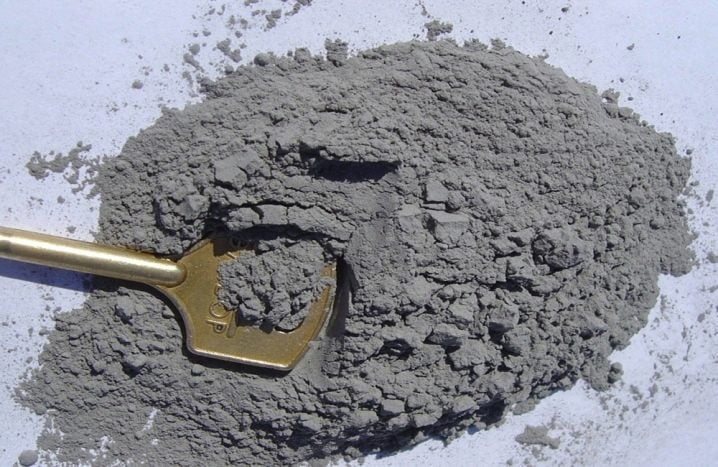
Aluminum cement.
Under the leadership of Dr. Luu Thi Hong, the research team has successfully completed the design documents for the alumina cement production line with a capacity of 4,500 tons/year, and at the same time supplemented and optimized the existing equipment system to form a complete line. Along with that, the team has built a set of technological processes for producing three types of alumina cement AC50, AC60 and AC70 from the above waste source. In particular, the line has been tested and produced 500 tons of alumina cement meeting TCVN 7569:2007 standards, affirming the practical applicability and quality of the product.
The analysis results show that the project brings clear economic efficiency. If AC50 cement is produced entirely, the capital recovery period is about 5.4 years; while with AC70 cement, which has higher value and demand, this period is reduced to only 1.86 years. These are very positive numbers, proving that investing in an alumina cement production line with a capacity of 4,500 tons/year is feasible and has high profitability. More importantly, mastering domestic technology will help reduce dependence on imported sources, take initiative in output and price, and retain more than 13 million USD per year that is "flowing out" to buy alumina cement.
Not only creating economic efficiency, the task also brings great social and environmental value. Using industrial waste as raw materials helps reduce the pressure on processing and storing alumina waste piles that exist in many localities. When the chain is widely deployed, production activities will create more jobs, promoting the formation of domestic value chains related to refractory materials and special materials. By mastering raw materials and technology, Vietnam also has the opportunity to compete with other countries in the region, moving towards the ability to export alumina cement to the ASEAN market - where demand is increasing.
The success of the mission shows that developing technology based on domestic raw materials, especially waste, can absolutely become a new driving force for the construction materials industry. This is also a clear demonstration of the direction that Vietnam is pursuing: Developing a circular economy, saving resources, reducing emissions and improving technological autonomy. With the results achieved, the mission not only solves an urgent problem of the industry but also lays the foundation for the formation of a domestic alumina cement production industry, a field that Vietnam has left empty for many years.
Source: https://mst.gov.vn/hoan-thien-cong-nghe-san-xuat-xi-mang-alumin-tu-chat-thai-cong-nghiep-197251201111137876.htm
![[Photo] Worshiping the Tuyet Son statue - a nearly 400-year-old treasure at Keo Pagoda](/_next/image?url=https%3A%2F%2Fvphoto.vietnam.vn%2Fthumb%2F1200x675%2Fvietnam%2Fresource%2FIMAGE%2F2025%2F12%2F02%2F1764679323086_ndo_br_tempimageomw0hi-4884-jpg.webp&w=3840&q=75)
![[Photo] Parade to celebrate the 50th anniversary of Laos' National Day](/_next/image?url=https%3A%2F%2Fvphoto.vietnam.vn%2Fthumb%2F1200x675%2Fvietnam%2Fresource%2FIMAGE%2F2025%2F12%2F02%2F1764691918289_ndo_br_0-jpg.webp&w=3840&q=75)


























































Comment (0)