

Promoting green capital flows for energy infrastructure
As Vietnam accelerates its energy transition towards a net zero emissions target by 2050, mobilizing private resources is key to meeting the growing demand for energy infrastructure investment, improving energy security and promoting green growth. Financing policies, innovative funding models and appropriate legal frameworks will determine the ability to attract high-quality capital flows from domestic and foreign investors.
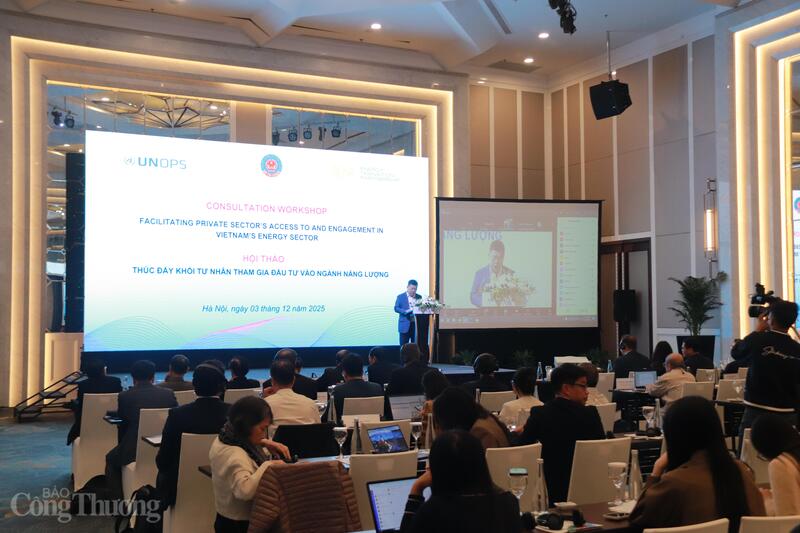
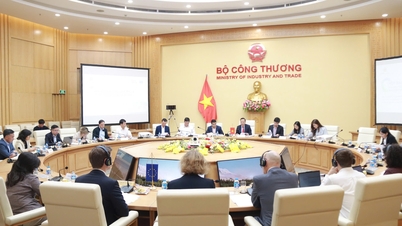
Conference scene. Photo: Thanh Tuan
Speaking at the workshop, Mr. Le Tuan Anh, Deputy Director of the Department of Finance - Industry Economics ( Ministry of Finance ) said that Vietnam is entering a period of strong economic transformation, with a positive GDP growth rate and energy demand expected to increase by an average of 8-10% per year in the next decade.
“ Resolution 55-NQ/TW of the Politburo has clearly defined the goal of modernizing the energy system, developing a competitive and transparent energy market, and prioritizing the mobilization of all social resources for renewable energy development by 2030, with a vision to 2045. In parallel, the Power Plan VIII forecasts the total investment demand for the electricity industry in the 2021-2030 period to reach about 134 billion USD, of which private capital is expected to account for a large proportion to meet the requirements of developing a modern, flexible and low-emission power system ,” Mr. Le Tuan Anh emphasized.
Besides, according to Mr. Le Tuan Anh, Vietnam has made a strong commitment at COP26 to achieve net zero emissions by 2050, which is a strategic goal that requires large-scale mobilization of domestic and foreign financial resources.

Mr. Le Tuan Anh, Deputy Director of the Department of Finance and Industry Economics. Photo: Thanh Tuan
In that context, the role of the private sector becomes extremely important, especially in investing in renewable energy, transmission infrastructure, energy storage and green, sustainable financial models.
“ The Ministry of Finance always identifies its responsibility in perfecting financial mechanisms, developing capital mobilization tools, adjusting tax and fee policies and credit mechanisms to create a stable, transparent investment environment in accordance with international standards, ” said the Deputy Head of the Finance and Economic Department of the industry.
Also according to the representative of the Ministry of Finance, today's workshop is an important forum to share international experiences, analyze the current financial legal framework, assess existing challenges, and propose innovative financial models to promote stronger participation of the private sector in Vietnam's energy transition process.
“ We believe that today’s sharing and discussion will make a practical contribution to shaping new policy mechanisms, removing barriers and creating more development momentum for the Vietnamese energy market, especially in the context of increasing demand for investment in energy infrastructure. We would like to sincerely thank the active cooperation of UNOPS/ETP (Southeast Asia Energy Transition Partnership), the participation of international and domestic experts, and the companionship of all delegates ”, said Mr. Le Tuan Anh.
Ensuring a stable investment framework
Also at the workshop, Mr. John Robert Cotton, Deputy Director of ETP/UNOPS, said that the global energy landscape is changing at an astonishing pace. The International Energy Agency estimates that emerging and developing economies will need to increase annual clean energy investment from about 770 billion USD today to more than 2.2 trillion USD by the early 2030s.
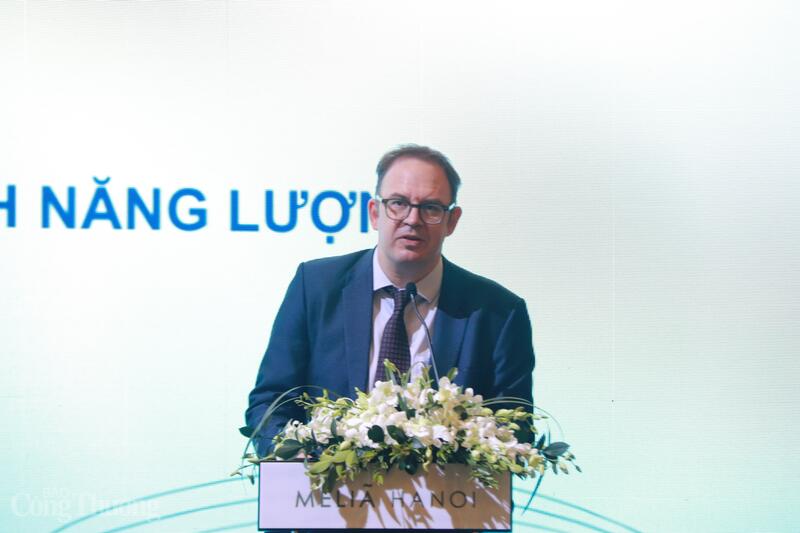
Mr. John Robert Cotton, Deputy Director of ETP/UNOPS. Photo: Thanh Tuan
“ These figures highlight the simple truth that countries that provide clear, predictable and investable frameworks will be the ones that attract the finance needed for the energy transition. COP30 took a step forward by pledging to triple global adaptation finance. However, the summit also showed that the gap between need and resources remains large, ” said John Robert Cotton.
According to the Deputy Director of ETP/UNOPS, these realities highlight the need for more predictable financing and stronger domestic frameworks that can mobilize large-scale investment. Vietnam’s recent efforts deserve recognition. Under Resolution 68 , the Government has outlined a clear vision for a more dynamic private sector and has acted quickly to improve the investment climate, reduce barriers and expand economic opportunities.
“ These reforms send a strong signal to investors and reinforce the role of the private sector across the economy, including the energy transition. For the energy system, this momentum is essential. Meeting the requirements of the revised Power Development Plan VIII, from expanding renewable energy to upgrading the grid, promoting storage and reducing carbon emissions in the industry, requires investment capital far beyond the capacity of public finance, ” said Mr. John Robert Cotton.
The workshop is a forum for the parties to evaluate the initial results of the cooperation program between the Ministry of Finance and UNOPS/ETP, and to further discuss international experiences, new financial models and strategies for mobilizing private resources for the energy sector - a field that is witnessing the strong participation of international corporations, infrastructure investment funds and domestic enterprises.
Thanh Binh
Source: https://congthuong.vn/thuc-day-khoi-tu-nhan-tham-gia-dau-tu-vao-nganh-nang-luong-433070.html

![[Photo] Parade to celebrate the 50th anniversary of Laos' National Day](/_next/image?url=https%3A%2F%2Fvphoto.vietnam.vn%2Fthumb%2F1200x675%2Fvietnam%2Fresource%2FIMAGE%2F2025%2F12%2F02%2F1764691918289_ndo_br_0-jpg.webp&w=3840&q=75)
























![[Photo] Worshiping the Tuyet Son statue - a nearly 400-year-old treasure at Keo Pagoda](/_next/image?url=https%3A%2F%2Fvphoto.vietnam.vn%2Fthumb%2F1200x675%2Fvietnam%2Fresource%2FIMAGE%2F2025%2F12%2F02%2F1764679323086_ndo_br_tempimageomw0hi-4884-jpg.webp&w=3840&q=75)


































































Comment (0)