

At the scientific conference themed "Establishing an economic growth model associated with restructuring the Vietnamese economy in the 2026-2030 period," organized today (December 10th) by the Institute of Economic and Financial Strategy and Policy, Ministry of Finance , experts emphasized the need to remove bottlenecks and establish a new growth model, aiming for a GDP growth rate of over 10%. This includes restructuring public investment, prioritizing investment in education, healthcare, and technology.
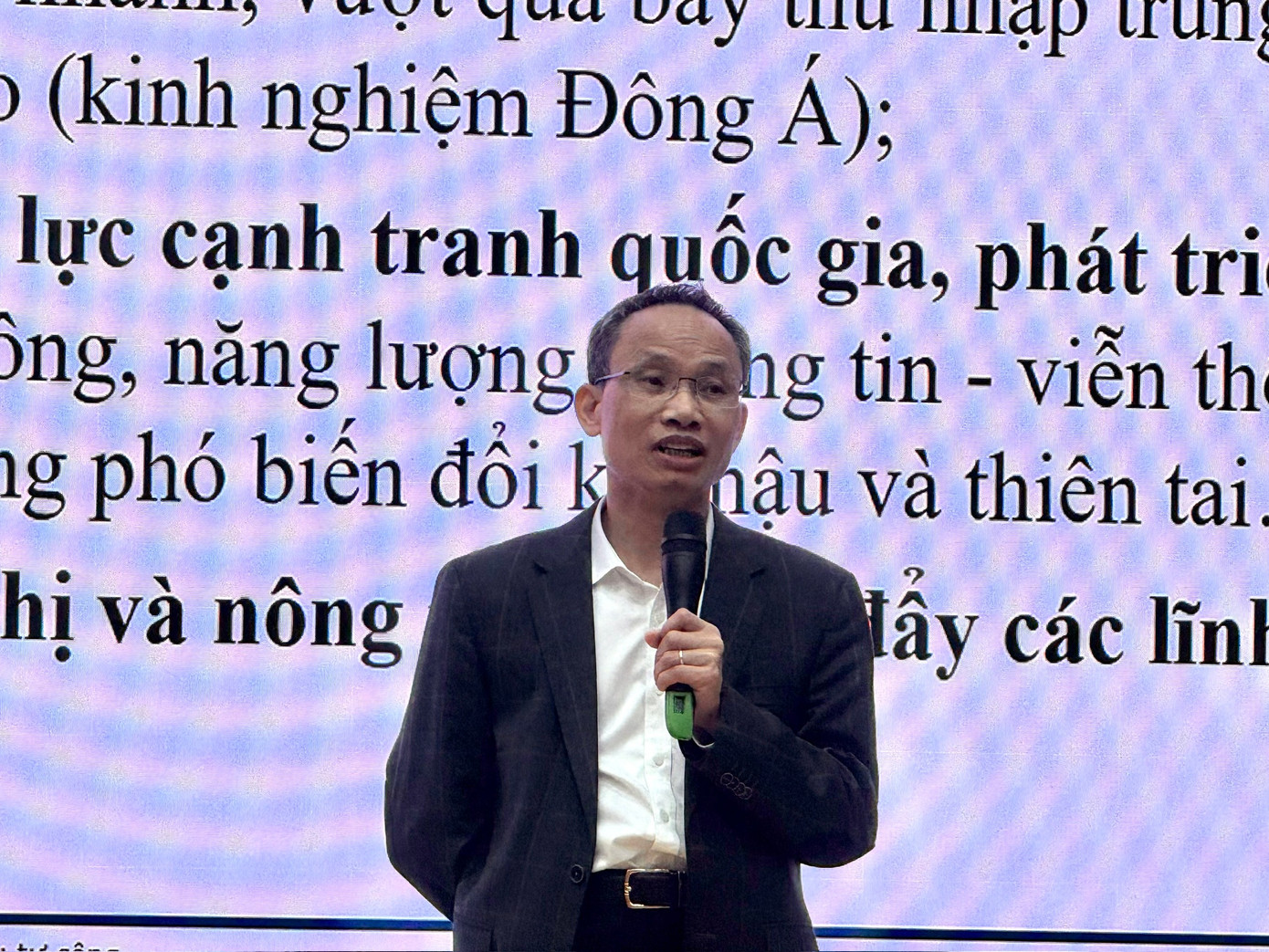
Dr. Can Van Luc - a member of the Prime Minister's Policy Advisory Council - affirmed that public investment plays a "leading" role and acts as "seed capital" for the economy , accounting for approximately 17.2% of total social investment capital in the 2021-2025 period.
According to calculations by the research team at the BIDV Training and Research Institute, the total investment demand over the next five years could reach $260-270 billion, with transportation infrastructure alone requiring $54 billion and other essential infrastructure around $200 billion.
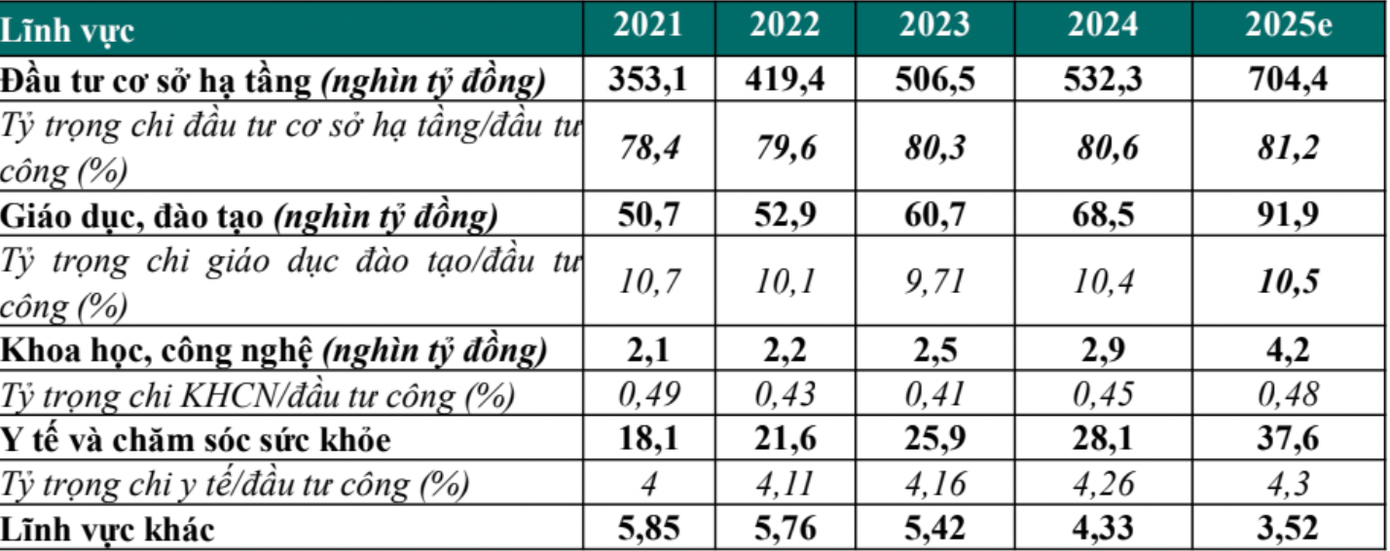
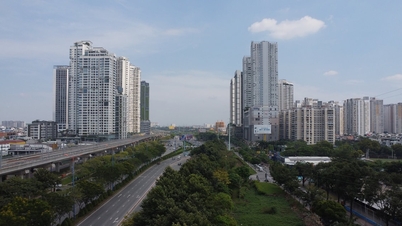
Mr. Luc noted that public investment is primarily focused on infrastructure, but it still hasn't met the needs. Infrastructure investment in the 2021-2025 period accounts for an average of 80% of total public investment, due to our existing infrastructure shortages. Meanwhile, other countries invest 53-55%, according to statistics from the World Bank and the International Monetary Fund.
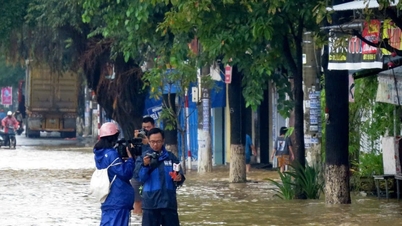
Investment in education and training, science and technology, and healthcare remains modest, accounting for only about 15% of total public investment, although improved, it is still lower than the regional average. Mr. Luc also noted that countries typically allocate 3-5% of their total budget to disaster and emergency preparedness, while Vietnam has almost no such allocation.
Another worrying issue, according to Mr. Luc, is the nearly 3,000 stalled projects. If approximately 10% of these projects could be resolved and released each year, the economy could gain an additional 600 trillion VND in working capital – an extremely important resource in the context of high capital demand.
The expert emphasized that, to be effective, public investment must be restructured in a focused manner, avoiding fragmentation, and must be linked to internationally standardized, transparent, and objective evaluation criteria.
Accordingly, public investment in infrastructure should gradually decrease to 50-55% of total public investment, equivalent to other countries in the region; at the same time, spending on education and training should increase to at least 20%, healthcare to 10-12%, and science and technology to 3-5%.
Regarding the situation and results of the 5-year implementation of Resolution No. 31 of the National Assembly on the Plan for Restructuring the Economy in the period 2021-2025, a representative from the Institute of Economic and Financial Strategy and Policy stated that, to date, 23 out of 27 indicators have been assessed. Of these, 10 indicators are considered likely to be achieved, 9 are unlikely to be achieved, and 4 are projected not to be achieved.
Notably, several indicators such as increased labor productivity; the number of enterprises; the number of agricultural cooperatives applying technology; the percentage of agricultural cooperatives linked with enterprises along the value chain; and the proportion of spending on science and technology, have encountered many difficulties and challenges in implementation, requiring significant effort to achieve.
Ms. Le Thi Mai Lien, Head of the Macroeconomics and Forecasting Department at the Institute of Economic and Financial Strategy and Policy, stated that the economic restructuring process in recent years has revealed several limitations. The progress in perfecting institutions and policies has not kept pace with development requirements. While the economic structure and growth model have improved, they have not created a strong transformation. The development of the business sector is uneven. Productivity in many sectors, especially industry and services, has not increased proportionally.
The restructuring of state-owned enterprises and public service units is slow, and many key sectors face challenges. Various types of markets are not yet operating effectively and sustainably.
However, according to experts, the target of double-digit GDP growth in the 2026-2030 period can only be achieved if the economic restructuring process is substantive, comprehensive, and synchronized. The new growth model needs to be quantified with clear sets of indicators.
Source: https://tienphong.vn/80-von-dau-tu-cong-cho-ha-tang-chuyen-gia-noi-diem-mat-can-doi-post1803474.tpo
![[Image] Leaked images ahead of the 2025 Community Action Awards gala.](/_next/image?url=https%3A%2F%2Fvphoto.vietnam.vn%2Fthumb%2F1200x675%2Fvietnam%2Fresource%2FIMAGE%2F2025%2F12%2F16%2F1765882828720_ndo_br_thiet-ke-chua-co-ten-45-png.webp&w=3840&q=75)
![[Photo] Prime Minister Pham Minh Chinh receives Lao Minister of Education and Sports Thongsalith Mangnormek](/_next/image?url=https%3A%2F%2Fvphoto.vietnam.vn%2Fthumb%2F1200x675%2Fvietnam%2Fresource%2FIMAGE%2F2025%2F12%2F16%2F1765876834721_dsc-7519-jpg.webp&w=3840&q=75)
![[Image] The tenacious fighting spirit of Vietnamese women's football](/_next/image?url=https%3A%2F%2Fvphoto.vietnam.vn%2Fthumb%2F1200x675%2Fvietnam%2Fresource%2FIMAGE%2F2025%2F12%2F17%2F1765990260956_ndo_br_4224760955870434771-copy-jpg.webp&w=3840&q=75)
![[Photo] Prime Minister Pham Minh Chinh receives the Governor of Tochigi Province (Japan)](/_next/image?url=https%3A%2F%2Fvphoto.vietnam.vn%2Fthumb%2F1200x675%2Fvietnam%2Fresource%2FIMAGE%2F2025%2F12%2F16%2F1765892133176_dsc-8082-6425-jpg.webp&w=3840&q=75)

![[Live] 2025 Community Action Awards Gala](/_next/image?url=https%3A%2F%2Fvphoto.vietnam.vn%2Fthumb%2F1200x675%2Fvietnam%2Fresource%2FIMAGE%2F2025%2F12%2F16%2F1765899631650_ndo_tr_z7334013144784-9f9fe10a6d63584c85aff40f2957c250-jpg.webp&w=3840&q=75)
























































![[Live] Closing Ceremony and Award Presentation for the "Impressive Vietnam Tourism" Video/Clip Creation Contest 2025](https://vphoto.vietnam.vn/thumb/402x226/vietnam/resource/IMAGE/2025/12/17/1765974650260_z7273498850699-00d2fd6b0972cb39494cfa2559bf85ac-1765959338756946072104-627-0-1338-1138-crop-1765959347256801551121.jpeg)

















Comment (0)