

The team of journalist-soldiers was a special branch of the military, making outstanding contributions to the miracles achieved during the two wars of resistance.
The lyrics are woven from heartfelt verses.
The revolutionary press of Vietnam has made many contributions to the resounding victory of the August Revolution, the glorious victories of the two resistance wars, in detecting and combating negativity and social criticism; in discovering and encouraging new, vibrant life; in fighting against evil and wickedness, protecting the right to life, freedom and legitimate interests of the people, thus creating the great victory of the country's Doi Moi (Renovation) cause since the mid-1980s.
As professional journalists with a deep understanding of life, the role, mission, and immense contributions of the Vietnamese Revolutionary Press, journalist and poet Nguyen Si Dai and Tran Kim Hoa together painted a true and noble image of journalists – those who ignite faith, who are the torch of the Party, guiding the entire nation through all obstacles and difficulties to the ultimate victory of the revolution, building an independent and developed Vietnam, standing shoulder to shoulder with the world's great powers, as earnestly desired by President Ho Chi Minh, the supreme leader, founder, and mentor of the Vietnamese Revolutionary Press. From that sacred emotion and with a special love for journalism, musician Duc Giao composed a meaningful musical piece about journalists.
Composer Duc Giao was born in 1955 in Vinh Linh, Quang Tri province , the "land of steel." In 1967, he was sent by the Party and State to study in Thai Binh (as a student in the K8 group). After the Paris Agreement was signed in 1973, he returned to his hometown of Quang Tri to continue his studies. In 1974, after finishing 10th grade, he joined the army. While serving, he was assigned by his superiors to take on additional responsibilities in arts and propaganda, serving as the team leader of the arts team of the regiment, 304th Division, 2nd Corps...
After leaving the army, he retook the university entrance exam and studied Law in the Soviet Union for 7 years. He returned to Vietnam in 1989 and worked at the National Assembly Office, then at the Ministry of Justice , where he retired in 2006.
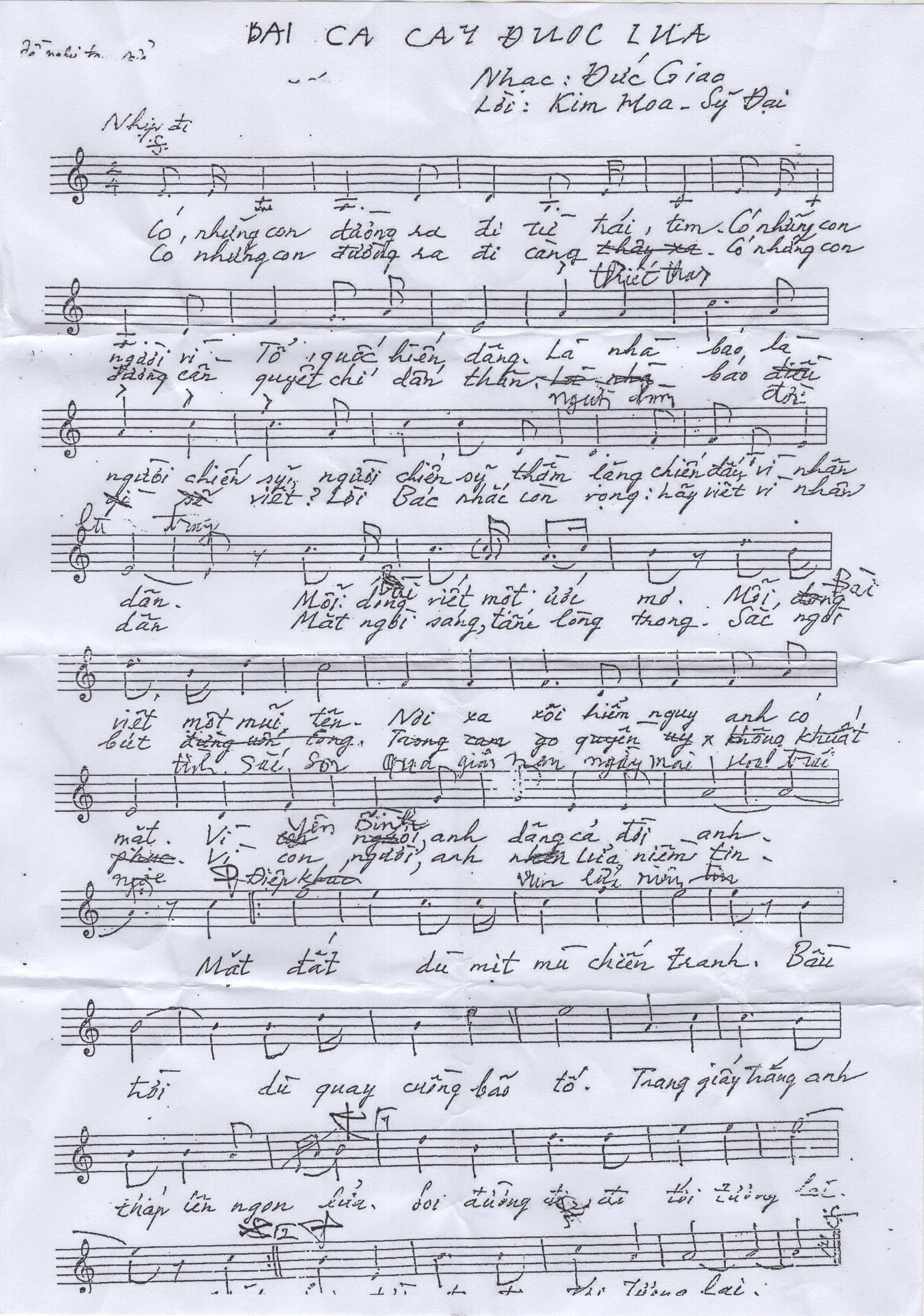
The musical manuscript for "The Song of the Torch" by composer Duc Giao.
Composer Duc Giao shared: He himself loves journalism and often writes articles. When working at the Ministry of Justice, he often wrote for the Law Newspaper, praising exemplary figures in the judicial sector, in the fields of culture and legal science . This further strengthened his love for writing and his admiration for the exemplary journalists who always fought for national liberation, social justice, and welfare.
Journalists are people trusted and honored by society. Among the various forces in society, the role of journalists is arguably the most important; they are the people who trust and rely on them. Journalists empathize with the people's difficulties, voice their concerns, expose vices and hidden aspects of society, speak the truth, and defend justice. Journalists are steadfast fighters not only in times of war but also in times of peace.
Composer Duc Giao is a member of the Hanoi Music Association and the Vietnam Musicians Association. Many of his compositions are highly appreciated by fellow composers, such as: "April in Hanoi," which won the C prize in the 2010 writing competition about Hanoi; "Hanoi in Autumn" ; and "Autumn Melody."
Among his compositions, he particularly cherishes the song "The Torch of Fire," composed in 2021, which has left him with many special emotions and memories. It was on a beautiful morning, while composer Duc Giao was at a writing camp of the Hanoi Union of Literature and Arts in Dai Lai, Vinh Phuc, that poet and journalist Nguyen Si Dai sent him a newly composed poem about the image of soldier-journalists.
After reading it, musician Duc Giao was overcome with emotion. Immediately, he went to the stone slab under the tree, sat there, and in his mind, musical notes accompanied the burning, march-like yet lyrical lyrics, beginning with the chorus: "The earth, though shrouded in war. The sky, though swirling with storms. On this blank page, I light a flame, illuminating the path, leading to the future..."
He composed and completed the song that very morning with very honest, unembellished lyrics about journalism, portraying the image of a journalist with a proud and confident attitude, yet full of humanity and compassion.
A beautiful image - "the torch of fire"
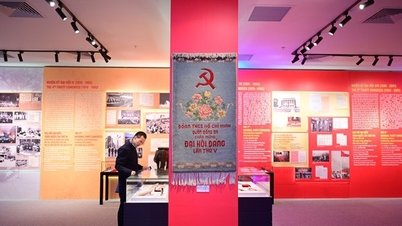
The main source of material for authors Nguyen Si Dai and Tran Thi Kim Hoa to write their poem about journalism and journalists likely came largely from the documents, artifacts, and images about the history of Vietnamese journalism displayed at the Vietnam Journalism Museum.
Since the first Vietnamese-language newspaper was published, through the turbulent and eventful periods of history, Vietnamese journalism has undergone transformations, diversifying and enriching in types associated with each stage of development, while the main current remains revolutionary journalism.
Through artifacts that tell stories of journalism during the clandestine period, the battlefield, and peacetime, the poem reveals the nature and role of revolutionary Vietnamese journalism, as well as portraying an image of passionate journalists who wholeheartedly dedicate their pens to serving the country and its people.
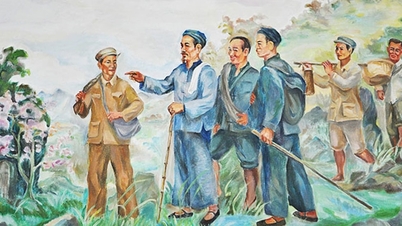
The image of a "flaming torch" is a striking and meaningful metaphor when referring to journalists. Since the founding of the Vietnamese Revolutionary Press by leader Nguyen Ai Quoc, ushering in a new era of struggle for national liberation, the role of our press and journalists has been like a blazing torch, illuminating the path for the people to walk through the dark night of colonial and feudal oppression.
Those torches were always facing dangers and hardships, constantly being extinguished by the enemy, but they could not know that the spiritual strength and noble ideals of those torches were immortal. Our revolutionary journalists would rather choose a noble death than kneel and bend their pens before the enemy.
Journalists are also soldiers; they use their pens as weapons to expose the crimes of the invading enemy, revealing their deceptive true face to the nation, like the Thanh Nien newspaper of Leader Nguyen Ai Quoc; they outline the path of struggle and protect the rights of the people, like newspapers such as Tin Tuc and Dan Chung... They call for unity among all social classes to fight against the invading enemy, like the Cuu Quoc newspaper...
Our outstanding journalists such as Nguyen Ai Quoc, Truong Chinh, Vo Nguyen Giap, Xuan Thuy, Hoang Tung... were tempered and matured through years of long and persistent struggle in colonial prisons. They used their pens as a weapon to overthrow the regime, playing a crucial role in shaping public opinion, encouraging and reflecting the fighting spirit of our army and people.
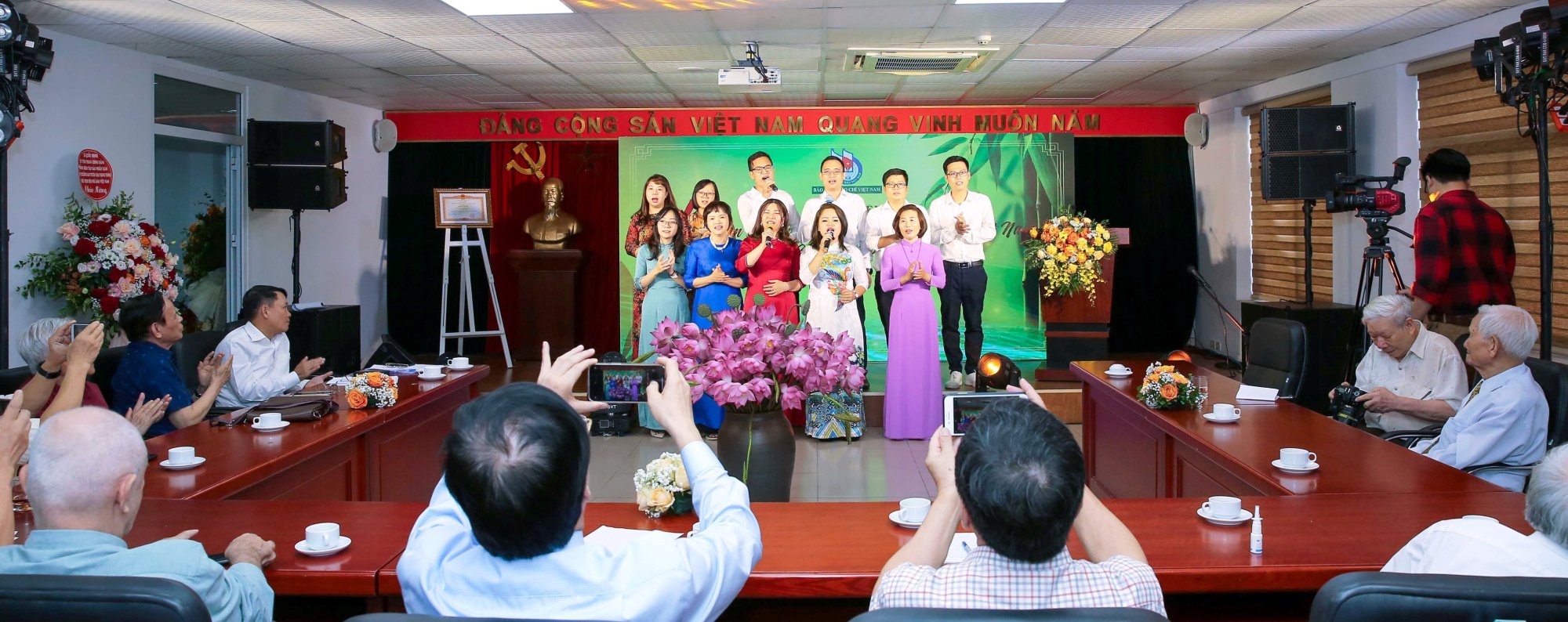
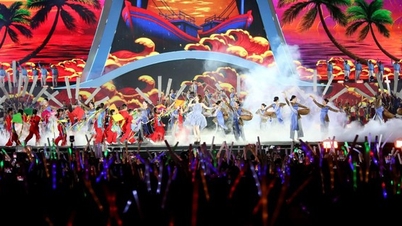
The song "The Torch of Fire" was sung by the leaders and staff of the Vietnam Press Museum during the celebration of its 5th anniversary (2017 - 2022).
Throughout the wars of resistance against invading enemies, revolutionary journalists deeply internalized President Ho Chi Minh's teachings: Fight for the country, fight for the people. For a unified future, journalists, undeterred by hardship and danger, readily crossed the Truong Son mountain range and braved the battlefields to capture images and write articles reflecting the fighting spirit of our army and people. Many of them fell for the cause of national liberation, for a steadfast belief and ideal that will forever inspire and be emulated by future generations.
Moreover, despite countless ups and downs and the devastation of war, even in peacetime, our journalists continue to use their pens to reflect the spirit of production emulation and national construction. The press praises exemplary individuals but also fearlessly exposes corruption and negative practices, fighting to the end to protect the rights of the people.
The saying, "Sharp pen, pure heart, clear eyes," serves as a declaration by generations of Vietnamese journalists, perfectly reflecting the advice of President Ho Chi Minh – the founder and mentor of Vietnamese revolutionary journalism: "Journalists are also revolutionary soldiers. The pen and paper are their sharp weapons." Uncle Ho's teachings constantly inspire genuine Vietnamese journalists to overcome all difficulties and dangers, both in times of war and peace, to gloriously fulfill their mission as writers.
"The Song of the Torch of Fire" was written by poets Si Dai and Kim Hoa with particularly sacred emotions and a profound love for the journalistic profession. Each verse seems to contain immense admiration and gratitude for generations of Vietnamese journalists – those who have always "fought for the people" .
Understanding the meaning the poet wanted to convey, coupled with deep empathy and gratitude, composer Duc Giao created a sacred, majestic torch of fire with his musical notes. This is truly a special spiritual gift for Vietnamese journalists.
Nguyen Ba
Source


![[Photo] Heartbreaking farewell moments as soldiers participating in the "Quang Trung Campaign" in Dak Lak return to their units.](/_next/image?url=https%3A%2F%2Fvphoto.vietnam.vn%2Fthumb%2F1200x675%2Fvietnam%2Fresource%2FIMAGE%2F2026%2F01%2F12%2F1768207839580_img-0400-5132-jpg.webp&w=3840&q=75)






























































Comment (0)