

 |
| For Thai Nguyen, the industrial center of the northern midland and mountainous region, energy security plays a crucial role in economic development, ensuring production and people's livelihoods. Photo: Provided |
The power grid faces the challenge of growth.
As one of the "industrial hubs" of the northern midland and mountainous region, Thai Nguyen is entering a period of strong growth with the presence of many large-scale industrial corporations and production chains. Along with industrial growth, the power system is facing increasingly evident pressure.
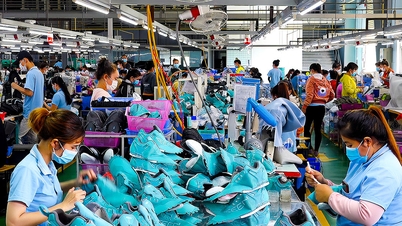
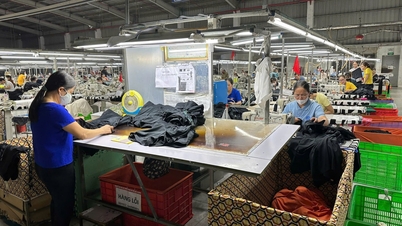
The rapid pace of industrialization and the strong increase in foreign direct investment (FDI) have led to a surge in electricity demand in the province. From the beginning of 2026 to the present, industrial parks such as Yen Binh, Diem Thuy, and Song Cong II Phase 2 have registered an additional 250-300 MW of capacity; this is expected to generate an additional 150-200 manufacturing customers and over 13,000 residential and service customers.
Currently, the power system in the province is operating stably, but the reserve capacity is shrinking. The entire province receives electricity from 6 220kV substations with a total capacity of 2,875MVA, operating at approximately 53% of peak load; the 110kV grid has 19 substations with a capacity of 2,334MVA, also operating at approximately 53% of peak load.
Nearly 5,800 distribution transformers with a total capacity of 2,382 MVA have experienced localized overloading in Go Dam, Song Cong, Gang Thep, and Yen Binh 3, with many points reaching 80-90% of their capacity. The greatest pressure is concentrated in the southern part of the province, where key industrial zones such as Phu Binh, Song Cong, and Pho Yen are located, with lower-than-average reserve levels and projected continued electricity demand in the coming period.
 |
| A stable power supply plays a crucial role in industrial development, production, and ensuring the well-being of the people in the province. Photo: Provided |
The power sector is maintaining system stability through demand response (DR), operational optimization, hotline maintenance, and energy saving measures to reduce peak-hour pressure and ensure room for industrial growth.
Mr. Ninh Van Phong, Deputy Director of Thai Nguyen Power Company, emphasized: In scenarios of high load increases, especially when peak power exceeds 1,385MW, the power sector has prepared plans to maximize power generation and monitor operations in real time.
At the same time, Thai Nguyen Power Company is accelerating the progress of 132 projects to upgrade and repair the power grid; strengthening load balancing and expanding the load adjustment program to ensure safe and continuous electricity supply during the hot season...
Creating energy space for industrial breakthroughs.
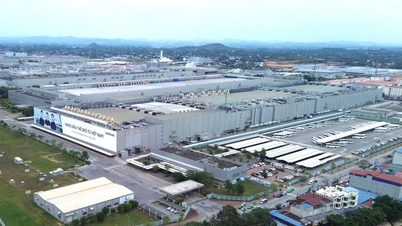
Thai Nguyen is shifting from a passive to an active approach in developing its power infrastructure, aiming to "take a step ahead" to create a foundation for economic growth. According to the 2021-2030 plan, the province has allocated over 18,000 hectares of land for industrial zones and clusters; and will add three 220kV substations with a total capacity of 1,500MVA and 34 110kV substations with nearly 6,000MVA to meet demand.
 |
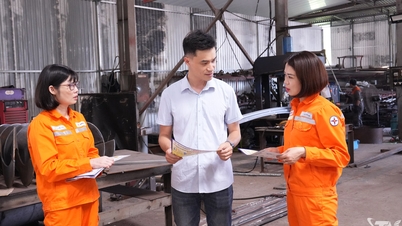
| Electricity sector officials and staff inspect and assess the current state of infrastructure at the 110kV Bac Kan Substation to ensure electricity supply capacity for the region. |
Many large projects are underway, such as: the Thai Nguyen 500kV substation (2x900MVA, expected in 2027), the Song Cong and Dai Tu 220kV substations, and 17 new 110kV substations with over 2,000MVA of additional capacity. Along with these are the transmission lines and distribution substations with a total investment of approximately 9,000 billion VND, contributing to strengthening the supply capacity and stabilizing the power grid.
Mr. Ma Kien Thao, Deputy Head of the Energy Department (Department of Industry and Trade), said: The province's power plan is built according to load growth scenarios, aiming to create long-term capacity instead of just meeting immediate needs.
The arrangement of power infrastructure, linked to over 18,000 hectares of land in industrial zones and clusters, along with large-scale 220kV and 110kV substations, aims to enhance redundancy and quickly meet growth demands, especially for FDI projects.
Notably, the province is applying a "60% green channel" mechanism to power projects. Accordingly, procedures related to wind power, waste-to-energy, transmission lines, and substations are shortened by at least 60% in processing time. This is considered a crucial solution to remove procedural bottlenecks, accelerate investment progress, and ensure energy security for economic development.
 |
| The electricity sector focuses on renovating and upgrading the power grid infrastructure to meet the needs of production development and daily life of people in the province. |
On April 20, 2026, Comrade Nguyen Linh, Member of the Standing Committee of the Provincial Party Committee and Permanent Vice Chairman of the Provincial People's Committee, signed and issued Official Document No. 4146/UBND-TTPVHCC regarding the supplementary implementation of the "60% Green Channel" mechanism for power projects in the province.
The additional projects include wind power, waste-to-energy, power transmission lines, and substations. Along with traditional power sources, Thai Nguyen is expanding renewable energy with 7 wind power projects (766MW), 5 solar power projects (200MW), as well as biomass and waste-to-energy projects, contributing to diversifying the supply and reducing pressure on the national power system.
According to the growth scenario, electricity demand is projected to increase by 6.5-7.7% per year by 2030; the industrial and construction sectors alone could reach 8-10% per year. Commercial electricity output is estimated at 10.2-11 billion kWh, an increase of 1.4-1.6 times, with a peak capacity of approximately 2,575 MW.
Based on this, the power system is operated with a reserve of 20-25%, even over 50% in key areas; at the same time, reducing losses to below 2.9%, developing 300-500MWp of renewable energy and promoting smart grids associated with load adjustment programs.
Key projects such as wind power, waste-to-energy, power transmission lines, and substations continue to be prioritized for implementation to ensure energy security and attract investment...
 |
| Staff and employees of An Khanh Thermal Power Joint Stock Company operate the central control room of An Khanh I Thermal Power Plant. Photo: Provided. |
"Embracing" the green economy through smart electricity infrastructure.
The changing economy is making the role of electricity go far beyond the concept of a "production input." With high-tech agriculture, smart logistics, digital cities, and modern healthcare and education, electricity has become a fundamental infrastructure for development. In Thai Nguyen province, the modernization of the power system is being promoted according to the "smart grid" model.
Currently, 100% of the 110kV substations in the province are operating under an unmanned model, remotely controlled from the Dispatch Center. This reduces the operation time from hours to just a few seconds when an incident occurs.
The power sector has also strongly implemented the DAS/DMS medium-voltage grid automation system, which allows for the automatic detection and isolation of fault points, quickly restoring power supply to the rest of the system.
 |
| The Remote Control Center (Thai Nguyen Power Company) plays a crucial role in improving the reliability of electricity supply in the province. Photo: Provided. |
This is especially important for smart manufacturing plants, where even a few minutes of power outage can cause significant damage. Smart electronic meter systems are gradually replacing traditional mechanical meters, allowing businesses to monitor load in real time to optimize electricity costs.
Advanced maintenance technologies such as thermal cameras, partial discharge measurement, and dissolved gas analysis in oil are also being implemented to detect potential problems early.
Notably, live-line electrical repair technology has enabled many projects to be connected to and maintained directly on the live grid without interrupting production. This is considered a significant step forward in ensuring the continuity of high-tech production lines and laying the foundation for the development of green energy.
The province is also encouraging businesses to invest in rooftop solar power for self-consumption; developing energy storage systems and preparing infrastructure for electric vehicle charging stations. The goal is to reach approximately 300-500 MWp of green power capacity by 2030.
 |
| Thai Nguyen has great potential for developing rooftop solar power, especially in industrial zones such as Yen Binh, Song Cong I, Song Cong II, Diem Thuy, etc. |
Mr. Ninh Van Phong further stated: The electricity sector is no longer just a supplier but has become a driving infrastructure for development. Promoting smart grids, digitizing operations, and automating processes helps improve the reliability of electricity supply to high-tech industrial parks. Along with this, developing renewable energy and storage infrastructure is an inevitable trend to ensure energy security and meet the local green growth requirements...
In the new development landscape, electricity is not only a necessary condition but also a decisive factor in the quality of growth. A modern power system should not stop at increasing capacity but must ensure sufficient electricity, at the right time, in the right place, and with high reliability.
Faced with the pressure of double-digit growth, proactive planning, creating "green lanes" for power projects, and developing smart grids are becoming crucial foundations for Thai Nguyen to maintain its role as an industrial growth pole in the northern midland and mountainous region.
Source: https://baothainguyen.vn/kinh-te/202605/bao-dam-nang-luong-cho-tang-truong-hai-con-so-e747b9c/
![[Image] Hanoi Police officially crowned champions of V-League 2025/2026](https://vphoto.vietnam.vn/thumb/1200x675/vietnam/resource/IMAGE/2026/05/31/1780244769054_ndo_br_039d561b692be875b13a-jpg.webp)


![[Photo] Solemn bathing ceremony and Buddha procession in Hue](https://vphoto.vietnam.vn/thumb/1200x675/vietnam/resource/IMAGE/2026/05/31/1780228263543_1-jpg.webp)
![[Photo] Admire the coral "masterpiece" amidst the million-year-old heritage of Dak Lak province.](https://vphoto.vietnam.vn/thumb/1200x675/vietnam/resource/IMAGE/2026/05/31/1780221235105_anh-man-hinh-2026-05-31-luc-16-53-27.png)
![[Photo] The General Secretary, President and his wife begin their state visit to the Philippines.](https://vphoto.vietnam.vn/thumb/1200x675/vietnam/resource/IMAGE/2026/05/31/1780230559452_anh-man-hinh-2026-05-31-luc-19-28-11.png)

















![[Video] Sunset at Lap An Lagoon – Where the sun sets over the fishing nets](https://vphoto.vietnam.vn/thumb/340x192/vietnam/resource/IMAGE/2026/05/31/1780192137701_beach-landscape-sea-water-nature-grass-745871-pxhere-com.jpeg)






















































Comment (0)