

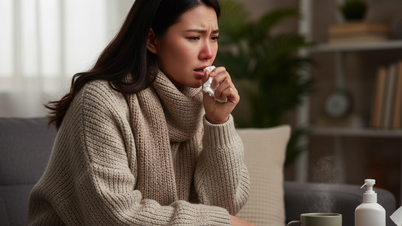
Regarding common symptoms of RSV, Dr. Ninh Quoc Dat, Head of the Respiratory Department at Hanoi Children's Hospital, said: The disease begins with symptoms of respiratory tract inflammation: coughing, sneezing, runny nose, accompanied by a mild fever or no fever. After 2-3 days, the cough usually worsens, wheezing, and phlegm appear. In severe cases, the child may have difficulty breathing, refuse to eat, and become lethargic.
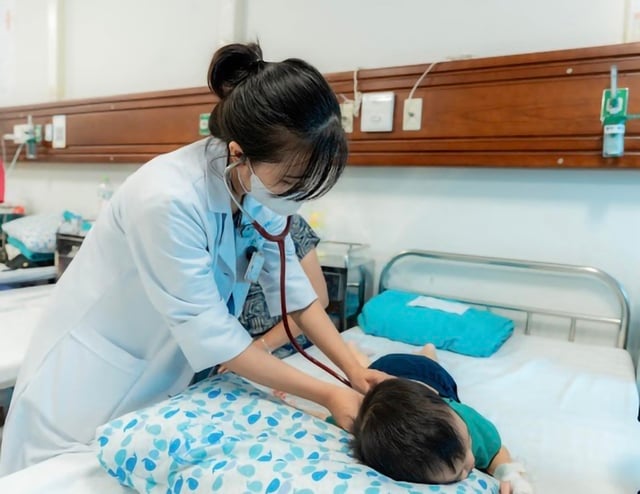
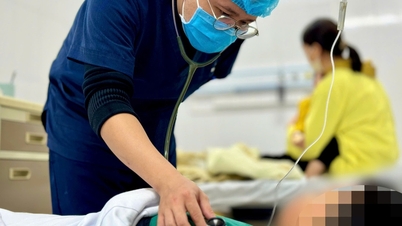
Hospitalizations of children due to RSV infection are increasing rapidly at Hanoi Children's Hospital.
PHOTO: PHAM THAO
Children require inpatient treatment when RSV causes bronchiolitis or pneumonia with difficulty breathing, respiratory failure, loss of appetite, fatigue, lethargy, etc., or in children with special conditions that make them prone to serious complications: premature babies, those with chronic lung disease, congenital heart defects, malnutrition, etc. Severe bronchiolitis and pneumonia are two common complications. During treatment, children need respiratory support, prevention of secondary bacterial infections, expectorants, bronchodilators, and nutritional support.
"Currently, there is no specific cure; treatment is mainly symptomatic. The disease is common in young children, causing coughing, frequent vomiting, poor appetite, and prolonging the recovery time," Dr. Ninh Quoc Dat informed.
The doctor advised on preventive measures for children, including: cleaning surfaces and toys that children frequently come into contact with; adults should wear masks in crowded places (adults may be infected but have no or mild symptoms, and then spread the disease to children); washing hands before contact with babies; isolating sick children and keeping them home from school to prevent the spread of the disease; and improving the child's health: ensuring adequate nutrition, drinking plenty of water, and receiving all necessary vaccinations.
Source: https://thanhnien.vn/benh-nhi-nhap-vien-do-nhiem-rsv-tang-nhanh-18525091420205503.htm

![[Image] Leaked images ahead of the 2025 Community Action Awards gala.](/_next/image?url=https%3A%2F%2Fvphoto.vietnam.vn%2Fthumb%2F1200x675%2Fvietnam%2Fresource%2FIMAGE%2F2025%2F12%2F16%2F1765882828720_ndo_br_thiet-ke-chua-co-ten-45-png.webp&w=3840&q=75)
![[Photo] Prime Minister Pham Minh Chinh receives Lao Minister of Education and Sports Thongsalith Mangnormek](/_next/image?url=https%3A%2F%2Fvphoto.vietnam.vn%2Fthumb%2F1200x675%2Fvietnam%2Fresource%2FIMAGE%2F2025%2F12%2F16%2F1765876834721_dsc-7519-jpg.webp&w=3840&q=75)
![[Live] 2025 Community Action Awards Gala](/_next/image?url=https%3A%2F%2Fvphoto.vietnam.vn%2Fthumb%2F1200x675%2Fvietnam%2Fresource%2FIMAGE%2F2025%2F12%2F16%2F1765899631650_ndo_tr_z7334013144784-9f9fe10a6d63584c85aff40f2957c250-jpg.webp&w=3840&q=75)

![[Photo] Prime Minister Pham Minh Chinh receives the Governor of Tochigi Province (Japan)](/_next/image?url=https%3A%2F%2Fvphoto.vietnam.vn%2Fthumb%2F1200x675%2Fvietnam%2Fresource%2FIMAGE%2F2025%2F12%2F16%2F1765892133176_dsc-8082-6425-jpg.webp&w=3840&q=75)








![[Video] Bach Mai Hospital puts into operation a group of the world's most modern equipment.](https://vphoto.vietnam.vn/thumb/402x226/vietnam/resource/IMAGE/2025/12/17/1765931442107_dung00-58-18-13still010-jpg.webp)























![[Video] Independence and self-reliance linked with international integration through 40 years of reform](https://vphoto.vietnam.vn/thumb/402x226/vietnam/resource/IMAGE/2025/12/16/1765899635777_1-1-8054-png.webp)



















Comment (0)