

Professor Tran Van Thuan, Deputy Minister of Health , said that AI-powered diagnostic imaging, targeted therapy based on gene mutations, immunotherapy, and many other methods offer hope for patients who were once considered "hopeless".
The Vietnamese health sector is implementing four key strategic directions: prioritizing preventive medicine, screening, and early detection of lung cancer in the community, with a focus on high-risk groups such as smokers, those working in hazardous environments, and those living in polluted large cities; promoting the application of advanced science and technology, artificial intelligence, big data, molecular biology, cell medicine, genetics, and immunology to personalize treatment, increase survival rates, reduce treatment toxicity, and improve the quality of life for patients; investing in the development of elite human resources, doctors, researchers, technicians, and nurses of international caliber, through bilateral and multilateral training cooperation programs, technology transfer, and clinical research; and establishing an interconnected, equitable, and humane healthcare ecosystem, ensuring that people in all regions, regardless of geography or economic conditions, have access to quality healthcare services.

PHOTO: THE ANH
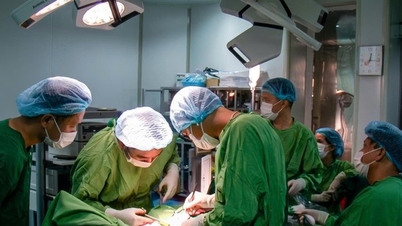
As a pioneering institution in Vietnam applying AI to lung cancer diagnosis, Associate Professor Dao Xuan Co, Director of Bach Mai Hospital, said that they have collaborated with the University of Technology - Vietnam National University, Hanoi to develop AI software to support lung cancer diagnosis ( photo ).
The software's unique feature is its ability to simultaneously analyze three main types of images: On chest CT scans, the software automatically detects abnormal nodules and suspected cancerous areas, helping doctors to quickly orient themselves during the film interpretation process. On bronchoscopy images, the system identifies lesions within the bronchi, even in hard-to-see locations, and suggests biopsy sites. On histopathology images, the software assists in cell classification, helping to identify the type of lung cancer (such as adenocarcinoma, squamous cell carcinoma, etc.) with high accuracy.
Research and testing results show that the application works effectively, helping doctors detect lesions faster and more accurately, and reducing their workload. This is also the first time in Vietnam that an AI application has been developed that is synchronized across all three types of imaging for lung cancer diagnosis.
Source: https://thanhnien.vn/ung-dung-ai-chan-doan-ung-thu-phoi-185251013190747827.htm

![[Photo] General Secretary and President To Lam meets with National Assembly delegates from ethnic minorities.](https://vphoto.vietnam.vn/thumb/1200x675/vietnam/resource/IMAGE/2026/04/20/1776696701056_a1-bnd-8331-3342-jpg.webp)
![[Image] National Assembly discusses the implementation of the socio-economic development plan.](https://vphoto.vietnam.vn/thumb/1200x675/vietnam/resource/IMAGE/2026/04/20/1776696707422_ndo_br_img-20260420-185419-jpg.webp)


























































































Comment (0)