

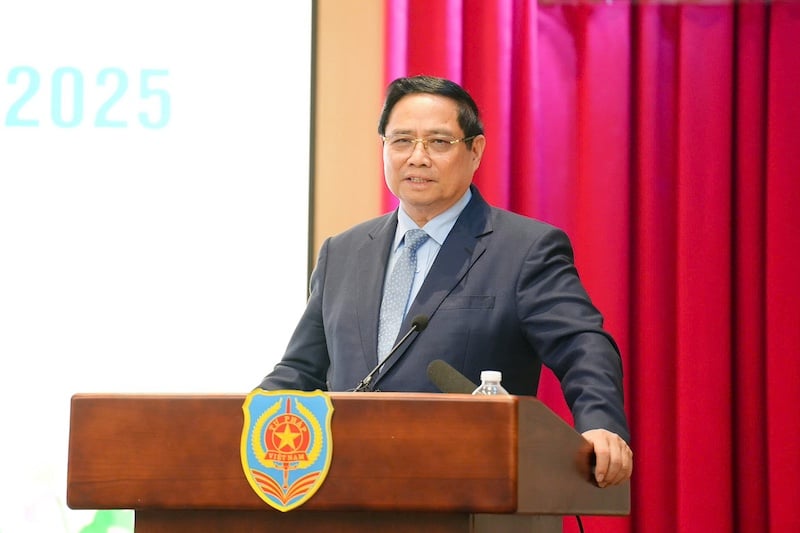
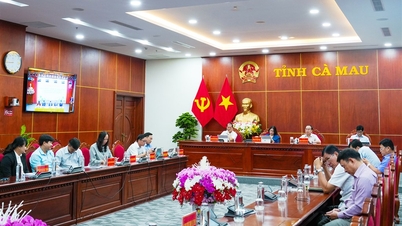
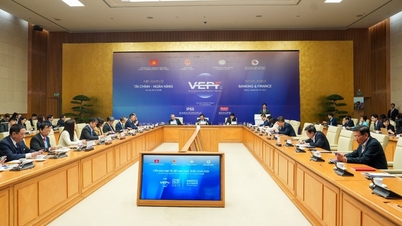
Speaking at the National Conference summarizing judicial work in 2025, the 2021-2025 term; orienting work for the 2026-2030 term and implementing key tasks for 2026, held on December 13th, Prime Minister Pham Minh Chinh presented a 16-word motto to the judicial sector and requested the Ministry and the judicial sector to play a core role in advising on the strategic development and improvement of institutions; focusing on improving the quality and effectiveness of law enforcement; and ensuring close coordination between lawmaking and law enforcement.
Looking back over the past five years, we have achieved many results to be very proud of.
Prime Minister Pham Minh Chinh emphasized that this is a very important conference, an opportunity to look back on the past five years with many proud achievements of the Justice sector in building and perfecting institutions and laws; and at the same time, to set forth groundbreaking directions and tasks for the Justice sector in the new development stage of the country.
According to the Prime Minister, the 2021-2025 term of the Government and the entire political system is a special one. We have to face many complex and unpredictable changes, many unprecedented issues that go beyond all predictions. The COVID-19 pandemic has left severe consequences not only for our country but for the whole world in the context of Vietnam's increasingly deep and broad integration. Changes in war, peace , strategic competition, along with increasingly severe natural disasters in recent years, have strongly impacted the country's situation.
However, with the Party's leadership, the Government's unity, the National Assembly's agreement, the people's support, and international friends' assistance, we have overcome "headwinds" and achieved many comprehensive achievements in almost all fields. In the overall achievements of the country, the Justice sector has made practical and comprehensive contributions, clearly demonstrating its role as the Government's "legal gatekeeper"; leading the revolution in building and perfecting institutions and laws with the view that institutions are both the goal, the driving force, and the resource; the breakthrough of breakthroughs; the competitive advantage of the nation; and investing in institutions is investing in development.
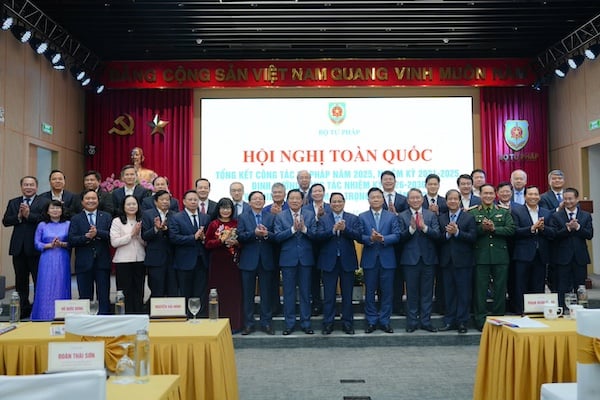
Based on the report from the Ministry of Justice and the presentations at the Conference, the Prime Minister noted that during the past term, judicial work was implemented comprehensively, effectively, rigorously, and meticulously across many fields, with six outstanding achievements:
Firstly, there was a significant breakthrough in thinking regarding the construction and improvement of institutions, the legal system, and the socialist rule of law in Vietnam; especially in advising on specific mechanisms and policies, shifting the COVID-19 pandemic prevention and control efforts from administrative measures to scientific, safe, flexible, and effective adaptation measures. Contributing to the issuance of the Resolution on pandemic prevention and control in a very short time was a significant legislative innovation, highly appreciated by the National Assembly.
The judicial sector also actively and responsibly participated in the process of drafting and promulgating Resolution No. 27 on continuing to build and perfect the socialist rule of law state of Vietnam in the new period - a large, difficult, and strategically significant project.
Specifically in 2025, the Ministry and the entire Justice sector advised and implemented many new and breakthrough tasks: advising the Politburo to issue Resolution No. 66 on reforming the work of lawmaking and enforcement to meet the requirements of national development in the new era; subsequently, the Government issued Resolution 140; drafting and submitting to the National Assembly for promulgation Resolution 197 on special mechanisms and policies in lawmaking and organization of law enforcement; drafting and submitting to the National Assembly for approval the Law on Promulgation of Legal Normative Documents (amended), fundamentally reforming the lawmaking process from a passive to an active and practical state.
A massive amount of work was undertaken in the appraisal and review of legal documents: approximately 180 draft laws, nearly 1,000 decrees, and numerous circulars and decisions of the Government and the Prime Minister were rigorously reviewed to ensure their constitutionality, legality, and feasibility.
Secondly, significant progress has been made in international law and international cooperation on legal matters at all three levels: bilateral, regional, and global; advising on the issuance of Directive No. 33 of the Party Central Committee on strengthening the Party's leadership in preventing and resolving international investment disputes; advising on the timely and effective handling of many international investment disputes, including large-scale cases that have dragged on for many years; promoting negotiations, agreements, and implementation of many international treaties; and successfully protecting the legitimate interests of the Vietnamese State and enterprises.
Thirdly, we must strengthen the organization and enforcement of laws, build a culture of compliance with the law; apply information technology and digital transformation; and advise on the development of a national legal portal to serve citizens and businesses.
Fourth, civil enforcement work met and exceeded targets; many large and complex cases were resolved definitively, especially the recovery of assets lost or misappropriated in economic and corruption cases... More than 3,200 administrative judgments have been fully enforced.
Fifth, significant innovation in administrative procedure reform. The Ministry of Justice has effectively coordinated with ministries, sectors, and localities to review, reduce, and simplify administrative procedures based on data for 817 procedures, contributing to reducing the burden on citizens and businesses and improving the investment and business environment.
Sixth, focus on building a streamlined, effective, and efficient judicial sector and improving the quality of human resources. This includes building a system of civil enforcement agencies organized according to a two-tier model; reducing staffing levels beyond the rate required by Resolution 18; and advising on specific and superior policies for those involved in lawmaking and law enforcement.
On behalf of the Party, State and Government leaders, the Prime Minister warmly commended, acknowledged and highly appreciated the results and achievements that the Ministry of Justice and the legal organizations of ministries, sectors and local governments have achieved in 2025 and throughout the past term, especially the specific mechanisms and policies that have removed obstacles and difficulties and promoted development.
The Prime Minister presented a 16-word motto to the Ministry of Justice.
Besides the fundamental achievements, the Prime Minister frankly pointed out the shortcomings and limitations, analyzed the causes, and shared lessons learned. The Prime Minister shared that practical development is outpacing the legal system and our thinking, requiring forecasting and the development of a legal framework to be more proactive, flexible, and closely aligned with reality.
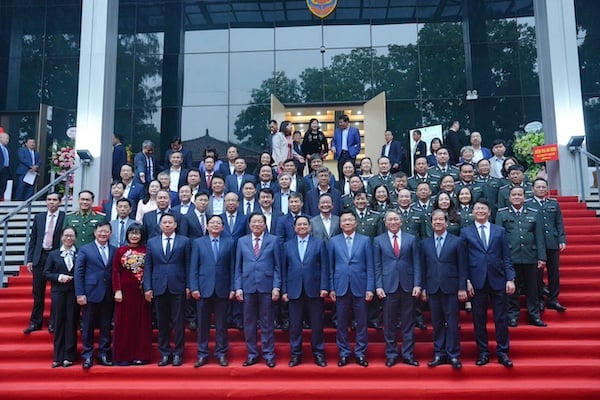
The Prime Minister noted that 2026 is of particular importance, as it is the year of the 14th National Party Congress and the first year of implementing the Congress's Resolution. The draft documents for the 14th Party Congress continue to identify institutions and laws as one of the three strategic breakthroughs.
Therefore, the Prime Minister proposed raising awareness and action in institution and lawmaking with three important guiding principles: Institution and lawmaking are resources, driving forces, and goals of development; investment in institution and lawmaking is investment in development and must be prioritized; institution and lawmaking must be centered on the people and businesses as the main subjects, with the people and businesses participating in the development and implementation of laws; and institution and lawmaking should transform bottlenecks and obstacles into national competitiveness.
Recognizing that the mission and responsibilities placed upon the judicial sector in building and perfecting the legal system will become increasingly heavy, the Prime Minister requested the Ministry and the judicial sector to continue to uphold their glorious 80-year tradition in fulfilling their duties with three major orientations and six key tasks to be implemented in the coming period.
Regarding the three major orientations, the Prime Minister requested that the core role in advising on the strategic development and improvement of institutions be promoted; while also focusing on improving the quality and effectiveness of law enforcement; ensuring close coordination between lawmaking and law enforcement, especially in building and perfecting the socialist rule of law state of the people, by the people, and for the people, under the leadership of the Party. Priority should be given to building a comprehensive development institution, with a focus on the legal system; reforming the thinking on lawmaking, shifting from "management by law" to "creating development institutions"; eliminating the mindset of "managing without knowing" or "prohibiting if it cannot be managed"; promoting decentralization and delegation of power coupled with resource allocation, improving the implementation capacity of lower levels, and strengthening supervision and inspection.
Simultaneously, we must promote comprehensive digital transformation and extensively apply information technology, artificial intelligence, and big data in the fields of justice and law, especially in the drafting and promulgation of legal documents and the organization of law enforcement; and build a system for measuring the quality of law enforcement based on the level of satisfaction of citizens and businesses – those affected.
Furthermore, priority should be given to developing high-quality judicial human resources with strong ethics, political integrity, in-depth expertise, a thorough understanding of international law, and technological proficiency; proactively integrating and enhancing international cooperation in legal work and judicial reform; improving the capacity to prevent and resolve international disputes; and maximizing the utilization of all available resources.
Regarding the six key tasks, the Prime Minister requested continued adherence to and effective implementation of the tasks and solutions clearly outlined in Resolution No. 66-NQ/TW of the Politburo and Resolution 27 on continuing to build and perfect the socialist rule of law in Vietnam in the new period; and to accelerate the review and resolution of institutional obstacles. The Ministry of Justice should continue to effectively fulfill its role as the Standing Agency of the Central Steering Committee on institutional and legal improvement and the Steering Committee on reviewing and organizing the implementation of addressing obstacles in the legal system.
In particular, it is urgent to focus on researching and finalizing important projects such as the Project on perfecting the structure of the legal system in the new era; the Project on researching and building the institution of public lawyers in a socialist rule of law state; the Project on establishing a specialized agency for resolving international investment disputes; and the Project on perfecting criteria and solutions to improve the quality of the workforce involved in institutional and legal development.
The second task group, the Ministry of Justice, continues to closely coordinate with relevant ministries and agencies to advise the Government and the Prime Minister on legislative orientations and tasks during the 16th National Assembly term, based on the principle of "three guarantees": comprehensive coverage of all areas of socio-economic development in practice; full and timely institutionalization of the Party's guidelines and policies, especially the documents of the 14th National Congress and strategic resolutions, conclusions of the Politburo and the Secretariat, and directives of the Party and State leaders; and meeting the requirements of building and perfecting the socialist rule of law.
The third task group, directed by the Prime Minister, focuses on researching and perfecting the law-making process in line with the innovative thinking in lawmaking and the orientation towards perfecting the structure of Vietnam's legal system; strictly implementing the provisions of the Law on the Promulgation of Legal Normative Documents, ensuring the Government's "full and proper fulfillment of its role and responsibility" for draft laws, ordinances, and resolutions; developing breakthrough solutions to thoroughly overcome the situation of delays and backlogs in promulgating detailed regulations for laws, ordinances, and resolutions; and improving the quality of policy appraisal, impact assessment, and law enforcement monitoring.
Task Group 4, the Ministry of Justice continues to research and improve the institutional framework and effectively implement legal regulations on civil and administrative enforcement; strives to complete and exceed assigned targets; ensures 100% of legally effective judgments and decisions of the Courts on administrative cases are monitored and enforced; and at the same time, effectively promotes the role of the Government's legal representative agency in advising, preventing, and resolving international investment disputes, maximizing the protection of the legitimate rights and interests of the State, the Government, and the business community and people.
Task Group 5: Accelerate progress and complete the construction and connection of specialized databases of the Ministry of Justice with the National Population Database and other databases; effectively implement the provision of full-process online public services in key areas such as civil registration, authentication, registration of security measures, shortening time and reducing compliance costs for citizens and businesses.
Task Group 6 focuses on strictly implementing the streamlining of the organizational structure to ensure efficiency and effectiveness, coupled with building a team of qualified, capable, and skilled judicial officials to meet the demands of the new era. It also involves inheriting and continuing the function of controlling administrative procedures from the Government Office. Furthermore, it aims to build a judicial culture characterized by "integrity, professionalism, and efficiency," with the satisfaction of citizens and businesses as the highest measure of success.
To ensure the Justice sector fulfills its mission effectively in the new era, the Prime Minister requests that Ministers, heads of agencies, and leaders of Party committees and governments at all levels continue their decisive leadership and direction, dedicating time, intellect, and maximizing resources to the development and implementation of laws, coupled with inspection and supervision; bear primary responsibility for the quality of policies and laws within their respective ministries, agencies, and localities; proactively and effectively advise, coordinate closely, synchronously, and efficiently with relevant agencies, especially those of the National Assembly, in the process of building and perfecting institutions and organizing the implementation of laws; promptly institutionalize and adjust legal regulations to suit practical realities; continue to review and develop plans to definitively address difficulties and obstacles arising from legal regulations, minimize administrative procedures, and reduce compliance costs for citizens and businesses.
The Prime Minister requested that every agency, unit, official, and public servant uphold the spirit of the rule of law, set an example in complying with and enforcing legal regulations; resolutely fight against and strictly handle acts of exploiting loopholes and leniency in the law to profit from policies and situations where superiors "legalize" actions by subordinates; and promote the role of inspection and supervision, as well as the role of the people as masters of their own destiny.
With the motto that lawmaking must be "impartial and transparent - dedicated and responsible - courageous and intelligent - effective for the people," Prime Minister Pham Minh Chinh hopes and believes that all officials, civil servants, and employees of the Ministry and the Justice sector will continue to excellently fulfill all tasks, playing a worthy role in the cause of building a socialist rule of law state, leading the country to steadily advance into a new era, an era of prosperity, civilization, happiness, and progress towards socialism.
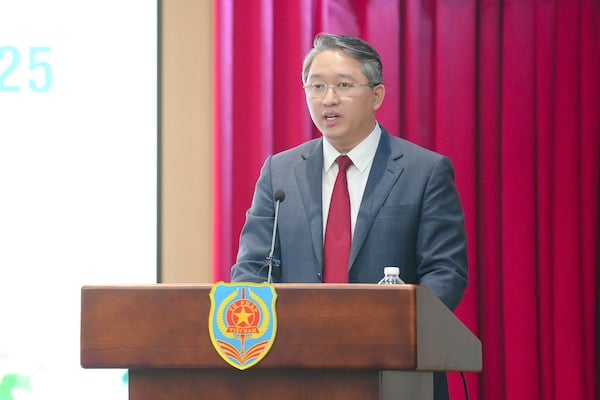
Responding to the Prime Minister's directives, Minister of Justice Nguyen Hai Ninh emphasized that the Prime Minister acknowledged and commended the positive contributions of the judicial sector to socio-economic development, national defense and security, and international integration. At the same time, the Prime Minister also outlined three strategic directions and requested the Ministry of Justice to focus on implementing six key tasks, summarized in sixteen words, in 2026 and throughout the 2026-2030 term. These tasks aim to improve the institutional framework, enforce laws, and make a worthy contribution to building a socialist rule of law state, leading the country into a prosperous, civilized, and happy era. This demonstrates the Government's concern, the trust, and the special affection of the Prime Minister personally for the Ministry of Justice.
Source: https://sotuphap.camau.gov.vn/thoi-su-chinh-polit-va-tin-tuc/bo-nganh-tu-phap-can-phat-huy-vai-role-nong-cot-trong-tham-muu-chien-luoc-xay-dung-hoan-thien-the-292362
![[Photo] Two flights successfully landed and took off at Long Thanh Airport.](/_next/image?url=https%3A%2F%2Fvphoto.vietnam.vn%2Fthumb%2F1200x675%2Fvietnam%2Fresource%2FIMAGE%2F2025%2F12%2F15%2F1765808718882_ndo_br_img-8897-resize-5807-jpg.webp&w=3840&q=75)


















































































Comment (0)