

Minister of Information and Communications Nguyen Manh Hung requested that leaders of all units thoroughly understand and adopt new approaches with a spirit of faster work and easier methods, thereby creating results.
On March 4th, Minister of Information and Communications Nguyen Manh Hung chaired the March State Management Review Meeting of the Ministry of Information and Communications. The meeting was also attended by Deputy Ministers Pham Duc Long, Phan Tam, Nguyen Thanh Lam, and Nguyen Huy Dung. The management and development of the information and communications sector must be balanced. In 2024, the working orientation set by the Party Committee of the Ministry of Information and Communications is: "Broader - More Comprehensive - Faster - Higher Quality - More Practical" . This action slogan has been concretized by units and businesses in the sector very early on. According to the report of the Office of the Ministry of Information and Communications, in the first two months of 2024, the total revenue of the information and communications sector is estimated at VND 653,284 billion, an increase of 24.55% compared to the same period in 2023. The total profit of the sector is estimated at VND 46,300 billion, an increase of 15%. The contribution of the information and communication technology (ICT) sector to GDP is estimated at VND 148,063 billion, an increase of 12.51% compared to the same period last year. 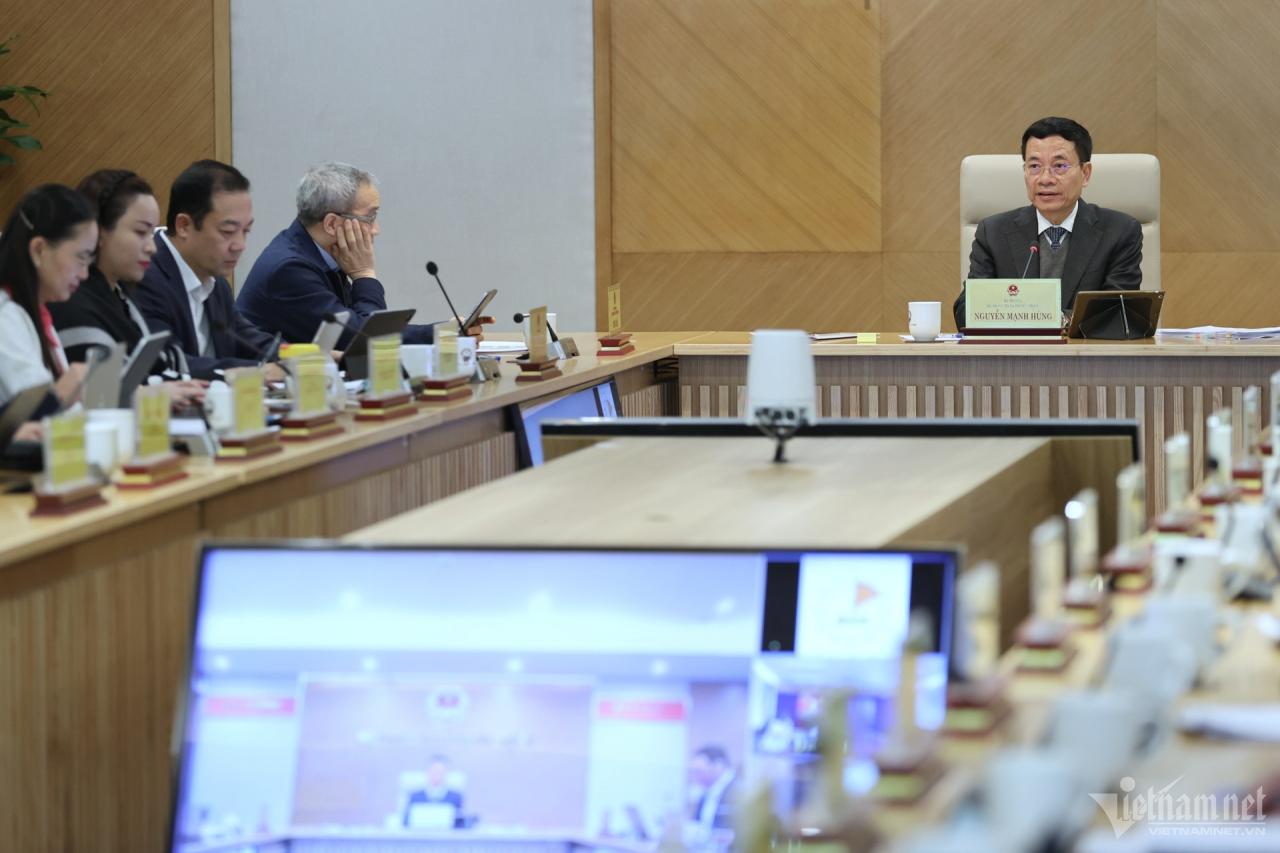
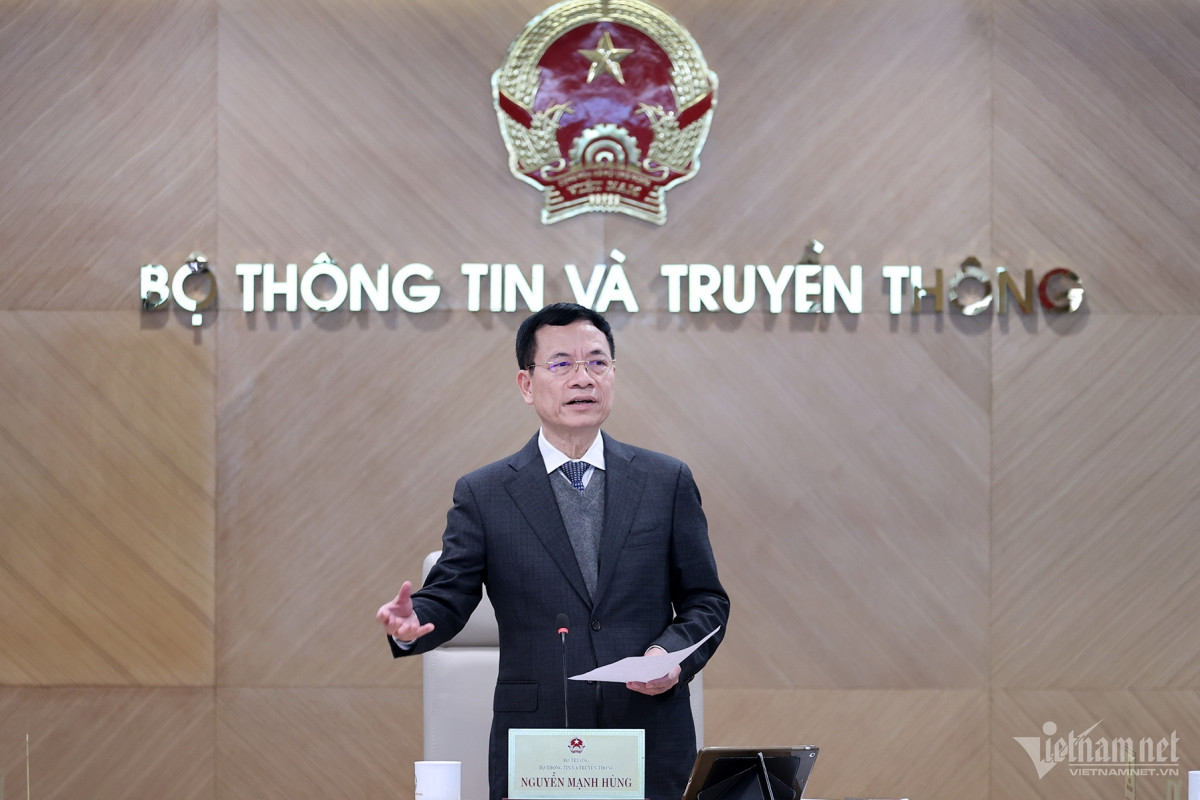
The March meeting on state management of the Ministry of Information and Communications. Photo: Le Anh Dung
At the conference, one of the major tasks that Minister Nguyen Manh Hung set for agencies and units under the Ministry in 2024 was to balance management and development. Accordingly, the Ministry of Information and Communications will soon hold a working session with digital content development businesses, postal businesses, social networks, etc., to promote the development of Vietnamese digital technology businesses. The issues that the Minister focused on included how to support domestic digital content businesses, the issue of combating monopolies in the context of the emerging trend of closed business practices by e-commerce platforms and social networks, and the issue of rampant promotions by cross-border businesses negatively impacting the market. The Minister also noted pressing issues in the information and communications sector that need to be addressed in 2024, namely the problem of online fraud, which is becoming a common pain point for the entire society, and the persistent problem of unregistered SIM cards. To achieve this, one of the immediate measures needed is to assign brand names to the phone numbers of government agencies, and to strictly penalize and shut down points of sale that accept unregistered SIM cards.Minister Nguyen Manh Hung directs important tasks for 2024. Photo: Le Anh Dung
The Ministry of Information and Communications will also adjust the proportion of negative information on the internet to accurately reflect the mainstream, build trust in society, while still reflecting the bad, with sufficient deterrent and warning power to improve society. To promote digital transformation, the Minister believes that the best way to do new things is to pilot small-scale models and see them through. Once successful, the model should be scaled up with detailed, step-by-step guidance. A highlight in the Ministry of Information and Communications' management work recently has been the secondment and rotation of officials. Officials who have performed well after rotation and secondment have been appointed to higher positions, some even at the Deputy Minister level. According to Minister Nguyen Manh Hung, the tradition of rotating officials needs to be maintained regularly. Initially, the Ministry of Information and Communications will hold a session to summarize experiences, thereby forming, supplementing, and perfecting regulations on official rotation. For the work of 2024, the Minister requested that units develop specific daily implementation plans so that the Ministry's Office can monitor their execution. The Minister also noted that heads of units should dedicate time to studying the theoretical and practical aspects of institutional development, be open to the press, and study practical lessons in their assigned areas of management to share with the public and businesses for reference. Learning from international best practices: At the conference, many new and effective ways of thinking and doing things from around the world were also shared. In a presentation on Singapore's digital infrastructure development orientation, the Director of the Telecommunications Department (Ministry of Information and Communications), Nguyen Thanh Phuc, stated that Singapore has a very good perspective on digital infrastructure development, which is that investment must precede demand. This is why the country focuses on five strategic priorities: investing in the development of undersea fiber optic cable capacity, building domestic connectivity, ensuring information security, developing green and sustainable data centers, and promoting the Singapore Digital Utility Stack to create soft infrastructure for citizens and businesses.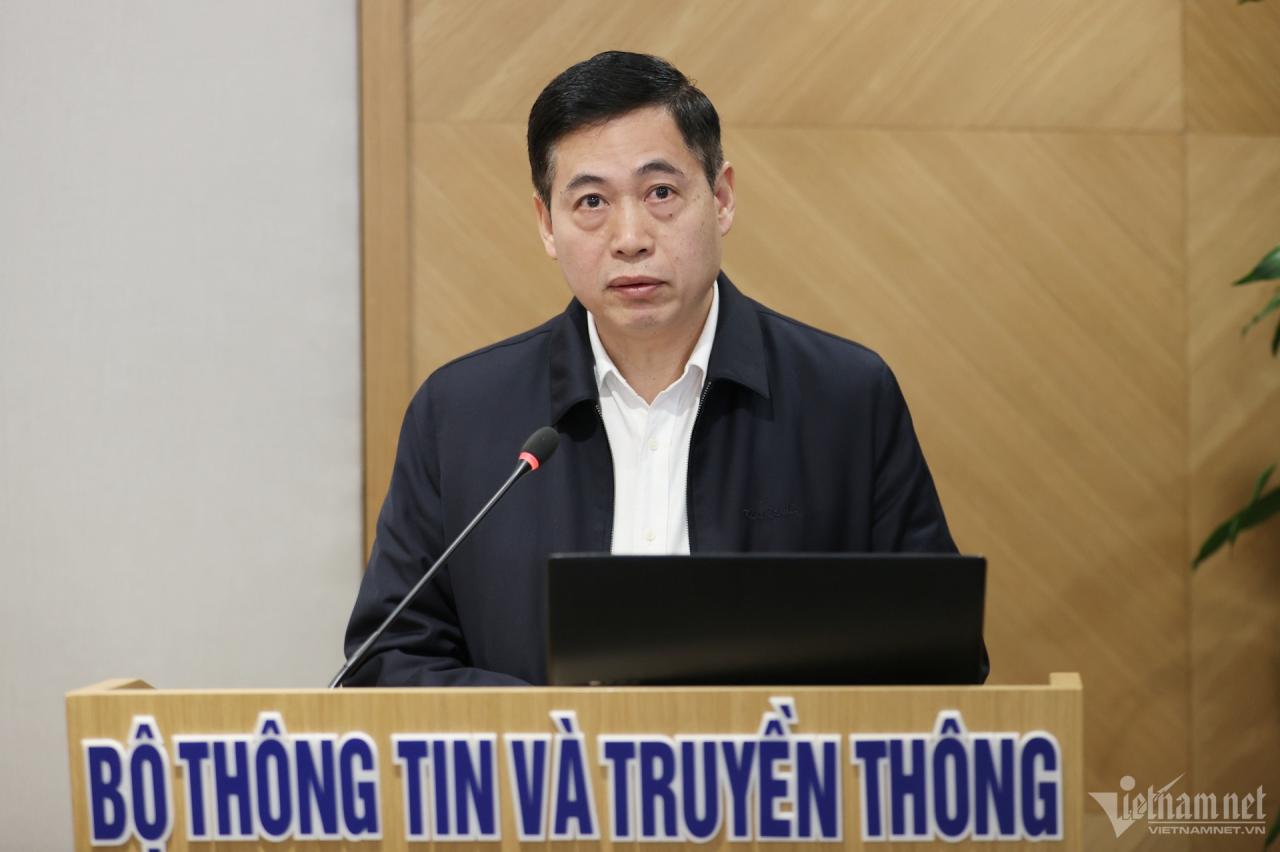
Director of the Telecommunications Department Nguyen Thanh Phuc shared lessons learned from Singapore. Photo: Le Anh Dung
According to Minister Nguyen Manh Hung, the key lesson Vietnam needs to learn from Singapore's example lies in the word "Stack." This refers to digital transformation through a tiered approach, aiming to simplify difficult tasks while clearly dividing responsibilities between the government and businesses. The state will undertake foundational tasks for innovation, such as issuing circulars and decrees. Meanwhile, businesses will participate in promoting digital transformation at the higher levels. Singapore's tiered approach will complement Vietnam's theory of digital transformation.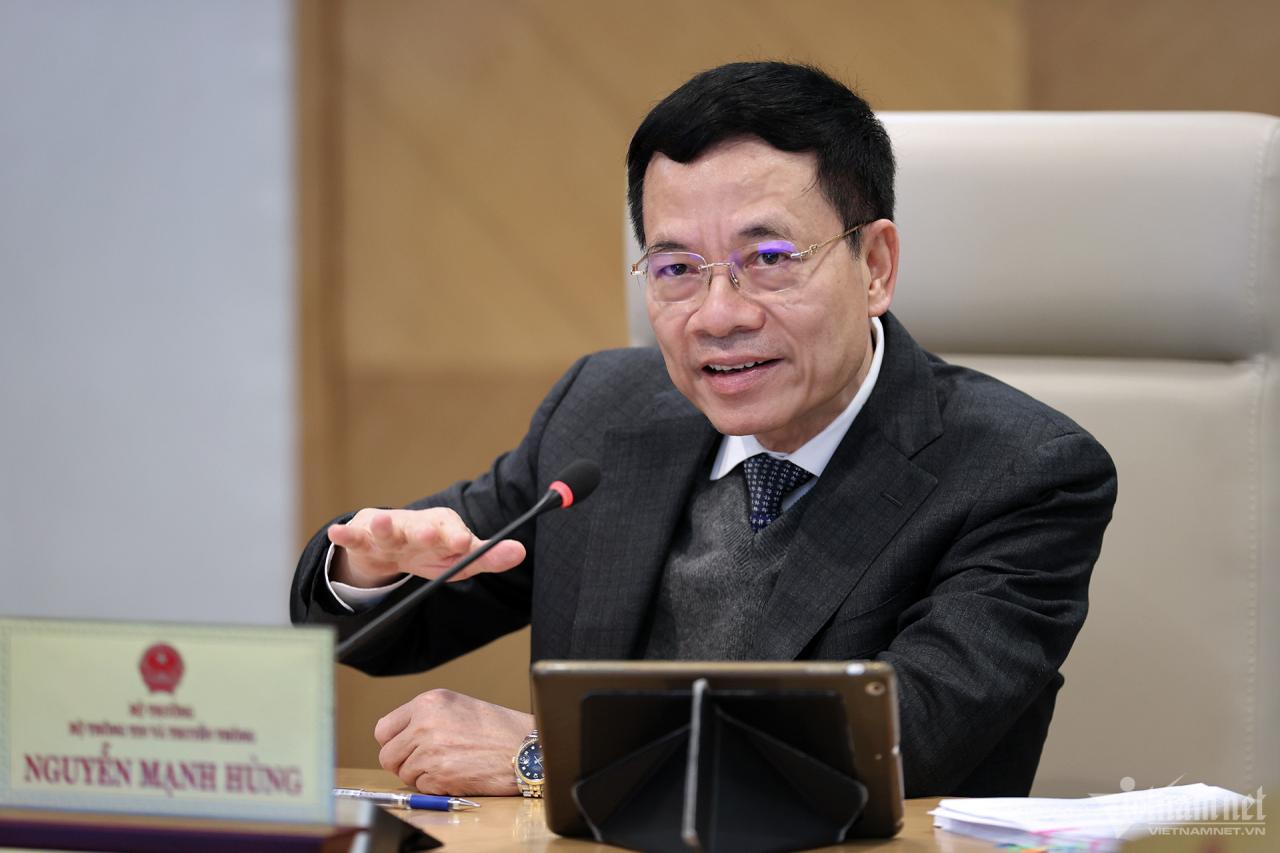
Minister Nguyen Manh Hung explains the tiered approach that Singapore is applying. Photo: Le Anh Dung
Software greening is one of Singapore's pioneering initiatives. Regarding this issue, Minister Nguyen Manh Hung stated that technology is a highly energy-intensive industry. This problem can only be solved by developing software and chips for specific functions instead of mass-produced, resource-intensive tasks. This is the reason behind the emergence of private AI programs and virtual assistants that only answer questions in specific areas. Alongside this is the school of thought that focuses on specific application chips (specific chips). Tran Minh Tuan, Director of the Department of Digital Economy and Society (Ministry of Information and Communications), presented a paper at the conference on a new management method combining OKRs and artificial intelligence (AI). This approach, which promotes growth, innovation, and improves efficiency, is currently being tested and implemented by his department. The OKR-based management model has been adopted by many technology corporations such as Oracle, LinkedIn, Microsoft, and several countries. Therefore, Mr. Tuan raised the question of whether Vietnamese digital technology businesses should switch to OKR management methods to innovate.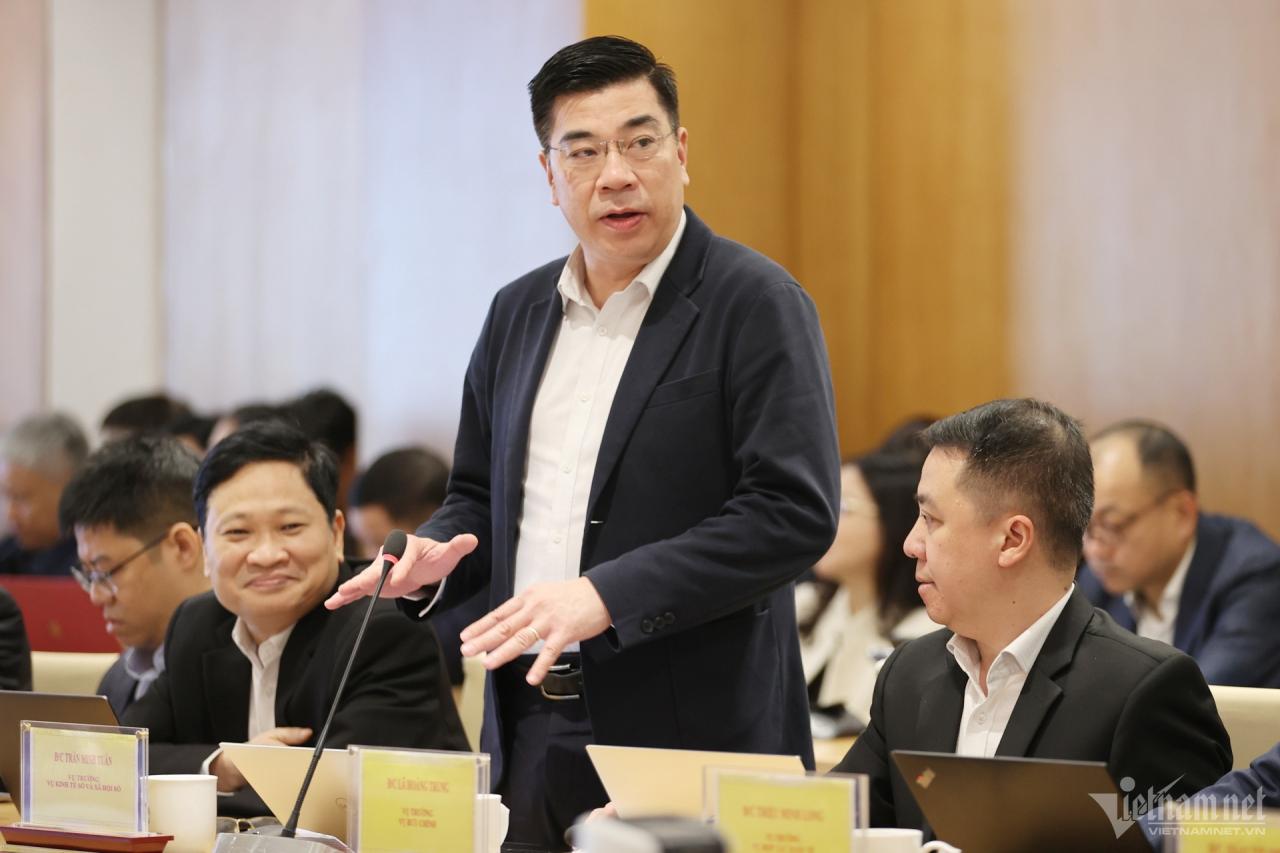
Director of the Department of Digital Economy and Digital Society, Tran Minh Tuan, offered insights on management methods using OKRs. Photo: Le Anh Dung
Commenting on this model, Minister Nguyen Manh Hung stated that OKRs is a management method that sets high goals and allows for adjustments during implementation. This method is the opposite approach to KPIs, which are rigid management methods based on individual performance. The Minister also reminded unit leaders to apply the KPI and OKR management models appropriately, assigning the right people to the right tasks. OKRs is a management method suitable for outstanding and creative personnel. KPIs, on the other hand, break down goals into smaller tasks, suitable for a hands-on approach. According to the Minister, an organization can only apply OKRs if each employee has a strong sense of discipline, self-motivation, and knows how to perform their assigned tasks. The OKR approach is suitable for technology companies, as these require creativity and differentiation. Based on the new insights and approaches shared at the briefing, the Minister requested that unit leaders thoroughly understand the spirit of doing their jobs better and faster, with an easier approach, thereby creating results that promote the development of the Ministry and the sector.Trong Dat - Le Anh Dung
Vietnamnet.vn
![[Photo] Prime Minister Pham Minh Chinh receives the Governor of Tochigi Province (Japan)](/_next/image?url=https%3A%2F%2Fvphoto.vietnam.vn%2Fthumb%2F1200x675%2Fvietnam%2Fresource%2FIMAGE%2F2025%2F12%2F16%2F1765892133176_dsc-8082-6425-jpg.webp&w=3840&q=75)

![[Image] Leaked images ahead of the 2025 Community Action Awards gala.](/_next/image?url=https%3A%2F%2Fvphoto.vietnam.vn%2Fthumb%2F1200x675%2Fvietnam%2Fresource%2FIMAGE%2F2025%2F12%2F16%2F1765882828720_ndo_br_thiet-ke-chua-co-ten-45-png.webp&w=3840&q=75)
![[Live] 2025 Community Action Awards Gala](/_next/image?url=https%3A%2F%2Fvphoto.vietnam.vn%2Fthumb%2F1200x675%2Fvietnam%2Fresource%2FIMAGE%2F2025%2F12%2F16%2F1765899631650_ndo_tr_z7334013144784-9f9fe10a6d63584c85aff40f2957c250-jpg.webp&w=3840&q=75)

![[Photo] Prime Minister Pham Minh Chinh receives Lao Minister of Education and Sports Thongsalith Mangnormek](/_next/image?url=https%3A%2F%2Fvphoto.vietnam.vn%2Fthumb%2F1200x675%2Fvietnam%2Fresource%2FIMAGE%2F2025%2F12%2F16%2F1765876834721_dsc-7519-jpg.webp&w=3840&q=75)























































![[Photo] Prime Minister Pham Minh Chinh attends the Vietnam Economic Forum 2025](https://vphoto.vietnam.vn/thumb/402x226/vietnam/resource/IMAGE/2025/12/16/1765893035503_ndo_br_dsc-8043-jpg.webp)






















Comment (0)