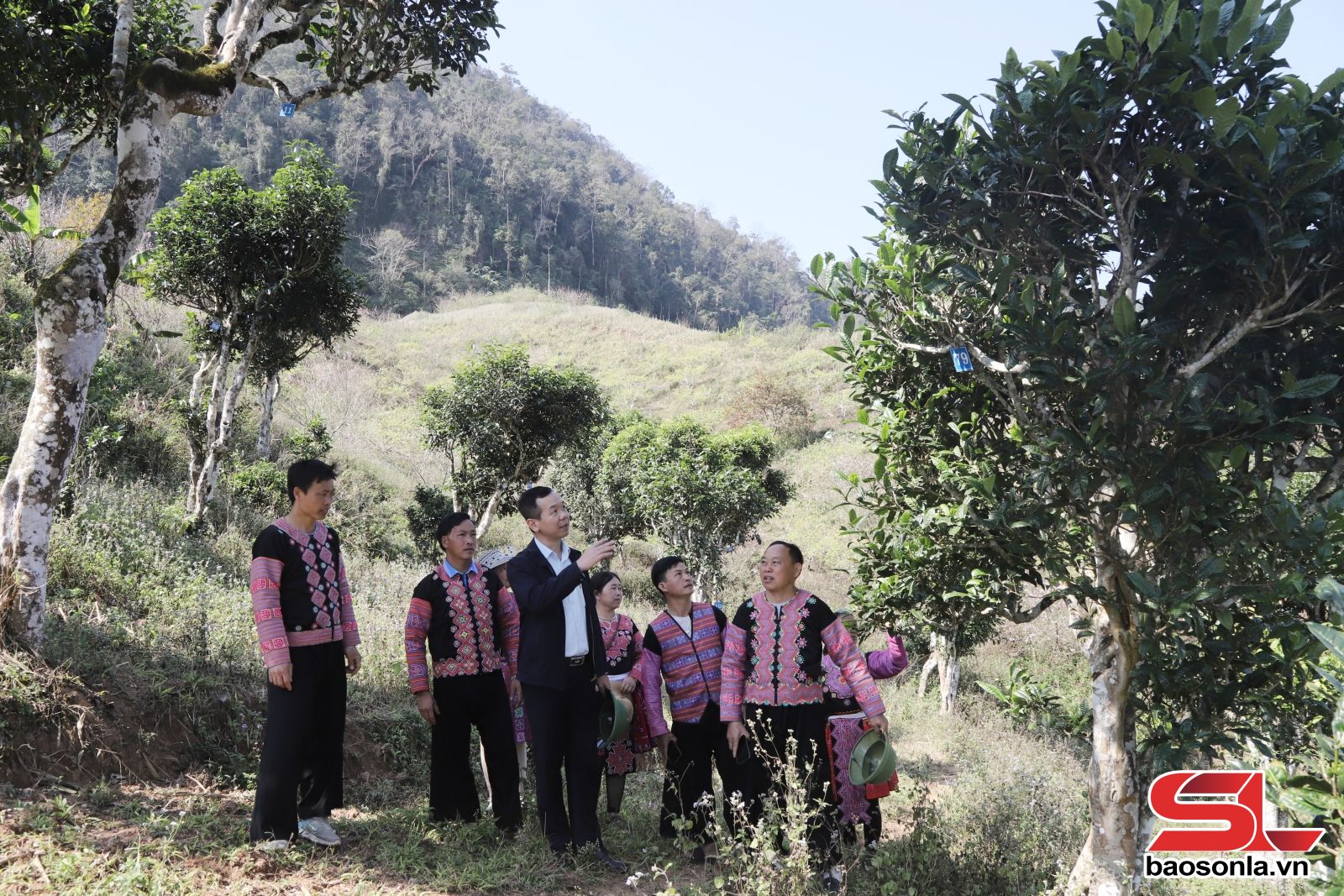
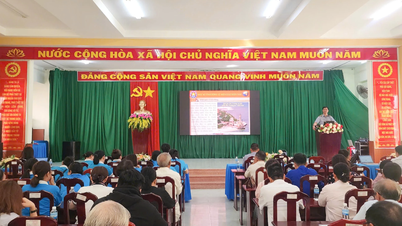
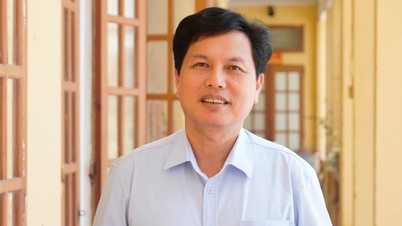
Leaders of Chiềng Hặc commune exchanged tea cultivation techniques with the people of Ôn Ốc village.
Precious products from the vast forest
To reach the ancient tea plantation, we had to hike to the summit of Pha Det Mountain. At this time of year, peach blossoms were in full bloom, adorning the peaceful and poetic landscape of On Oc highland village. On the windy summit of Pha Det, we were all surprised and impressed by the fact that at an altitude of over 1,300 meters above sea level, there were ancient Shan Tuyet tea trees, their trunks covered in moss and lichen, some reaching 5-6 meters in height, stretching themselves amidst the vast forest.
Leading us on a tour of the tea plantation, Mr. Vu A Giang from On Oc village, Chieng Hac commune, shared: According to the elders in the village, these tea plants have been here for hundreds of years. When my grandparents were born, they saw these tea plants growing naturally on the top of Pha Det mountain. In the past, when people went to work in the fields, they often picked tea leaves to brew tea for daily consumption.

The people of On Oc village are harvesting tea.
Due to the mountainous terrain, year-round cloud cover, high humidity, and cool, fresh climate, the Shan Tuyet tea plants here produce many large, round buds. The tea leaves are covered with a layer of fine, white downy hairs, like snow, hence the name "snow tea." In the past, people harvested the tea leaves to brew tea, roast them as gifts, or trade them for rice, salt, or cloth in neighboring villages. The harvesting and processing of the tea were done manually; the villagers roasted the tea in cast-iron pans and then placed it in fresh bamboo tubes to preserve its flavor and maintain the pure taste of the ancient Shan Tuyet tea. The people of On Oc consider these ancient tea trees treasures of their village; they are symbols of the vibrant life of the Mong ethnic people here. However, for a long period, the ancient tea plantation was abandoned. Many old tea trees have died due to pests and diseases, or have been cut down to make way for other crops. Some have been damaged by livestock and gradually died over the years, resulting in a significant decrease in tea cultivation area.
Recognizing the value of tea plants, since 2019, the people of On Oc village have been determined to preserve the remaining tea plants, proactively caring for, cultivating, propagating, and expanding the tea growing area. In particular, they cultivate tea using organic, environmentally friendly methods; they do not spray pesticides or use chemical fertilizers. Currently, the tea growing area covers approximately 2 hectares, with nearly 200 ancient tea trees.
Mr. Vu Lao Tenh, Party Secretary and Head of On Oc village, Chieng Hac commune, informed: To protect and develop ancient tea trees, the village has assigned households with tea trees to protect and harvest them for processing. At the same time, the protection of ancient tea trees has been included in the village's regulations and customs, such as: Absolutely no cutting down or raising livestock in the area where ancient tea trees are planted... Anyone who violates this will be severely punished according to the village's regulations; minor violations will result in the family not being recognized as a "Cultural Family" that year; major violations will be reported to the commune for handling according to the law.
As a result, people's awareness has been raised, and the ancient tea trees are protected and thrive. Notably, in May 2025, nine ancient Shan Tuyet tea trees in On Oc village were recognized as Vietnamese Heritage Trees by the Vietnam Association for Nature and Environment Protection.
Building the brand of Shan Tuyet On Oc tea.
Recognizing the potential and value of the ancient Shan Tuyet tea trees in On Oc village, members of the Tay Bac Cooperative in Yen Chau commune decided to collaborate with the villagers to restore the ancient tea growing area. Nguyen Anh Duc, Deputy Director of the Tay Bac Cooperative, shared: "In 2018, when I visited On Oc village, the villagers invited me to sample their ancient tea. The tea had a yellowish-brown color, a slightly astringent taste at first, and a gentle sweetness in the throat. It was a very special flavor that couldn't be found anywhere else. At that time, I had the idea to create a specialty tea product with the villagers to introduce to consumers."

The people of On Oc village are harvesting tea.
With a long-term vision, the Tay Bac Cooperative has encouraged local people to preserve and care for the remaining tea plants, while also guiding them on proper cultivation techniques to protect the development of this rare tea variety. Care measures such as pruning and reducing the canopy to encourage easier harvesting of buds and preserving fresh tea leaves after harvesting have been implemented, contributing to the growth of the tea growing area. In addition, the cooperative provides equipment and technical support to help people process tea to ensure quality.
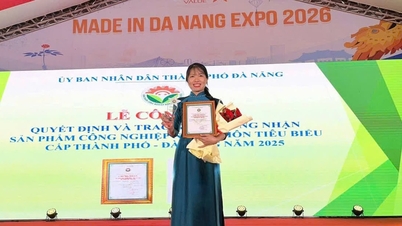
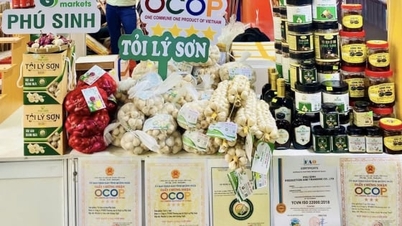
Beyond conservation, the cooperative also collaborates with local people to build the brand of On Oc Shan Tuyet tea, enhancing product value and developing the local economy . Currently, the cooperative leases nearly 200 ancient tea trees from local people for 10 years. On average, the cooperative harvests about 1 ton of fresh tea buds annually, producing about 200 kg of dried tea. Local people are paid 20,000 VND/kg for caring for and harvesting the tea. With the cooperative's efforts and determination, in June 2025, On Oc Shan Tuyet tea was recognized as a 4-star OCOP product by the Provincial OCOP (One Commune One Product) product evaluation and ranking council, marking an important step in the journey of bringing ancient tea to a wider market.
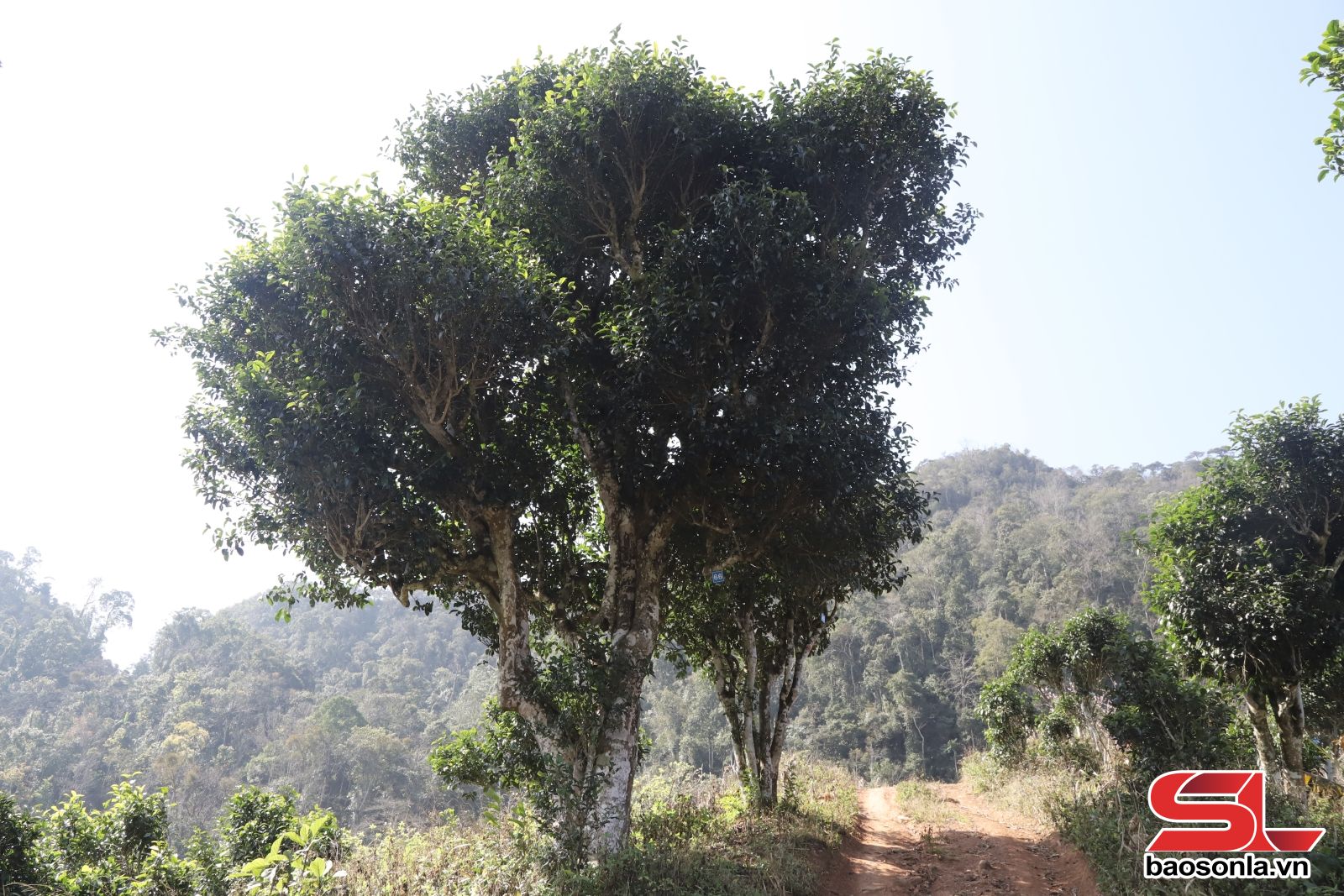
One of the tea trees recognized as a Vietnamese heritage tree.
Even more encouraging, since the end of 2024, Son La College has been implementing a provincial-level scientific project titled "Research on the conservation and development of the value of ancient Shan Tuyet tea trees associated with tourism development in Son La province" in several localities in the province, including On Oc village, Chieng Hac commune. The project will be implemented for 36 months, from September 2024 to February 2027. Accordingly, the project team has specifically numbered each ancient tea tree in On Oc village. At the same time, they have guided the local people on techniques for improving the soil environment, techniques for promoting bud formation and shaping the canopy of ancient Shan Tuyet tea trees; techniques for pruning combined with shaping according to the basic bonsai styles to create landscapes and increase productivity; and techniques for harvesting and processing ancient Shan Tuyet tea properly...
Thanks to the support of the Tay Bac Cooperative and the guidance of the research team, the people of On Oc village have successfully restored and protected the existing ancient tea trees. In addition, households with land in the ancient tea hill area have planted approximately 1,000 more Shan Tuyet tea trees. Mr. Lai Huu Hung, Vice Chairman of the Chieng Hac Commune People's Committee, who directly participated in the survey of the tea-growing area in On Oc village, stated: "We recognize that the ancient tea trees in On Oc village are not only valuable perennial crops but also unique ecological and cultural assets of the locality. Based on this, the commune has incorporated the preservation and promotion of the value of ancient tea trees into its agricultural economic development program, linked with the preservation of cultural identity. At the same time, we are intensifying propaganda efforts to raise awareness among the people, especially households with ancient tea trees, about protecting, caring for, and sustainably exploiting them."
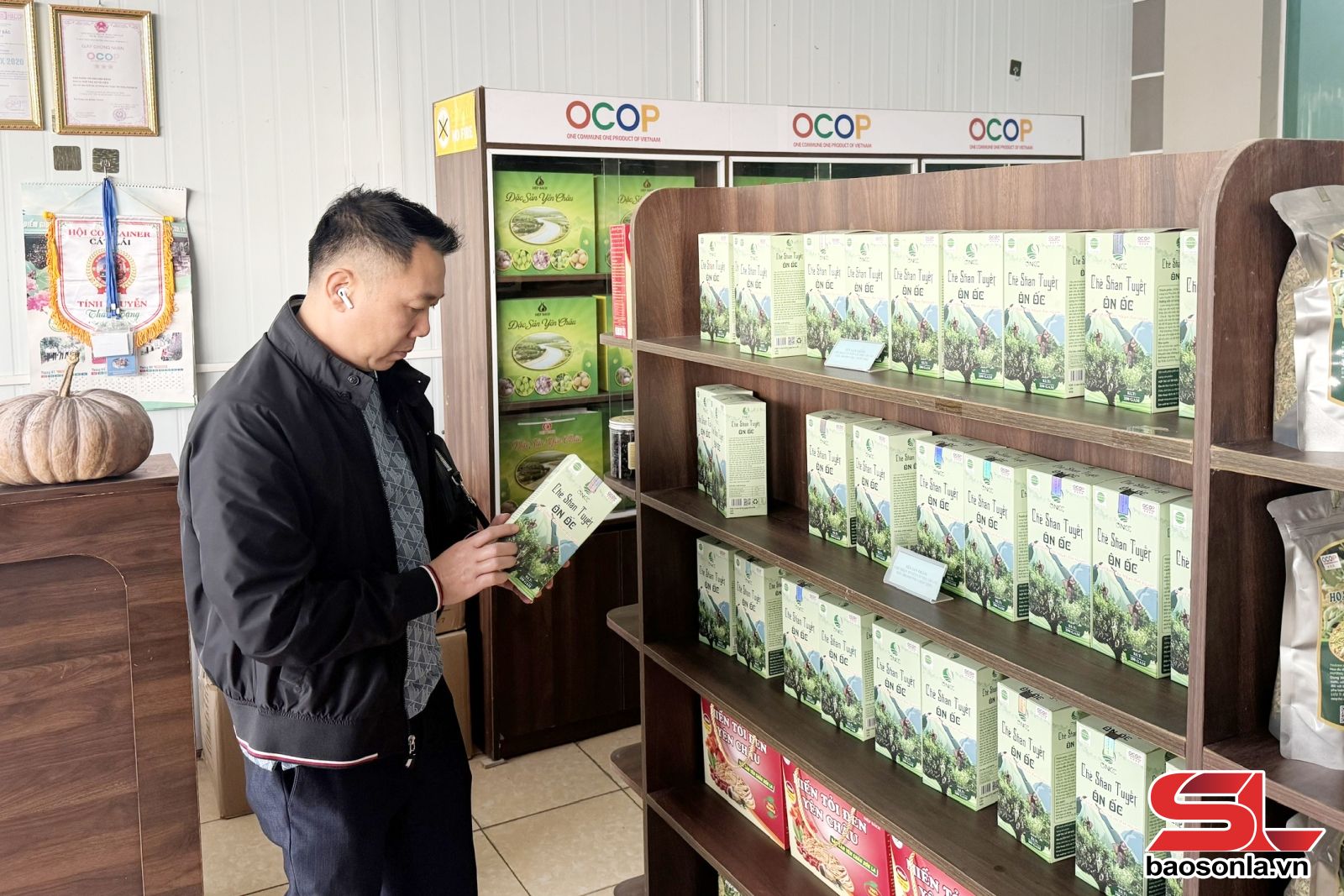
Shan Tuyet On Oc tea product has been recognized as a 4-star OCOP product.
However, to date, the area and production of Shan Tuyet tea remain modest, failing to meet customer demand. Furthermore, the preservation and promotion of the value of ancient tea trees in On Oc village still face several obstacles, such as: steep mountainous terrain and difficult transportation; many ancient tea trees are old and slow-growing; limited investment resources for conservation, propagation, replanting, and processing; and the predominantly manual techniques used by the local people for cultivation and processing.
The Party Committee and local government of Chiềng Hặc commune and Ôn Ốc village hope that all levels and sectors will pay attention to investing in infrastructure, especially roads leading to the village; provide financial support for preserving the genetic resources of ancient tea trees, propagating and planting new ones; and strengthen the transfer of scientific and technical knowledge. Through these efforts, they aim to both preserve traditional values and spread the fragrance of Ôn Ốc tea far and wide, creating sustainable livelihoods and increasing income for the people.
Source: https://baosonla.vn/kinh-te/cay-che-co-thu-tren-dinh-pha-det-j4G5PANvR.html



























































































Comment (0)