

Vietnam has not yet fully utilized the advantages from FTAs in footwear exports.
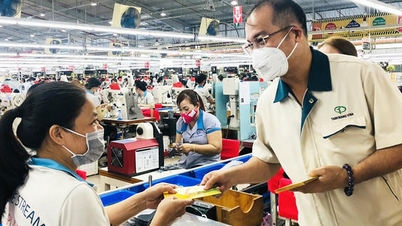
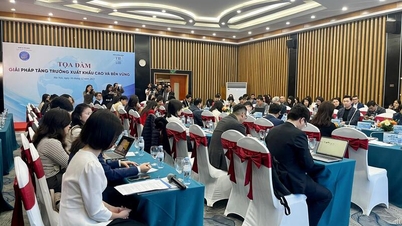
According to data from the General Statistics Office, in 2023, Vietnam's footwear exports brought in over $20.2 billion, a decrease of 15.3% compared to 2022. Vietnamese footwear has been exported to more than 150 markets worldwide , focusing on major markets such as the US, EU, China, Japan, and the UK.
It is projected that footwear exports for the whole year of 2024 will reach approximately 26-27 billion USD. However, according to the Ministry of Industry and Trade , Vietnamese footwear businesses have not yet fully utilized the advantages and potential offered by Free Trade Agreements (FTAs).
Vietnam is a major exporter of footwear, but its quality has not improved significantly, the domestic content ratio is low, and the added value is not high. Therefore, it is necessary to build an ecosystem that leverages the advantages of FTAs to increase efficiency.
Dr. Le Huy Khoi, Deputy Director of the Institute for Strategic and Policy Research in Industry and Trade, noted that the footwear industry has played a significant role in the national economy in recent years. Besides increasing the proportion of export turnover, this industry has also created a major impetus for energy growth and improved the income of workers.
Production indicators show that since joining trade agreements, the footwear industry has experienced positive growth. However, Mr. Khoi believes that this growth is not yet sustainable due to the impact of external factors and unstable economic cycles. For example, in 2015, the production growth rate reached 17.8%, but by 2020, this figure had gradually decreased. After that period, the industry recovered with good growth rates in 2021 and 2022. By 2023, growth was still heavily affected by many external factors, leading to a significant decline.
According to Mr. Khoi, although Vietnam is a major exporter, the competitive position of the footwear industry is not yet truly stable. We currently rank 10th-11th in the world in the production of footwear and related accessories. However, because we mainly participate in processing stages, the industry's competitiveness index has not reached the high level expected. Nevertheless, the representative of the Institute for Strategic and Policy Research in Industry and Trade affirmed that the Vietnamese footwear industry still has much potential for development.
According to Nguyen Cong Han, Deputy Director of the Hai Phong Department of Industry and Trade, the Free Trade Agreements (FTAs) have created many favorable opportunities for the footwear industry in Hai Phong to expand its export markets. Statistics from the issuance of preferential Certificates of Origin (C/O) at the Hai Phong Department of Industry and Trade show that in the first eight months of 2024, the total export value of footwear to FTA markets by businesses in the city and some neighboring provinces increased by 8% compared to the same period.
Some markets experienced growth rates exceeding 10%, such as Europe (13%), South Korea (13%), CPTPP (15%), ASEAN (17%), and Hong Kong (27%). In terms of trade value proportions, Certificates of Origin (C/O) issued to the European market accounted for 52.28%, China 11%, Japan 8.9%, and CPTPP 8%...
Mr. Nguyen Cong Han also pointed out many challenges, including the difficulty for businesses to independently source raw materials and components, being dependent on or dictated to by import partners. Furthermore, there is a lack of information and regulations from foreign countries, including factors related to leveraging FTAs, and difficulties in brand building.
Building an FTA ecosystem for the footwear industry to ensure sustainable development.
According to experts, building an FTA ecosystem for the footwear industry is a practical solution to help businesses optimize the benefits from FTAs, as well as achieve sustainable exports.
Ms. Nguyen Thi Ngoc Mai from the Product Design and Development Center of the Leather and Footwear Research Institute stated that private enterprises and traditional craft villages all aspire to bring their products to the international market. However, they face significant technical barriers, from raw materials to the final product, resulting in many products failing to meet export standards. Therefore, establishing a system of technical standards for the leather and footwear industry has become a key factor in controlling input materials and improving the quality of exported goods.
According to Mr. Ngo Chung Khanh, Deputy Director of the Multilateral Trade Policy Department (Ministry of Industry and Trade), for this ecosystem to function, its organizational structure must include a management board operating like an independent company, with a board of directors and various departments. The management board will be the "soul" of the operation, helping to bring initiatives and connections among stakeholders to life.
To have an executive board, you need personnel, offices, headquarters, and financial resources to operate. In addition, for the ecosystem to function, the stakeholders must work together and comply with regulations and laws.
"There must be principles here, 'rules of the game,' and anyone who violates them will be eliminated. But ensuring compliance is also a challenge; more importantly, how to encourage and motivate businesses and other entities to participate voluntarily and effectively. To encourage participation, we must first show them the benefits of joining the model," said Mr. Ngo Chung Khanh.
Mr. Khanh believes that with an established ecosystem, the needs and desires of businesses will be addressed more efficiently, quickly, and practically. This will, in turn, help boost the effectiveness of business operations.
The main challenges in building an ecosystem that leverages the FTA for the footwear industry include adopting international standards and ensuring compliance with environmental and labor requirements. However, if successful, this new ecosystem will help Vietnamese businesses improve efficiency and maximize the benefits of the FTA.
Source: https://baophapluat.vn/chia-khoa-giup-doanh-nghiep-toi-uu-hoa-loi-ich-tu-cac-fta-huong-den-xuat-khau-ben-vung-post528398.html


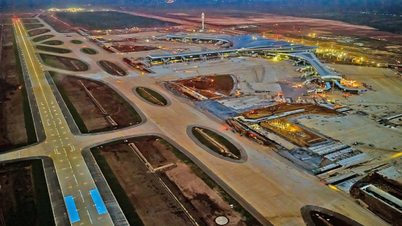
![[Photo] Two flights successfully landed and took off at Long Thanh Airport.](/_next/image?url=https%3A%2F%2Fvphoto.vietnam.vn%2Fthumb%2F1200x675%2Fvietnam%2Fresource%2FIMAGE%2F2025%2F12%2F15%2F1765808718882_ndo_br_img-8897-resize-5807-jpg.webp&w=3840&q=75)
































































Comment (0)